Introduction to Magnaporthe
Magnaporthe oryzae (syn. Pyricularia oryzae) is the causative agent of rice blast, a devastating fungal disease that threatens global rice production. This hemibiotrophic ascomycete can infect rice at any growth stage, producing characteristic lesions on leaves, nodes, panicles, and grains. The pathogen spreads rapidly via airborne conidia and survives between seasons on crop residues and alternative hosts. Because rice is a staple for over half the world’s population, losses from Magnaporthe can have severe food-security implications.
Identifying Symptoms & Damage
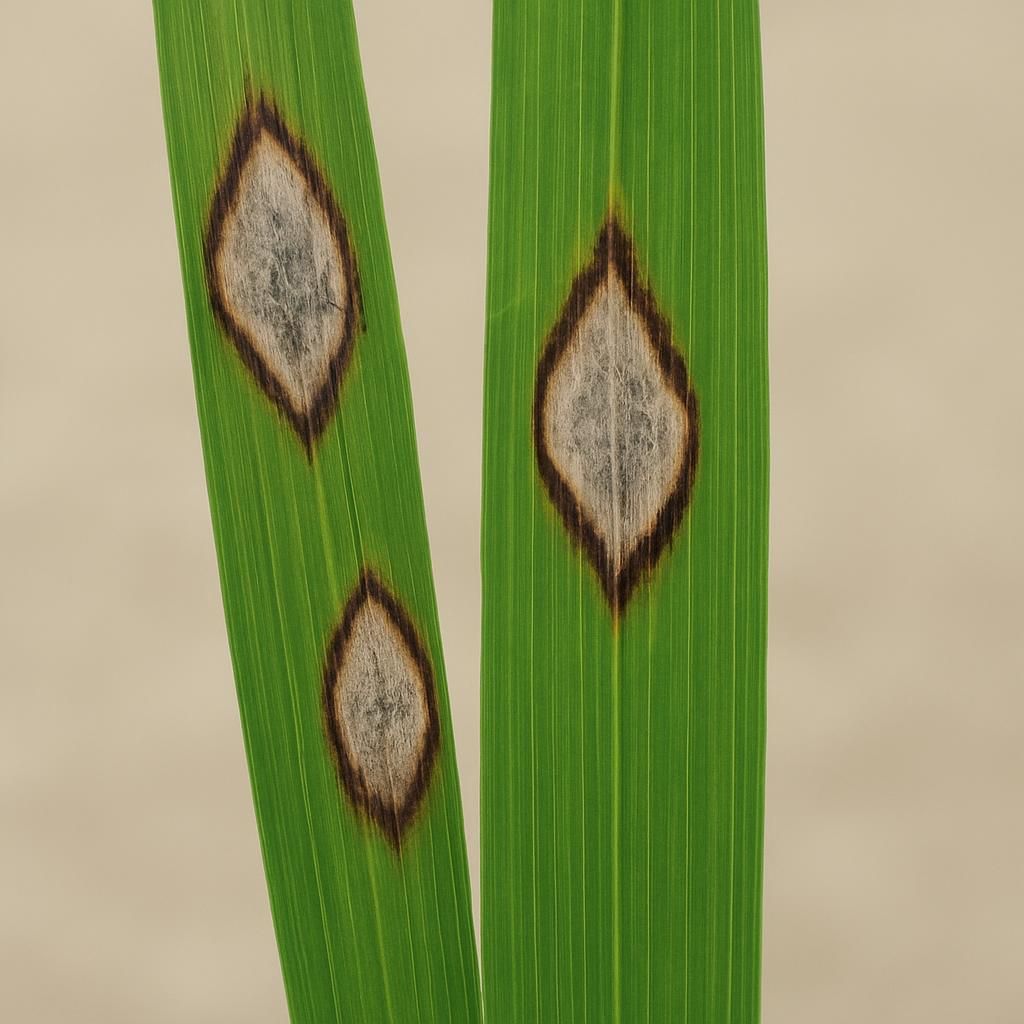
Leaf blast appears as diamond-shaped lesions with gray-white centers and dark-brown margins. Neck blast causes dark lesions at the base of the panicle, leading to “neck rot” and empty grains. Node blast produces dark discoloration at stem nodes, weakening culms and causing lodging. Grain infection results in discolored, shriveled kernels and reduced milling quality. Early detection is critical; scouting should focus on the most susceptible growth stages from tillering through flowering.
Lifecycle and Progression of Magnaporthe
| Stage | Description | Duration (optimal conditions) |
|---|---|---|
| Spore Germination | Conidia land on wet leaf surfaces and germinate within 2–6 hours | 2–6 hours |
| Appressorium Formation | Specialized infection structure develops and generates turgor pressure | 6–12 hours |
| Penetration | Mechanical penetration of cuticle and epidermis | 12–24 hours |
| Biotrophic Phase | Intracellular hyphae colonize living cells without immediate cell death | 2–4 days |
| Necrotrophic Phase | Toxin production and lesion expansion; new conidia produced | 4–7 days |
| Sporulation & Dispersal | Conidia released by wind and rain splash to new hosts | Ongoing during wet periods |
Environmental Triggers & Risk Factors
| Factor | Optimal Range for Disease | Management Implication |
|---|---|---|
| Temperature | 20–28 °C daytime | Avoid planting in cool, wet seasons |
| Relative Humidity | >90 % for 8–10 consecutive hours | Improve field drainage and spacing |
| Leaf Wetness | 6–12 hours continuous film | Time irrigation to allow rapid drying |
| Soil pH | 5.5–6.5 | Maintain balanced fertility; excess nitrogen favors disease |
| Nitrogen Rate | >120 kg N ha⁻¹ | Split applications and use resistant cultivars |
Organic Control & Treatment Plans
| Treatment Option | Active Ingredient / Method | Application Frequency | Notes |
|---|---|---|---|
| Resistant Varieties | IR64, CO39, Pusa Basmati 1 | At planting | Most cost-effective long-term strategy |
| Cultural Sanitation | Remove crop residues and volunteer plants | Post-harvest | Reduces overwintering inoculum |
| Crop Rotation | Rotate with non-host crops (e.g., Soybeans) for 1–2 seasons | Annual | Breaks disease cycle |
| Silicon Amendment | Apply 200–300 kg ha⁻¹ rice-hull ash or wollastonite | Pre-plant or early tillering | Strengthens cell walls |
| Compost Tea / Bio-fungicides | Bacillus subtilis or Trichoderma harzianum sprays | Every 7–10 days during high-risk periods | OMRI-listed options |
| Copper-based sprays | Copper hydroxide (organic formulation) | At first sign of lesions, repeat every 10–14 days | Use sparingly to avoid soil accumulation |
Preventing Magnaporthe in the Future
Implement an integrated approach: select blast-resistant cultivars suited to local conditions, maintain balanced fertility with moderate nitrogen, ensure adequate plant spacing (20–25 cm between hills) for airflow, and practice timely drainage after irrigation. Regular field monitoring during the wet season allows early intervention. Rotating rice with legumes such as Chickpeas or Lentils further reduces soil-borne inoculum. Post-harvest residue management and seed treatment with approved biological agents complete the prevention cycle.
Crops Most Affected by Magnaporthe
While rice is the primary host, Magnaporthe oryzae also infects Wheat, Barley, Oats, and several wild grasses. Among rice types, high-yielding indica and japonica varieties show varying susceptibility; aromatic types such as Basmati Rice and Jasmine Rice can suffer severe neck blast under humid conditions. Understanding host range helps in designing effective rotation and resistance-breeding programs.