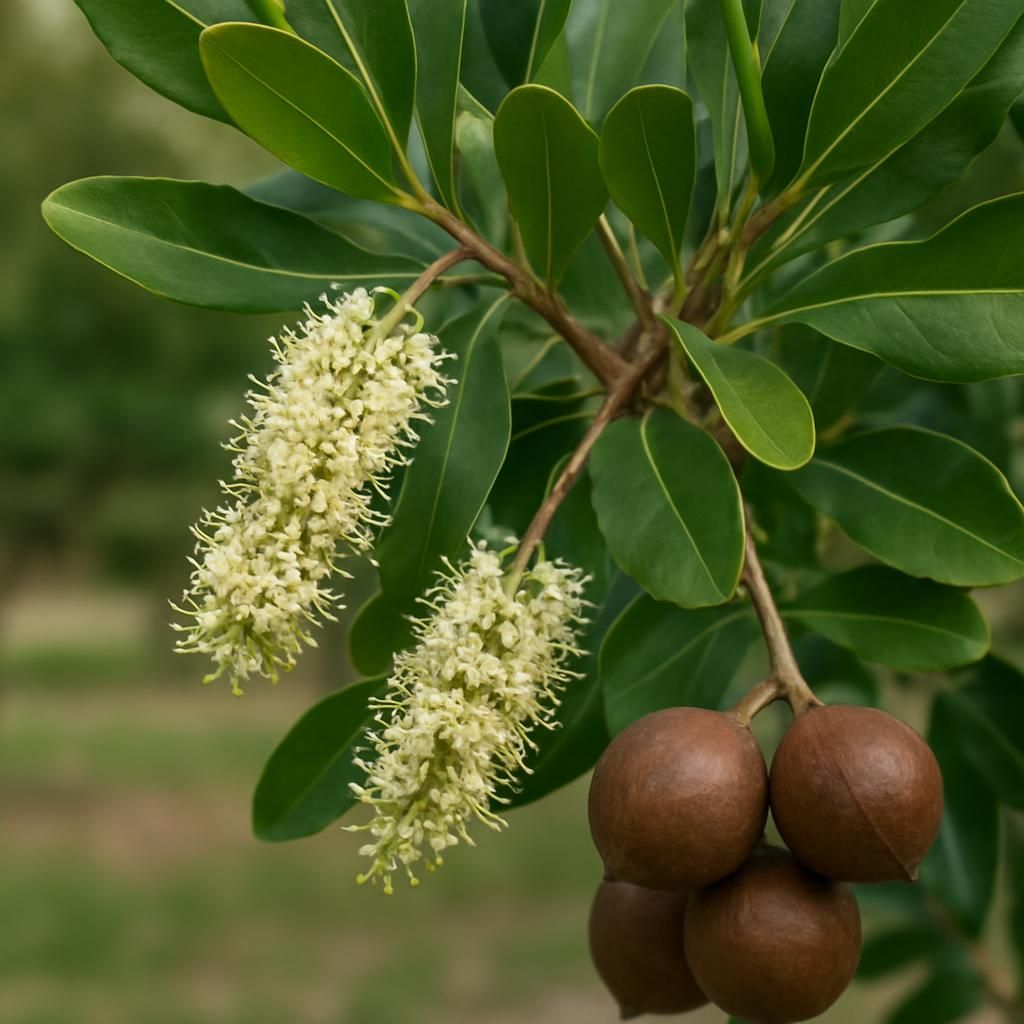
Introduction to Macadamia (Cate)
Macadamia (Cate) trees produce some of the world's most valuable nuts, known for their creamy texture and high monounsaturated fat content. Native to the coastal rainforests of eastern Australia, these evergreen trees have become a major commercial crop in subtropical and tropical regions worldwide. The "Cate" cultivar is noted for its reliable yields, moderate tree size, and excellent kernel quality, making it a top choice for both commercial orchards and dedicated home growers. With proper management, mature trees can produce for decades, delivering consistent harvests of premium-grade nuts.
Successful cultivation requires understanding the tree's specific environmental needs, including well-drained acidic soils, protection from strong winds, and a frost-free climate. This guide provides professional-grade, actionable advice for every stage of growing Macadamia (Cate), from site selection and propagation through to post-harvest handling.
Botanical Profile of Macadamia (Cate)
Macadamia integrifolia 'Cate' belongs to the Proteaceae family. It is a medium to large evergreen tree that can reach 10–15 meters in height with a spreading canopy when mature. The glossy, dark green leaves are oblong to lanceolate, often with slightly serrated margins. Small, creamy-white flowers appear in long racemes during late winter to spring, attracting bees and other pollinators. The fruit is a hard, woody follicle containing one or two spherical kernels protected by a thick brown shell. Inside the shell lies the edible kernel, prized for its high oil content (up to 75%) and sweet, buttery flavor. The 'Cate' selection offers good kernel recovery rates and consistent nut size.
Soil, pH, and Climate Requirements for Macadamia (Cate)
Macadamia (Cate) thrives in deep, well-drained, fertile soils with a slightly acidic pH. Poor drainage is the leading cause of tree decline, so raised beds or mounds are recommended in heavy soils. The tree prefers subtropical to tropical climates with mild winters and protection from frost. Strong winds can damage branches and reduce yields, so windbreaks are essential in exposed locations.
| Parameter | Ideal Range | Notes |
|---|---|---|
| Soil Type | Sandy loam to clay loam | Deep, well-drained; avoid waterlogging |
| Soil pH | 5.0 – 6.5 | Slightly acidic; correct with sulfur if needed |
| Temperature | 15–30 °C (59–86 °F) daytime | Frost sensitive below –1 °C |
| Annual Rainfall | 1000–2000 mm | Supplemental irrigation in dry periods |
| Elevation | Sea level to 800 m | Higher elevations may need frost protection |
| Sun Exposure | Full sun (minimum 6 hours) | Partial shade reduces nut production |
Step-by-Step Planting & Propagation
- Site Selection: Choose a location with full sun, protection from wind, and excellent drainage. Conduct soil tests and amend pH if necessary.
- Propagation: Most commercial orchards use grafted 'Cate' scions on seedling rootstocks for uniformity and disease resistance. Grafting is typically performed in spring when sap flow is active.
- Spacing: Plant trees 6–8 meters apart in rows 8–10 meters wide to allow machinery access and canopy development.
- Planting Time: The best planting window is early spring after the last frost risk has passed.
- Hole Preparation: Dig holes twice the width of the root ball and the same depth. Backfill with a mix of native soil and well-rotted compost.
- Watering In: Water thoroughly after planting and apply a 5–10 cm layer of organic mulch, keeping it 10 cm away from the trunk.
Care & Maintenance regimes for Macadamia (Cate)
Young trees require consistent moisture and balanced nutrition to establish strong root systems. Mature trees need less frequent but deeper irrigation. Fertilizer programs should be based on leaf and soil analyses, with emphasis on nitrogen, potassium, and micronutrients such as zinc and boron. Pruning focuses on maintaining an open canopy for light penetration and ease of harvest.
| Task | Schedule | Details |
|---|---|---|
| Watering | Weekly deep watering for first 2 years; then every 2–3 weeks | Apply 40–60 liters per mature tree during dry spells |
| Fertilizer | 3–4 applications per year | Use NPK 10-5-20 or similar; apply at bud break, flowering, and post-harvest |
| Pruning | Annual light prune after harvest; corrective prune in year 3–4 | Remove dead wood, crossing branches, and low limbs; maintain 3–4 main leaders |
Pests, Diseases & Organic Management
Common pests include Macadamia nut borer, scale insects, and thrips. Diseases such as Phytophthora root rot and anthracnose can affect stressed trees. Organic management relies on cultural practices, beneficial insects, and targeted sprays of neem oil or horticultural oils. Regular monitoring and removal of fallen nuts help break pest life cycles. Windbreaks and proper spacing reduce humidity-related fungal issues.
Harvesting, Curing & Optimal Storage
Macadamia (Cate) nuts are typically harvested when they fall naturally to the ground, usually from late autumn through winter. Collect nuts frequently to prevent mold and insect damage. After harvest, de-husk within 24 hours and dry the nuts in their shells at 30–35 °C with good airflow until the kernel moisture drops to 1.5–2%. Store cured nuts in cool, dry conditions or vacuum-seal for long-term preservation. Properly cured kernels maintain quality for 12–18 months.
Companion Planting for Macadamia (Cate)
Leguminous cover crops such as clover improve soil nitrogen levels beneath the canopy. Marigold and nasturtium planted in orchard rows attract beneficial insects and deter nematodes. Avoid planting heavy feeders like corn or banana too close, as they compete for nutrients and water. Deep-rooted herbs such as rosemary help improve soil structure and provide habitat for predatory insects.
Macadamia trees benefit from the biodiversity created by well-planned companion planting, leading to healthier orchards and reduced pest pressure over time.