Introduction to Litchi
The Litchi fruit borer, commonly referred to simply as 'Litchi' in agricultural contexts, is one of the most destructive pests affecting litchi (Litchi chinensis) cultivation worldwide. Native to Southeast Asia, this pest—Conopomorpha sinensis—has spread to major litchi-producing regions including China, India, Vietnam, and parts of Africa and Australia. Adult moths lay eggs on young fruits, and the larvae tunnel inside, feeding on the pulp and seeds, leading to fruit deformation, rotting, and massive premature drops. Yield losses can exceed 50-80% in unmanaged orchards, making timely diagnostics and management critical for commercial growers.
Litchi fruit borer infestations not only reduce marketable fruit but also increase susceptibility to secondary infections like anthracnose and sooty mold. Understanding this pest's behavior is essential, as it thrives in tropical and subtropical climates where litchi is predominantly grown. For small-scale and commercial farmers, integrating monitoring with organic controls can restore orchard health. This guide draws from entomological research and field trials to deliver actionable strategies. Read our comprehensive Spring Pest Patrol: Organic AI Strategies to Shield Your Crops from Common Invaders for tech-enhanced scouting tips.
Identifying Symptoms & Damage
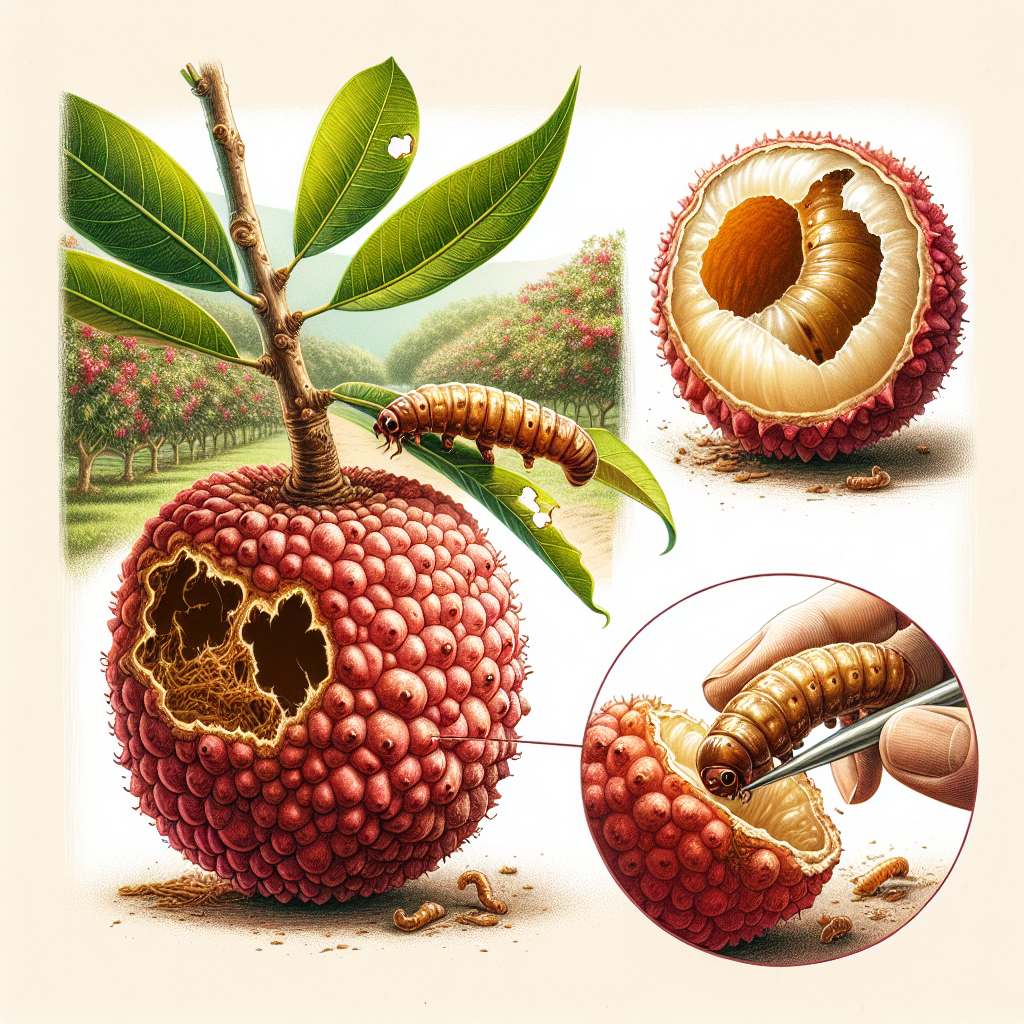
Early identification of Litchi fruit borer damage is key to limiting spread. Initial signs appear 7-10 days after egg-laying, typically during fruit set in spring. Look for tiny entry holes (1-2 mm) on the fruit surface, often near the peduncle, surrounded by frass (insect excrement) resembling sawdust. Affected fruits turn yellowish prematurely, swell irregularly, and split open to reveal reddish-brown larvae inside feeding on the pulp.
Advanced symptoms include fruit abortion, where infested litchis drop en masse, littering the orchard floor. Surviving fruits show internal blackening, watery rot, and seed damage, rendering them unmarketable. Damage patterns cluster on panicles, with 20-30% infestation signaling an outbreak. Differentiate from other pests like fruit flies by the bore holes and frass; fruit flies cause surface punctures without tunneling.
Scout weekly using a magnifying lens or phone camera during peak fruiting. Sticky traps baited with pheromone lures capture adults, confirming presence. In severe cases, entire clusters blacken due to secondary sooty mold. Economic thresholds: Remove panicles if >10% fruits show entry holes. For similar diagnostics on nearby crops like mango, cross-reference symptoms to avoid misidentification.
Lifecycle and Progression of Litchi
The Litchi fruit borer completes 4-6 generations per year, synchronized with host phenology. Adults are small, silvery-white moths (6-8 mm wingspan) with fringed wings, active at dusk. Females lay 50-100 eggs singly on calyces or young fruits over 3-5 days. Eggs hatch in 3-4 days into cream-colored larvae (up to 12 mm long) that immediately bore into fruits.
Larval stage lasts 10-15 days, with 4 instars; they exit via a new hole, spin a cocoon on leaves or bark, and pupate for 7-10 days. Total cycle: 21-30 days at 25-30°C. Overwintering occurs as diapausing pupae in fallen fruits or soil. Peak activity aligns with flush growth and fruiting, from March to July in northern hemispheres.
Progression monitoring: Use degree-day models (base 10°C) to predict emergence. First generation targets flowers, second-third hit developing fruits. By harvest, later broods infest maturing litchis. Lifecycle knowledge enables precise timing for interventions, reducing overlap with pollinators.
Environmental Triggers & Risk Factors
Litchi fruit borer thrives in warm, humid conditions (25-32°C, >70% RH), common in monsoon-prone litchi belts. High nitrogen fertilization promotes tender flushes, attracting egg-laying. Poor sanitation—uncollected fallen fruits—harbors pupae, spiking next-season infestations by 3x. Dense canopies limit spray penetration, exacerbating spread.
Risk factors include nearby unmanaged hosts like longan or rambutan, though litchi is primary. Monsoon rains wash off frass, masking early signs. Climate change extends generations, with models predicting 20% more cycles by 2050. Soil types with poor drainage foster soil pupae survival. Assess risk via farm history: Orchards with prior outbreaks need vigilant scouting.
Organic Control & Treatment Plans
Organic management emphasizes IPM: cultural, biological, and mechanical tactics before botanicals. Cultural: Prune for open canopies, destroy infested panicles weekly (bag and bury >50 cm deep). Trap crops like marigolds divert adults. Biological: Release Trichogramma wasps (2-3 releases/week at fruit set, 10,000/ha). Neem oil (2-3% emulsion) disrupts larvae; apply evenings to spare predators like spiders.
Monitoring & Thresholds: Pheromone traps (4-6/ha) at 5-10 moths/trap/week trigger action. Bacillus thuringiensis (Bt) kurstaki sprays (every 7-10 days) target young larvae, safe for beneficials. Spinosad (organic-approved) at 0.5 ml/L controls 80-90% in trials. Rotate with Beauveria bassiana fungal sprays for pupae.
Treatment Plan: Week 1: Scout + sanitation. Week 2-4: Bt + neem alternate sprays. Monitor via traps. Success metrics: <5% infestation. Combine with bird perches for natural predation. Avoid broad-spectrum disruptions to aphids predators that indirectly aid control.
Preventing Litchi in the Future
Prevention builds resilient orchards. Plant resistant cultivars like 'Muzaffarpur' or 'Calcuttia'. Wrap young bunches in fine mesh bags post-fruit set (95% efficacy). Mulch orchards to suppress soil pupae; solarize soil pre-planting. Calendar-based sprays timed to biofix (first trap catch).
Enhance biodiversity: Intercrop with thai-basil as repellent. Ant management prevents tending of borers. Post-harvest, flail mow and deep plow litter. Annual trap counts guide next season. Long-term: Scout neighbors, quarantine tools. Soil Health Mastery: 5 Proven Strategies for Small Farms to Build Fertile Ground Without Breaking the Bank complements prevention via robust roots resisting stress.
Crops Most Affected by Litchi
Primarily devastating to litchi, the fruit borer spills over to related Sapindaceae: longan (Dimocarpus longan), rambutan (Nephelium lappaceum), and ackee. In mixed orchards, it attacks 70% of litchi, 20% longan. Minor hosts include mango, guava, and citrus under high pressure. Tropical fruit growers prioritize it; avoid monocultures. Nearby banana farms see occasional damage but less tunneling preference.