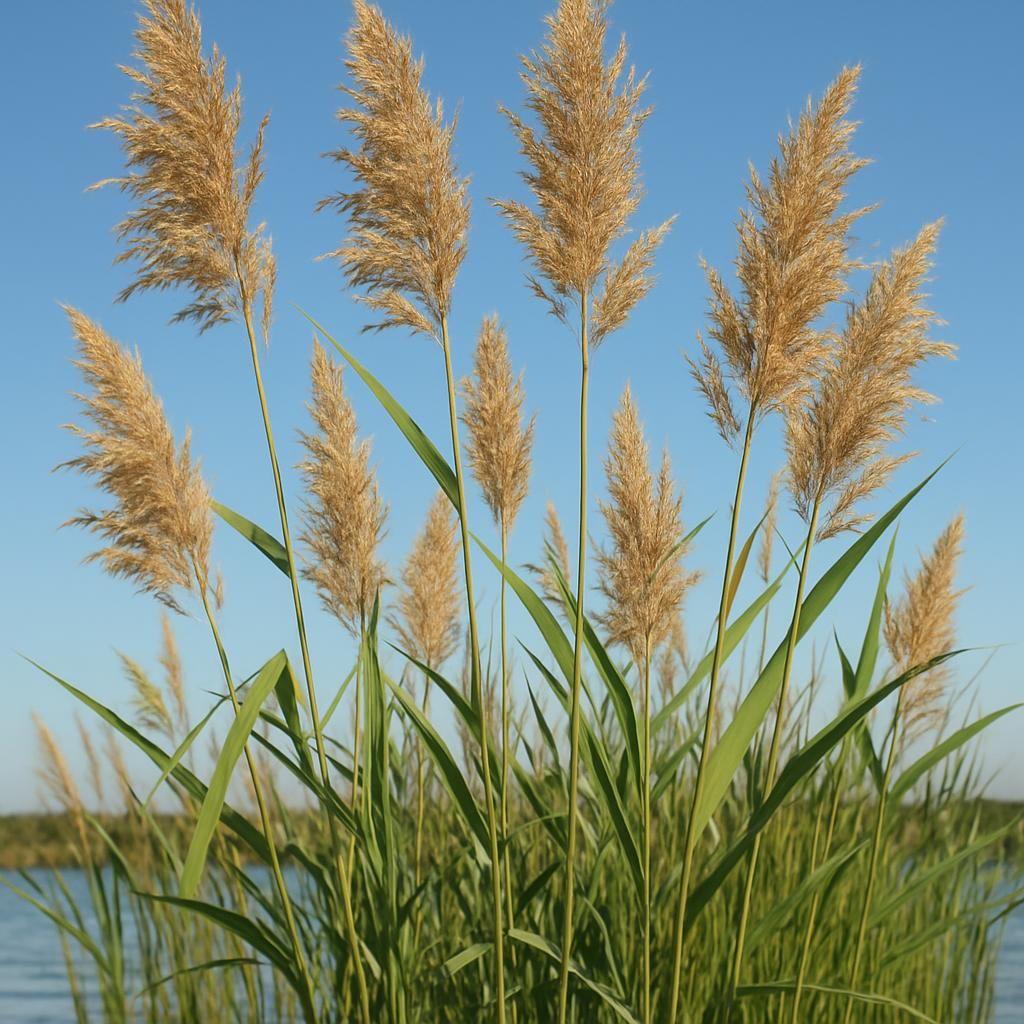
Introduction to Phragmites
Phragmites australis, commonly known as common reed, is one of the most widely distributed wetland plants on Earth. This robust perennial grass has been utilized for centuries in water purification systems, thatching, and as livestock fodder. In modern agriculture it serves as an effective tool for phytoremediation, shoreline stabilization, and renewable biomass feedstock. Professional growers value Phragmites for its rapid growth rate, high biomass yield, and ability to tolerate extreme environmental conditions that would challenge most conventional crops.
Botanical Profile of Phragmites
Phragmites australis belongs to the Poaceae family and is characterized by its tall, hollow culms that can reach 3–6 meters in height. The plant spreads aggressively through an extensive network of rhizomes and stolons, forming dense monocultures in suitable habitats. Leaves are lanceolate, 20–60 cm long, with rough margins. The inflorescence consists of a large, feathery panicle that produces wind-dispersed seeds. Although native populations exist, many regions now contend with invasive haplotypes that exhibit even greater vigor and spread.
Soil, pH, and Climate Requirements for Phragmites
Successful commercial or restoration plantings require careful attention to edaphic and climatic parameters. The following table summarizes ideal growing conditions:
| Parameter | Ideal Range | Notes |
|---|---|---|
| Soil Type | Silty loam to clay | High organic matter improves establishment |
| Soil pH | 5.5 – 8.5 | Tolerates mildly acidic to alkaline conditions |
| Water Regime | Saturated to 30 cm standing water | Can survive periodic drought once established |
| Temperature Range | 15–35 °C daytime | Frost tolerant to –10 °C dormant rhizomes |
| Salinity Tolerance | Up to 20 ppt | Useful in brackish coastal restoration |
| Light Requirement | Full sun to partial shade | Maximum biomass achieved in full sun |
Step-by-Step Planting & Propagation
- Site Preparation: Clear competing vegetation and grade the site to maintain consistent moisture. Incorporate organic matter if soil organic content is below 3 %.
- Rhizome Collection: Harvest healthy rhizomes from local ecotypes in late winter or early spring. Select segments 15–25 cm long with at least two viable buds.
- Planting Density: Space rhizomes 30–50 cm apart in rows 1 m apart for biomass production; closer spacing accelerates wetland coverage.
- Depth: Plant rhizomes horizontally 5–10 cm below the soil surface and cover firmly.
- Initial Irrigation: Maintain saturated conditions for the first 4–6 weeks until new shoots emerge.
- Establishment Monitoring: Scout weekly for herbivory and desiccation; replant gaps within the first season.
Care & Maintenance regimes for Phragmites
The following table outlines seasonal water, fertilizer, and pruning schedules for optimal biomass and ecosystem service delivery:
| Season | Water Management | Fertilizer Application | Pruning / Harvest Schedule |
|---|---|---|---|
| Spring | Maintain 5–15 cm standing water | Apply 40–60 kg N/ha at shoot emergence | Remove winter dead culms before new growth |
| Summer | Keep soil saturated; avoid prolonged flooding >30 cm | Top-dress 20 kg N/ha after first cutting | Cut at 1.5–2 m height for dual harvest |
| Autumn | Reduce water level gradually | Optional 30 kg K/ha to support rhizomes | Final biomass harvest before frost |
| Winter | Allow natural drawdown | No fertilizer | Leave stubble 20–30 cm for erosion control |
Pests, Diseases & Organic Management
While generally resilient, Phragmites can be affected by Aphids, Spider mites, and occasional fungal leaf spots. Monitor for honeydew and stippling on foliage. Organic control includes releasing lady beetles, applying neem oil at 0.5 % concentration during early infestation, and maintaining habitat for predatory insects. Proper water level fluctuation discourages root rot pathogens such as Pythium. In restoration sites, selective cutting combined with prescribed burns can suppress aggressive haplotypes without chemical intervention.
Harvesting, Curing & Optimal Storage
Biomass harvest occurs once or twice per season when culms reach maximum height but before seed set. Cut stems 10–15 cm above the water line using a sickle bar or flail mower. Field-dry bundles to 15–18 % moisture content over 5–7 days in full sun. Store cured reeds in ventilated sheds elevated on pallets to prevent ground moisture uptake. Properly cured material retains structural integrity for thatching or pelletizing for up to 18 months.
Companion Planting for Phragmites
Phragmites performs well alongside other wetland species that enhance biodiversity and nutrient cycling. Compatible companions include Rice in shallow paddies, Cattail (new internal link required) for increased pollutant uptake, and Juncus effusus (new internal link required) to diversify habitat structure. Avoid planting with upland crops that cannot tolerate saturated conditions. Strategic pairing with nitrogen-fixing legumes such as Clover in adjacent buffer strips can reduce external fertilizer inputs while supporting pollinator populations.
Phragmites australis
The Hidden Power of Mulching: 8 Organic Strategies to Transform Small Farm Soil