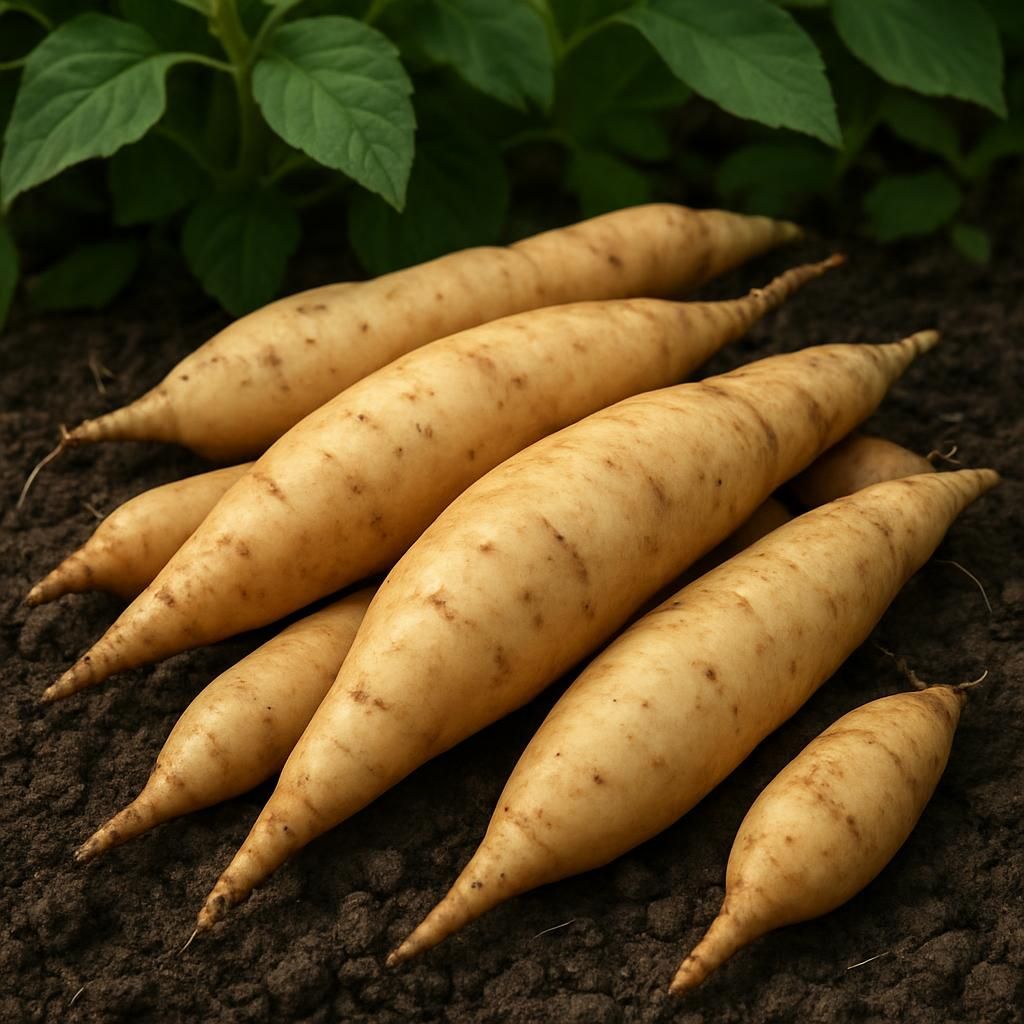
Introduction to Jerusalem Artichoke (Sunchoke - Fuseau)
Jerusalem artichoke (Helianthus tuberosus), commonly called sunchoke, is a vigorous perennial in the Asteraceae family that produces edible underground tubers. The Fuseau cultivar is distinguished by its smooth, spindle-shaped tubers that are easier to clean and process than knobby heirloom types. With yields often exceeding 5–7 kg per square meter under optimal management, Fuseau offers both culinary versatility and soil-improving benefits through extensive root systems.
This crop thrives across temperate climates and is exceptionally cold-hardy, surviving winter temperatures down to −30 °C once established. Tubers are rich in inulin, a prebiotic fiber that supports gut health, making Fuseau a valuable specialty crop for health-focused markets. Because it regrows from any overlooked tuber fragment, careful containment is essential to prevent volunteer spread.
Botanical Profile of Jerusalem Artichoke (Sunchoke - Fuseau)
Helianthus tuberosus is a herbaceous perennial reaching 1.5–3 m in height with opposite, ovate-lanceolate leaves up to 25 cm long. Fuseau plants produce multiple stems from a single crown and bear bright yellow, daisy-like flowers 5–8 cm across from late summer into autumn. The edible tubers form at the ends of stolons and vary from 7–15 cm in length with smooth, tan skin and crisp white flesh.
Fuseau’s low-knob morphology reduces soil adhesion and simplifies mechanical harvest. The plant’s extensive fibrous root network improves soil structure and sequesters carbon. Flowers provide late-season nectar for pollinators, while the dense canopy suppresses weeds once established.
Soil, pH, and Climate Requirements for Jerusalem Artichoke (Sunchoke - Fuseau)
Fuseau performs best in deep, well-drained loamy soils with high organic matter. It tolerates a wide pH range but yields peak between 6.0–7.0. The crop requires full sun (minimum 6–8 hours) and 500–700 mm of annual precipitation or equivalent irrigation.
| Parameter | Ideal Range | Notes |
|---|---|---|
| Soil Texture | Sandy loam to loam | Avoid heavy clays; improve drainage |
| Soil pH | 6.0–7.0 | Tolerates 5.5–7.5 |
| Organic Matter | 3–6 % | Incorporate compost or aged manure |
| Temperature (Growing) | 15–28 °C | Frost tolerant to −5 °C once sprouted |
| Temperature (Dormant) | −30 °C to 5 °C | Tubers survive winter soil freezing |
| Annual Rainfall | 500–700 mm | Supplement with drip irrigation if needed |
| Sunlight | Full sun (6–8+ hours) | Partial shade reduces tuber size |
Step-by-Step Planting & Propagation
- Site Selection & Preparation: Choose a location with full sun and well-drained soil. Remove perennial weeds and incorporate 5–8 cm of compost. Perform a soil test and adjust pH to 6.0–7.0 with lime if necessary.
- Tuber Selection: Use certified disease-free Fuseau tubers or divisions from healthy mother plants. Each planting piece should weigh 30–50 g and contain at least one viable bud (eye).
- Planting Window: In USDA zones 3–8, plant tubers 2–4 weeks before the last spring frost when soil temperature reaches 7–10 °C. In warmer zones, plant from late autumn through early spring.
- Spacing & Depth: Plant tubers 10–15 cm deep and 30–45 cm apart in rows 75–90 cm apart. This spacing maximizes yield while allowing mechanical cultivation.
- Initial Watering: Water thoroughly after planting to settle soil around tubers. Maintain even moisture during the first 3–4 weeks until shoots emerge.
Care & Maintenance regimes for Jerusalem Artichoke (Sunchoke - Fuseau)
Consistent moisture and moderate fertility support robust growth and high-quality tubers. Mulching conserves water, suppresses weeds, and moderates soil temperature. Minimal pruning is required, but removing flower heads in late season can redirect energy to tubers.
| Growth Stage | Watering Schedule | Fertilizer Application | Pruning / Other Tasks |
|---|---|---|---|
| Pre-emergence | Keep soil moist (15–20 mm/week) | None; rely on pre-plant compost | Weed control; maintain mulch |
| Vegetative (0–8 wk) | 25–30 mm/week | Side-dress 20-5-10 NPK at 4 weeks (30 g/m²) | Remove weeds; monitor for lodging |
| Flowering | 20–25 mm/week | Light compost tea (1:10) every 3 weeks | Optional: pinch flower buds for larger tubers |
| Tuber Bulking | 15–20 mm/week; reduce before harvest | None; avoid excess nitrogen | Cut back foliage to 30 cm 2 weeks pre-harvest |
| Post-harvest | None | Broadcast 2–3 cm compost over bed | Remove all tubers to prevent volunteers |
Pests, Diseases & Organic Management
Jerusalem artichoke is relatively pest-resistant but can be affected by aphids, slugs, and wireworms. Fungal issues such as powdery mildew and Sclerotinia stem rot may occur in humid conditions. Cultural practices—crop rotation, resistant cultivars, and sanitation—are the foundation of organic control.
- Aphids: Blast with water or apply insecticidal soap; encourage lady beetles.
- Slugs: Use beer traps and diatomaceous earth barriers.
- Powdery Mildew: Improve airflow and apply potassium bicarbonate sprays.
- Sclerotinia: Rotate with non-host crops and remove infected debris.
Harvesting, Curing & Optimal Storage
Harvest begins 110–130 days after planting when foliage yellows. Carefully dig tubers with a fork, taking care not to damage skins. Cure harvested tubers in a shaded, well-ventilated area at 15–20 °C for 1–2 days to heal minor wounds.
Store cured tubers in perforated plastic bags or crates at 0–2 °C and 85–90 % relative humidity. Properly stored Fuseau tubers remain crisp for 4–6 months. Leaving a portion of the crop in the ground allows winter harvesting in milder climates.
Companion Planting for Jerusalem Artichoke (Sunchoke - Fuseau)
Fuseau pairs well with tall, nitrogen-fixing companions that do not compete heavily for light. Suitable partners include corn, sunflower, and beans. Aromatic herbs such as thyme and rosemary help deter aphids. Avoid planting near shallow-rooted crops that may be shaded by the tall sunchoke canopy. In rotations, follow with brassicas or root vegetables to break pest cycles.
Jerusalem Artichoke benefits from the biodiversity created by mixed plantings, improving overall farm resilience and pollinator habitat.