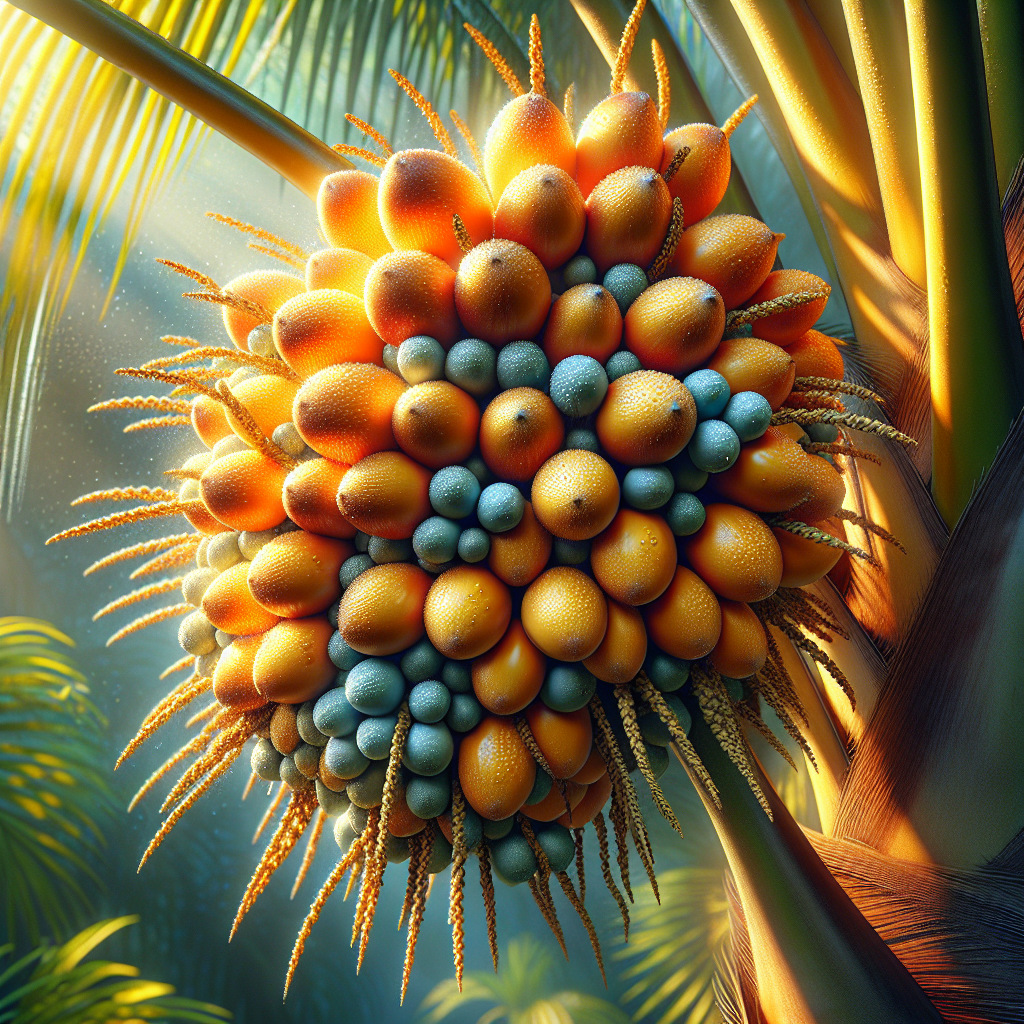
Introduction to Jelly Palm Fruit (Butia capitata)
Jelly Palm Fruit, scientifically known as Butia capitata, is a striking feather palm native to the grasslands and savannas of southern Brazil, Uruguay, and northern Argentina. Renowned for its clusters of golden-yellow fruits with a pineapple-banana flavor profile, this palm has earned its common name from the fruit's high pectin content, making it perfect for homemade jellies, jams, wines, and liqueurs. The fruits ripen in late summer to fall, providing a reliable harvest in suitable climates.
This palm's arching, blue-green fronds create a picturesque, windmill-like canopy, reaching 15-25 feet tall at maturity, with a spread of 10-15 feet. It's exceptionally hardy for a palm, surviving temperatures down to 10°F (-12°C) once established, making it suitable for USDA zones 8-11. Beyond its culinary uses, Jelly Palm serves as an excellent windbreak, privacy screen, or specimen tree in landscapes. Its drought tolerance and salt resistance make it ideal for coastal gardens and xeriscaping. Why Companion Planting Feels Like Guesswork for Small Farms - And How AI Makes It Foolproof
Home growers and small farms appreciate its low input needs—no fancy fertilizers or constant watering required. Fruits are rich in vitamin C, antioxidants, and fiber, with each bunch yielding 50-100 fruits weighing up to 1 pound total. Propagation is straightforward via seeds, and mature trees produce for decades, offering long-term value. Whether you're establishing a food forest or adding tropical flair to a temperate yard, Butia capitata delivers reliable yields with minimal fuss.
Botanical Profile of Jelly Palm Fruit (Butia capitata)
Butia capitata belongs to the Arecaceae family, a monotypic genus with pinnate, glaucous leaves up to 6-10 feet long, drooping gracefully from a stout trunk. The tree develops a fibrous, fire-resistant trunk 1-2 feet in diameter, crowned by 20-30 fronds. Male and female flowers grow on the same inflorescence—a massive, 3-4 foot yellow spike emerging from the leaf axils in spring.
Fruits are obovoid drupes, 1-1.5 inches long, turning from green to vibrant orange-yellow when ripe. Each contains a single large seed surrounded by sweet, fibrous, juicy pulp. Pollination is anemophilous (wind) or entomophilous (insects), with peak fruit set in warm, humid conditions. Growth is slow initially (1-2 feet/year) but accelerates after 5-7 years, with first fruits appearing at 5-8 years from seed.
Root system is fibrous and deep, aiding drought tolerance. Leaves have sharp spines on petioles, so gloves are essential during maintenance. In cultivation, it hybridizes with Butia odorata (Butia yatay), producing similar but larger fruits. Nutritionally, 100g of fruit provides 60 calories, 15g carbs (mostly sugars), 1g protein, and negligible fat. Pectin levels (2-4%) make it superior for gelling without added thickeners.
Soil, pH, and Climate Requirements for Jelly Palm Fruit (Butia capitata)
Jelly Palm thrives in well-drained, sandy loam or clay loam soils, tolerating poor fertility and high salinity. Avoid heavy clays prone to waterlogging, which invite root rot. Optimal pH is 6.0-7.5, though it adapts to 5.5-8.5. Amend with 20-30% organic matter (compost, pine bark) for seedlings; mature trees need none.
Full sun (6+ hours daily) is mandatory for fruit production—shade reduces yields by 50%. Climate-wise, it excels in subtropical to warm temperate zones with annual rainfall 20-50 inches, evenly distributed or supplemented by irrigation. Summer highs of 85-100°F boost fruit size; winters below 20°F damage young plants, but established trees shrug off brief freezes to 10°F.
Wind tolerance is excellent due to flexible fronds, ideal for exposed sites. Drought resistance kicks in after 2-3 years, surviving 3-6 months dry spells. High humidity (50-80%) favors flowering, but it handles arid conditions better than most palms. In marginal zones 7b, mulch heavily and protect trunks with wraps during extremes. Soil test annually for micronutrients like magnesium and iron, common deficiencies in alkaline soils.
Step-by-Step Planting & Propagation
Seed Propagation (Primary Method)
- Seed Collection/Preparation: Harvest ripe fruits in fall, extract seeds, wash off pulp to prevent fungal growth. Scarify by nicking seed coat or soaking in hot water (180°F/82°C) for 24 hours, then 3% hydrogen peroxide for sterilization.
- Germination: Sow 1-inch deep in 4-inch pots with 1:1 sand:perlite mix at 80-90°F. Use bottom heat mat; germination takes 1-6 months. Keep moist but not soggy.
- Seedling Care: Transplant to 1-gallon pots at 6-12 inches tall. Harden off over 2 weeks before outdoor planting.
Planting Out
- Site Selection: Choose full sun, sheltered from harsh winds. Dig hole 2x wider than root ball, same depth.
- Timing: Spring after last frost, soil >60°F.
- Planting: Space 15-20 feet apart. Mix native soil with 50% sand if heavy. Water deeply weekly first year.
- Transplanting Mature Palms: For nursery stock, prune dead fronds, lift with root ball intact using machinery for large specimens.
Vegetative propagation via offshoots is rare, as this species rarely pups. Grafting is experimental. Expect 70-80% germination success with fresh seeds. Banana (crop) shares similar propagation needs.
Care & Maintenance regimes for Jelly Palm Fruit (Butia capitata)
Water young palms weekly (1-2 inches), tapering to monthly after year 2. Mature trees need none except prolonged drought. Fertilize sparingly: 8-2-12 palm formula in March/June at 1 lb/tree/year, broadcast under canopy.
Prune dead, yellowing fronds annually in dry weather—never green ones, as they photosynthesize. Remove spent flower stalks post-fruiting to redirect energy. Mulch 4-6 inches deep with organic material to retain moisture and suppress weeds.
Winter protection for young trees: Wrap trunks in burlap, heap mulch around base. Monitor for nutrient deficiencies—yellowing fronds indicate potassium lack; treat with Epsom salts.
Thinning dense frond clusters improves air flow, reducing fungal risk. In containers (for patios), use 20-gallon pots minimum, repot every 3 years. Consistent yields demand cross-pollination; plant multiples. Longevity: 50-100+ years.
Pests, Diseases & Organic Management
Common pests include scale insects, mealybugs, and palm aphids. Hose off early infestations; apply neem oil (2% solution) weekly or insecticidal soap. For severe cases, horticultural oil smothers crawlers.
Diseases: Phytophthora palmivora causes bud rot in wet soils—ensure drainage, apply copper fungicide preventatively. Leaf spots from Fusarium are cosmetic; remove affected fronds.
Organic IPM: Introduce ladybugs for aphids, use Bacillus thuringiensis for caterpillars. Beneficial nematodes target root pests. Avoid overhead watering. Ganoderma butt rot affects old trees—remove infected stumps promptly. Why 90% of Small Farms Fail at Pest Management - And 8 Organic Fixes That Actually Work
Harvesting, Curing & Optimal Storage
Harvest when fruits turn fully orange-yellow and easily detach (late summer-fall). Cut entire bunches with pole pruner; yield 5-20 lbs/tree at maturity. Wear gloves—spines abound.
Process immediately: Pulp ferments quickly. For jelly, simmer fruits whole 20-30 min, strain pulp, add sugar/lemon (1:1 ratio), boil to 220°F. Yields 4-6 half-pints/quart pulp.
Fresh storage: Refrigerate 1-2 weeks in ventilated bags. Frozen pulp lasts 1 year. Dried slices (dehydrator 135°F/12 hours) store 6 months. Ferment into wine: Crush, add yeast, rack after 2 weeks. Ripe fruits ship poorly due to bruising.
Companion Planting for Jelly Palm Fruit (Butia capitata)
Pair with drought-tolerant understory like lavender, rosemary, or fig for nitrogen fixation and pest deterrence. Marigold repels nematodes; yarrow attracts pollinators. Avoid water-hungry plants like squash that compete for moisture.
Shade-tolerant clover as groundcover prevents erosion under canopy. In food forests, underplant with berries like strawberry guava. Benefits: Improved soil health, biodiversity, microclimate moderation. Space companions 5-10 feet from trunk.