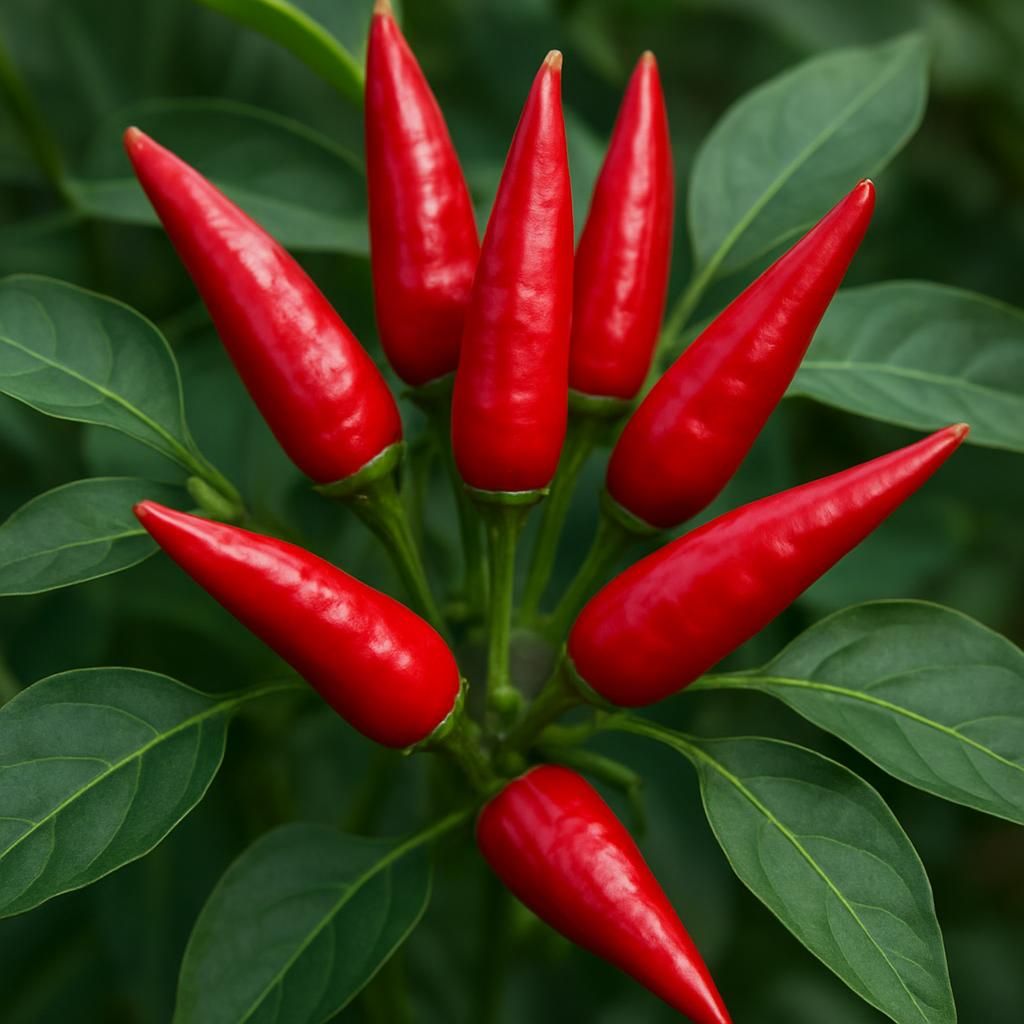
Introduction to Japones Chili
Japones Chili (Capsicum annuum 'Japones') is a compact, upright pepper variety originating from East Asia and now widely cultivated for both fresh and dried markets. The plant produces clusters of slender, pointed pods measuring 5–7 cm that turn from glossy green to deep crimson at maturity. With a Scoville heat range typically between 15,000–30,000, Japones offers reliable medium heat and excellent drying characteristics that make it a staple in commercial spice production and home gardens alike.
Commercial growers favor Japones for its uniform fruit set, relatively short growing cycle, and strong tolerance to common pepper viruses when proper sanitation is practiced. The variety also performs well in both open-field and protected-culture systems, delivering consistent yields of 1.5–2.5 kg per plant under optimal management. Because the pods dry rapidly without mold risk, Japones is frequently chosen for whole-pod, crushed, or powdered products.
Botanical Profile of Japones Chili
Japones belongs to the Solanaceae family and shares the same species as many sweet and hot peppers. The plant exhibits a determinate to semi-determinate growth habit, reaching 45–70 cm in height with a bushy canopy. Leaves are ovate-lanceolate, dark green, and slightly glossy, while stems remain sturdy enough to support heavy fruit loads without staking in most field conditions.
Flowers are small, white, and typically self-pollinating, although insect activity can improve fruit set. Each node produces 2–4 fruits that ripen sequentially over 65–80 days after transplant. The thin-walled pods contain 20–40 small, cream-colored seeds and dehydrate to a flexible yet brittle texture ideal for storage.
Soil, pH, and Climate Requirements for Japones Chili
Japones thrives in well-drained, fertile loam or sandy loam soils rich in organic matter. The crop prefers a slightly acidic to neutral pH and consistent warmth throughout the growing season.
| Parameter | Ideal Range | Notes |
|---|---|---|
| Soil Type | Loam / Sandy loam | High organic matter improves water retention |
| Soil pH | 6.0–7.0 | Avoid pH below 5.5; lime if necessary |
| Temperature (Day) | 24–30 °C | Optimal fruit set occurs in this range |
| Temperature (Night) | 16–20 °C | Below 15 °C slows growth and pollination |
| Growing Season | 90–120 frost-free days | Start indoors 6–8 weeks before last frost |
| Sunlight | Full sun (6–8+ hours) | Partial shade reduces yield and heat |
| Spacing | 45–60 cm between plants | 75–90 cm between rows for airflow |
Step-by-Step Planting & Propagation
- Start seeds indoors 6–8 weeks before the last expected frost. Sow 0.5 cm deep in sterile seed-starting mix at 24–28 °C.
- Maintain even moisture and provide 14–16 hours of supplemental light until seedlings develop 4–6 true leaves.
- Harden off transplants for 7–10 days by gradually increasing outdoor exposure.
- Transplant into prepared beds once soil temperature reaches 18 °C and night air temperatures stay above 15 °C.
- Space plants 45–60 cm apart in rows 75–90 cm wide; install drip irrigation at planting.
- Mulch immediately with 5–7 cm of organic material to suppress weeds and stabilize soil moisture.
Care & Maintenance regimes for Japones Chili
Consistent irrigation, balanced nutrition, and timely pruning maximize both yield and pod quality.
| Growth Stage | Water Schedule | Fertilizer Schedule | Pruning Schedule |
|---|---|---|---|
| Transplant–Flowering | 2–3 cm/week; keep soil evenly moist | Side-dress with 5-10-10 (N-P-K) at 2 weeks post-transplant | Remove lower leaves touching soil; pinch first flowers to promote branching |
| Flowering–Fruit Set | Maintain 2.5 cm/week; avoid overhead watering | Apply calcium nitrate or fish emulsion every 14 days | Remove suckers below first major branch; stake if lodging occurs |
| Fruit Ripening | Reduce to 1.5–2 cm/week to concentrate flavor | Cease nitrogen; apply potassium sulfate once at color change | Harvest ripe pods promptly to encourage further set |
Pests, Diseases & Organic Management
Japones is susceptible to Aphids, Spider Mites, and Thrips as well as fungal issues such as Powdery Mildew and Phytophthora. Scout weekly and deploy yellow sticky traps early. Neem oil or insecticidal soap applied at the first sign of infestation provides effective organic control. Maintain wide spacing and drip irrigation to reduce humidity-related diseases. Rotate with non-solanaceous crops every 3–4 years to break soil-borne pathogen cycles.
Harvesting, Curing & Optimal Storage
Harvest Japones pods when they reach full red color and begin to feel slightly leathery. Pick in the cool morning hours and avoid bruising. For fresh use, store at 7–10 °C with 85–90 % humidity for up to two weeks. For drying, spread pods in a single layer on screens in a well-ventilated area or dehydrator at 45–50 °C until brittle (8–12 % moisture). Store dried chilies in airtight containers away from light and heat for 12–18 months.
Companion Planting for Japones Chili
Plant Japones alongside Tomato, Basil, and Marigold to deter pests and improve pollination. Avoid planting near Fennel or other members of the Apiaceae family that may inhibit growth. Nasturtium serves as an effective trap crop for aphids while providing edible flowers.