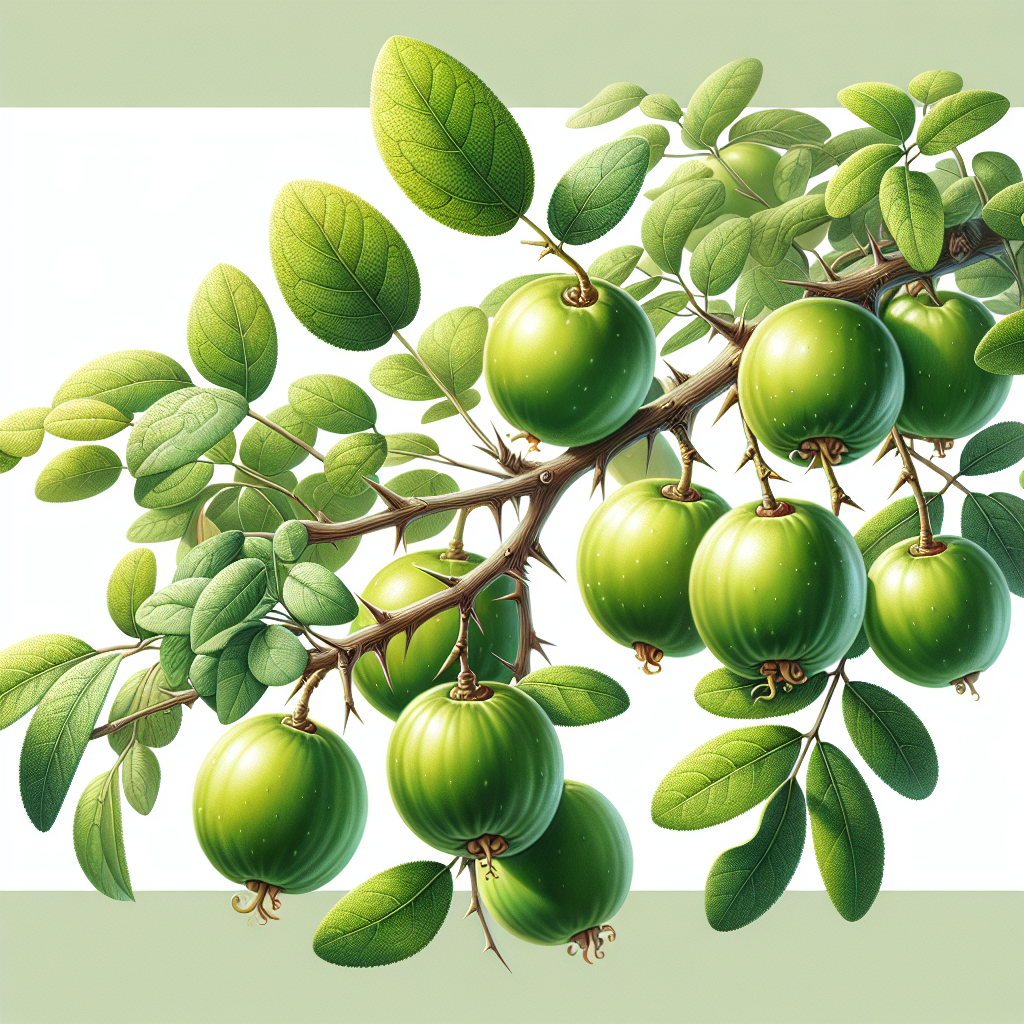
Introduction to Indian Jujube (Ber - Gola)
Indian Jujube, commonly known as Ber or Gola in India, is a powerhouse crop for farmers seeking low-maintenance, high-value fruit production. The 'Gola' cultivar stands out for its round, greenish-yellow fruits that ripen to a sweet, crisp texture reminiscent of apples, with a sugar content reaching 18-22° Brix. Native to South Asia, this tree thrives in harsh conditions where other fruits fail, making it a staple in dryland horticulture.
Ber - Gola trees are incredibly hardy, surviving temperatures from -6°C to 50°C and producing yields of 80-100 kg per mature tree annually. The fruit is rich in vitamin C (up to 76 mg/100g), iron, and antioxidants, commanding premium prices in fresh markets, dried products, and traditional sweets like chyawanprash. With proper management, trees bear fruit within 2-3 years and remain productive for 50+ years, offering exceptional return on investment for small-scale growers. This guide provides professional-grade techniques to maximize your Ber - Gola success. For more on resilient fruit trees, check out the Mango (crop) wiki.
Botanical Profile of Indian Jujube (Ber - Gola)
Scientific Classification:
- Kingdom: Plantae
- Family: Rhamnaceae
- Genus: Ziziphus
- Species: Z. mauritiana
- Cultivar: 'Gola'
Ber - Gola is a semi-deciduous to evergreen shrub or small tree growing 3-12 meters tall with a spreading canopy and thorny branches. Leaves are glossy green, ovate, 2-7 cm long, with wavy margins. Flowers are small, greenish-yellow, polygamous (hermaphroditic and male-only), borne in cymes during March-May in India.
Fruits are drupes, 2-5 cm diameter for 'Gola', round with thin, edible skin turning from green to yellow-brown at maturity. The flesh is white, juicy, and aromatic, surrounding a hard stone with 1-2 seeds. 'Gola' is parthenocarpic to some degree, setting fruit without pollination, though cross-pollination boosts yields. Root system is deep taproot with extensive laterals, conferring drought resistance. Trees enter semi-dormancy in extreme heat, dropping leaves to conserve water.
Soil, pH, and Climate Requirements for Indian Jujube (Ber - Gola)
Indian Jujube excels in marginal soils, tolerating salinity up to 8-10 dS/m, alkalinity (pH 4.5-9.6), and even waterlogged conditions briefly. Optimal soil is sandy loam or loamy sand with good drainage; heavy clays require raised beds. Test soil pH – Ber thrives at 6.5-7.5 but adapts widely. Incorporate 10-15 tons/ha FYM before planting to enhance structure.
Climate: Subtropical to tropical; rainfall 250-1200 mm ideal, but drought-tolerant to near-zero irrigation once established. Full sun essential (6-8 hours daily). Frost tolerance to -6°C for short periods; young trees need protection below 0°C. Hot winds (up to 48°C) are survived via leaf drop. For heatwave strategies, see Why Summer Heatwaves Are Silently Killing Small Farm Yields - And 7 Organic Strategies to Fight Back. Flowering triggered by dry periods post-monsoon.
Step-by-Step Planting & Propagation
Propagation Methods:
- Air-layering (Gootee): Preferred for 'Gola'. Select 2-3 year old branches (pencil-thick), girdle 5 cm, apply rooting hormone (IBA 5000 ppm), wrap with moist moss and polythene. Roots form in 40-60 days. Success rate 80-90%.
- Budding: Patch or chip budding in July-August on seedling rootstocks. Use 'Gola' scion on wild Ziziphus.
- Seeds: Sow fresh seeds in polybags; germinate in 15-20 days. Grafted trees fruit earlier.
Planting Steps:
- Site Prep: Pit 1x1x1 m, fill with FYM:soil:superphosphate (20:75:5 kg). Plant in June-July (monsoon onset).
- Spacing: High-density 5x5 m (400 trees/ha) or 6x6 m conventional.
- Planting: Dip roots in mud slurry, plant at original depth, stake. Irrigate immediately.
- Training: Single stem to 1 m, then open center. Prune annually post-harvest.
Care & Maintenance regimes for Indian Jujube (Ber - Gola)
Irrigation: Critical first 2 years (monthly 50-60 L/tree); mature trees rainfed, but drip irrigation (10-20 L/week in dry spells) doubles yield.
Fertilization: Year 1: NPK 0.5:0.25:0.25 kg/tree split 3 doses. Mature: 1-1.5 kg N, 0.5-0.75 kg P, 0.5-1 kg K/tree/year. Foliar micronutrients (ZnSO4 0.5%, Fe 0.2%) in May.
Pruning: Post-harvest remove deadwood, water sprouts, inward growth. Head back to promote bushiness. Thinning fruits at pea-size for larger ber.
Weed Control: Mulch with straw; intercrop legumes first 3 years. Basin irrigation conserves moisture.
Growth Stages: Vegetative flush post-pruning → Flowering (dry spell) → Fruit set → Marble size → Pea size (thin) → Harvest (90-120 days).
Pests, Diseases & Organic Management
Major Pests: Aphids cluster on tender shoots – neem oil 2-3 ml/L weekly. Fruit fly (Carpomya vesuviana) – bait traps with protein hydrolysate + malathion. Mealybugs – alcohol wash + predatory beetles. Bark-eating caterpillar – remove manually, install bird perches.
Diseases: Powdery mildew (Oidium spp.) – sulfur spray 0.2%. Anthracnose – copper oxychloride pre-monsoon. Root rot (Phytophthora) in waterlogged soils – improve drainage, Trichoderma drench.
Organic IPM: Yellow sticky traps for flies, neem seed kernel extract 5%, release Chrysoperla carnea. For detailed strategies, see Why 90% of Small Farms Fail at Pest Management - And 8 Organic Fixes That Actually Work. Monitor weekly; prune for airflow.
Harvesting, Curing & Optimal Storage
Harvest at color break (green to yellow) for fresh market; physiological maturity (full yellow-brown, soft) for drying. Yield peaks years 8-15. Pick by clipping stalk with secateurs; 3-4 pickings over 4-6 weeks.
Curing: Spread fruits 2-3 days in shade to reduce moisture, enhance sweetness. For drying: fumigate with SO2 (750 ppm 30 min), sun-dry 3-5 days to 20% moisture.
Storage: Fresh: 10-15°C, 85-90% RH, 3-4 weeks. Dried: cool dry place, 6-12 months. Controlled atmosphere (3% O2, 5% CO2) extends fresh life to 8 weeks. Market as fresh, dried ber, powder, or pickle.
Companion Planting for Indian Jujube (Ber - Gola)
Ber's thorny canopy provides shade and windbreak. Intercrop first 3-4 years with Onion, Garlic, legumes for nitrogen fixation and revenue. Nitrogen-fixers like Clover or Pigeon pea enhance soil. Repel pests with Marigold, Thyme. Avoid water-hungry crops like Watermelon. Multi-tier: groundnut/ginger understory, Ber canopy. This boosts biodiversity and yields 20-30%.