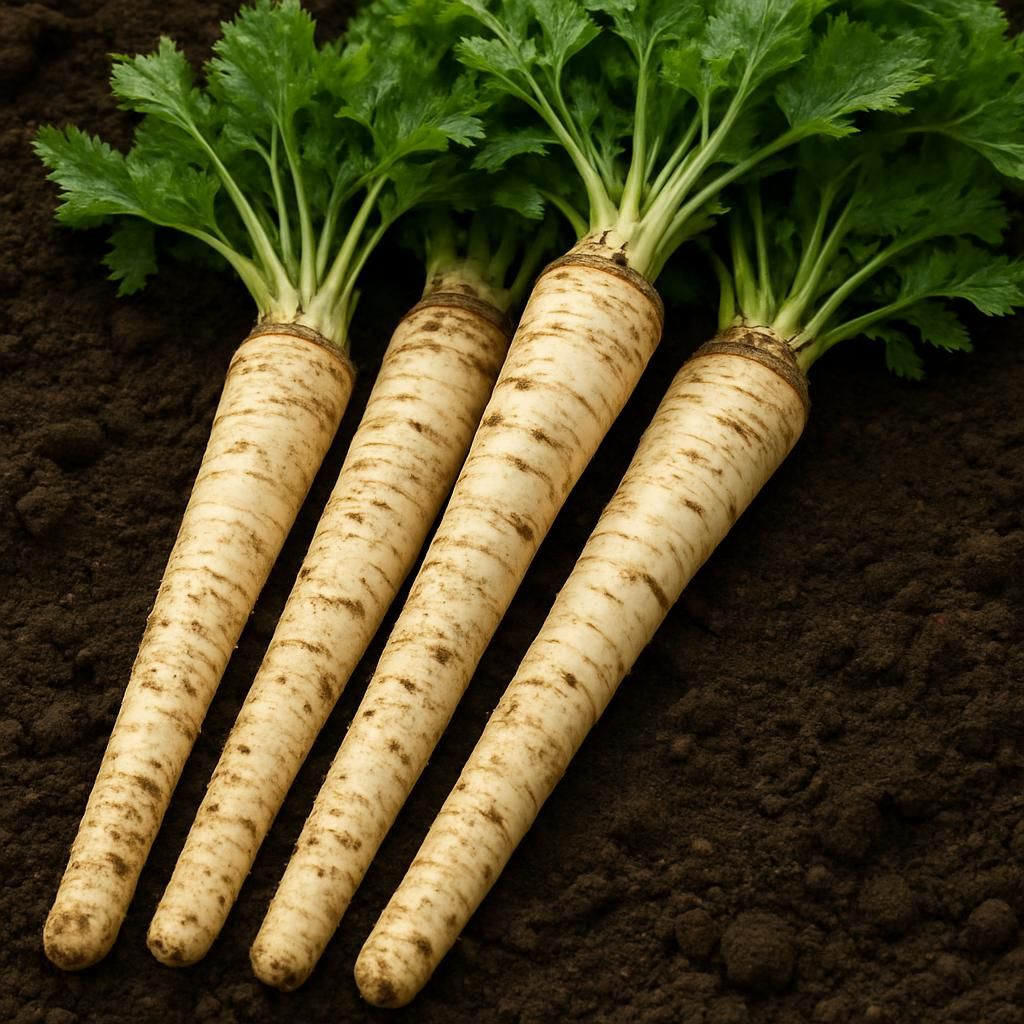
Introduction to Horseradish (Maliner Kren)
Horseradish (Maliner Kren) is a specialty perennial root crop belonging to the Brassicaceae family. Known for its exceptionally straight, thick roots and powerful flavor, this cultivar is favored by commercial growers and serious home gardeners. The roots are harvested in autumn, processed into fresh grated condiment or preserved products, and valued for both culinary and medicinal applications. Maliner Kren is particularly suited to temperate climates with cold winters, where the plant develops superior root quality.
The crop is propagated vegetatively from root cuttings rather than seed. Once established, horseradish forms a deep taproot system that stores carbohydrates and produces the characteristic sinus-clearing compounds. Because the plant is perennial, proper site selection and long-term soil management are essential for sustained productivity.
Botanical Profile of Horseradish (Maliner Kren)
Armoracia rusticana 'Maliner Kren' is a hardy herbaceous perennial that grows 60–90 cm tall with large, coarse, dark-green leaves. The plant produces a thick, fleshy taproot that can reach 30–60 cm in length and 3–6 cm in diameter under optimal conditions. The roots contain high levels of sinigrin, which hydrolyzes into allyl isothiocyanate, giving horseradish its distinctive pungency.
Flowering is rare in cultivated plants, and seed production is minimal; therefore, vegetative propagation is the standard method. The cultivar is noted for uniform root shape, minimal forking, and strong disease resistance compared with standard horseradish types.
Soil, pH, and Climate Requirements for Horseradish (Maliner Kren)
Horseradish thrives in deep, fertile, well-drained soils with high organic matter. The crop performs best in loamy or sandy loam textures that allow straight root development without compaction. Heavy clay soils should be amended with organic matter or raised beds to improve drainage and root quality.
| Parameter | Ideal Range | Notes |
|---|---|---|
| Soil pH | 6.0–7.0 | Slightly acidic to neutral; avoid alkaline soils |
| Soil Texture | Loam to sandy loam | Deep, friable soil prevents root forking |
| Organic Matter | 3–5% | Improves moisture retention and fertility |
| Temperature Range | 15–24 °C (day); 5–10 °C (night) | Cool-season crop; tolerates light frost |
| USDA Hardiness Zones | 3–8 | Requires winter chilling for best flavor |
| Spacing | 30–45 cm between plants; 60–90 cm between rows | Allows root expansion and cultivation |
Step-by-Step Planting & Propagation
- Select disease-free root cuttings (sets) 20–30 cm long and 1–2 cm thick from the previous season’s harvest.
- Prepare the planting site by incorporating 5–8 cm of well-rotted compost or aged manure into the top 30 cm of soil.
- Plant root cuttings vertically or at a slight angle in early spring (soil temperature above 7 °C) or late autumn in mild climates.
- Position the thicker end of the cutting upward, covering with 5–8 cm of soil.
- Space plants 30–45 cm apart within rows and 60–90 cm between rows to accommodate root growth.
- Water thoroughly after planting and apply a 5 cm layer of organic mulch to suppress weeds and conserve moisture.
Care & Maintenance regimes for Horseradish (Maliner Kren)
Consistent moisture and fertility management are critical during the active growing season. Avoid over-fertilization, which can cause excessive foliage at the expense of root development. Weed control is essential, especially during the first 8–10 weeks after planting.
| Task | Schedule | Details |
|---|---|---|
| Watering | Weekly during active growth | Provide 2.5–4 cm of water; maintain even moisture without waterlogging |
| Fertilizer | Early spring & mid-summer | Apply balanced organic fertilizer (e.g., 5-5-5) at 500–700 kg/ha; side-dress with compost tea at 4–6 weeks |
| Pruning/Thinning | Late spring | Remove flower stalks to direct energy into roots; thin excess shoots to 2–3 per plant |
Pests, Diseases & Organic Management
Horseradish is relatively pest-resistant but can be affected by aphids, flea beetles, and cabbage loopers. Root-knot nematodes may become problematic in sandy soils with poor rotation. Fungal issues such as Alternaria leaf spot and white mold can occur under prolonged wet conditions.
Organic management begins with crop rotation on a 3–4 year cycle and the use of disease-free planting stock. Row covers protect young plants from flea beetles. Beneficial insects such as lady beetles and lacewings help control aphids. For fungal leaf spots, apply copper-based fungicides or neem oil at the first sign of symptoms, ensuring thorough coverage of lower leaves.
Harvesting, Curing & Optimal Storage
Harvest roots in late autumn after the first hard frost, when foliage begins to yellow. Use a garden fork to loosen soil around the plant, then lift roots carefully to avoid breakage. Select straight, thick roots for market or processing; smaller roots can be saved as sets for the next season.
Curing involves washing roots gently and allowing them to air-dry for 24–48 hours in a shaded, well-ventilated area. Store cured roots in perforated plastic bags or damp sand at 0–4 °C with 90–95% relative humidity. Properly stored roots remain viable for 6–9 months. For fresh condiment, grate roots immediately before use or preserve in vinegar.
Companion Planting for Horseradish (Maliner Kren)
Horseradish is an effective companion for many brassica crops because its pungent roots help deter certain soil-borne pests. It pairs well with potato, cabbage, and beet. Avoid planting near other deep-rooted crops that may compete for space. The plant also serves as a beneficial border crop that can reduce pest pressure on adjacent vegetable beds.
Potato benefits from horseradish’s pest-repellent properties, while cabbage and beet grow compatibly in the same cool-season window. For more on strategic pairings, see Summer Companion Planting: 10 Organic Pairings to Boost Small Farm Resilience.