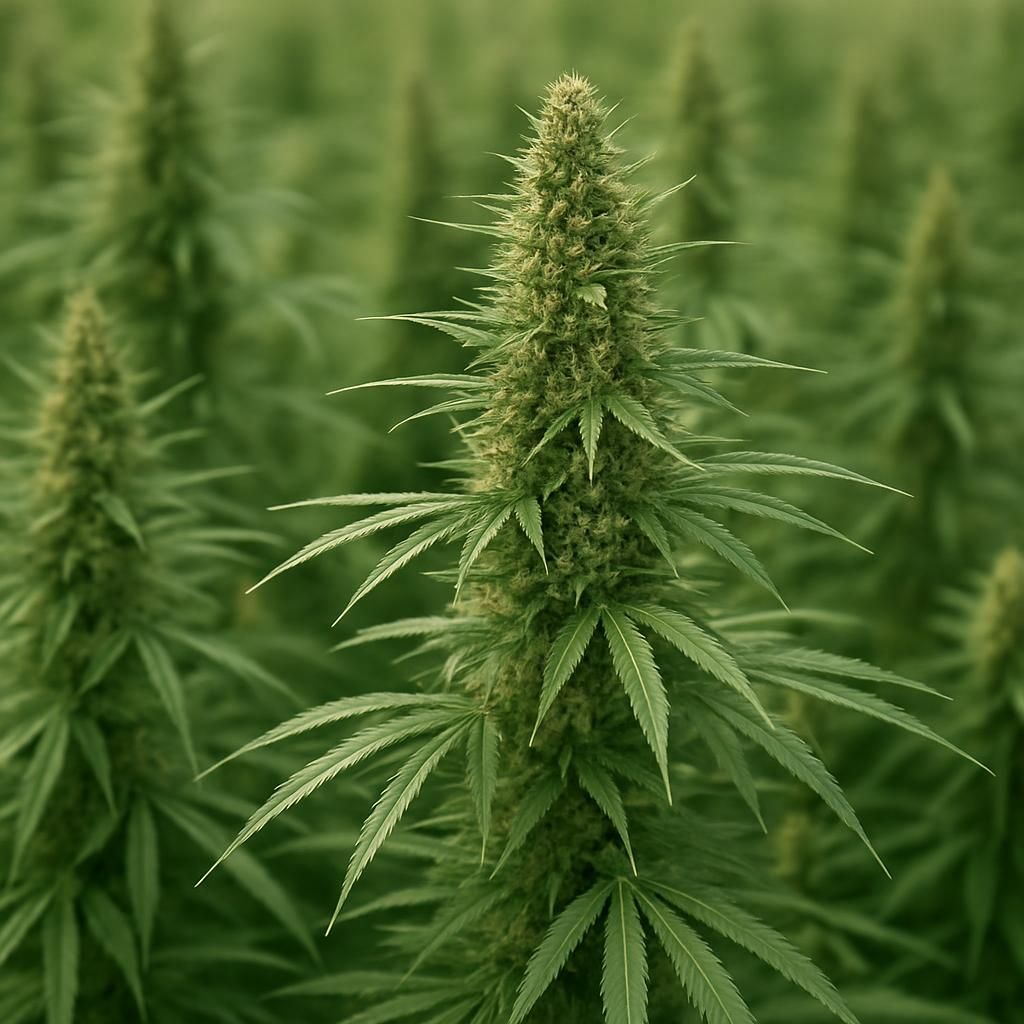
Introduction to Hemp Seed (Finola)
Finola is a compact, early-maturing industrial hemp cultivar developed specifically for seed production in northern latitudes. Bred in Finland, it combines rapid flowering with reliable seed set even under marginal day-length conditions, making it one of the most dependable varieties for short-season regions. Growers value Finola for its high seed yield, balanced omega fatty acid content, and relatively low THC levels that keep it compliant with industrial hemp regulations.
Beyond seed, Finola produces moderate fiber biomass suitable for textiles, paper, or bedding. Its short stature (usually 1.2–1.8 m) reduces lodging risk and simplifies mechanical harvest. Because the variety finishes quickly, it fits well into double-cropping systems or as a break crop in cereal rotations. Sustainable management emphasizes soil health, precise nutrient timing, and integrated pest management to protect both yield and oil quality.
Botanical Profile of Hemp Seed (Finola)
Finola belongs to the species Hemp (Cannabis sativa L.) and is classified as a dioecious annual. Female plants produce dense clusters of seed-bearing flowers while male plants supply pollen. The cultivar was selected for uniform flowering and high female-to-male ratios that maximize seed set. Leaves are palmate with 5–9 serrated leaflets, and stems are hollow with a high bast-to-hurds ratio.
Seed size averages 3–4 mm with a thin hull that facilitates oil extraction. The oil contains roughly 80 % polyunsaturated fats, dominated by linoleic and alpha-linolenic acids in an optimal 3:1 ratio. Protein content reaches 25 % on a dry-matter basis, making the seed a valuable human and animal feed ingredient. Finola’s short internodes and early senescence allow harvest before autumn rains degrade seed quality.
Soil, pH, and Climate Requirements for Hemp Seed (Finola)
Finola performs best on well-drained, fertile loams with good water-holding capacity. Avoid compacted or waterlogged soils that restrict root development and increase disease pressure. The crop tolerates a wide pH range but yields peak between 6.0 and 7.5. In cooler climates, choose south-facing fields with good air drainage to accelerate spring warm-up.
| Parameter | Ideal Range | Notes |
|---|---|---|
| Soil Type | Loam to sandy loam | Avoid heavy clays without drainage |
| Soil pH | 6.0–7.5 | Lime if below 5.8 |
| Organic Matter | 3–6 % | Maintain with cover crops and compost |
| Temperature (Day) | 18–28 °C | Growth slows below 12 °C |
| Temperature (Night) | 10–16 °C | Frost below –2 °C damages seedlings |
| Annual Rainfall | 400–700 mm | Supplemental irrigation in dry spells |
| Growing Degree Days | 1 200–1 600 GDD (base 10 °C) | Typical for 90–110 day maturity |
Step-by-Step Planting & Propagation
- Soil testing and amendment should occur in the preceding autumn. Apply lime and balanced organic matter based on lab results.
- In early spring, perform a shallow cultivation to create a fine, firm seedbed. Avoid deep tillage that brings weed seeds to the surface.
- Sow certified Finola seed at 25–30 kg/ha when soil temperature reaches a consistent 10 °C. Row spacing of 15–20 cm promotes rapid canopy closure and weed suppression.
- Plant depth should be 1.5–2.5 cm. Shallower placement risks desiccation; deeper placement delays emergence.
- Roll the field after seeding to improve seed-to-soil contact and moisture retention.
- If using transplants for research plots, start seedlings indoors four weeks before last frost and harden off for seven days prior to field setting.
Care & Maintenance regimes for Hemp Seed (Finola)
Finola requires modest but timely inputs. Nitrogen demand peaks during vegetative growth, while potassium supports seed fill and disease resistance. Maintain consistent moisture during flowering to prevent flower abortion. Scout weekly for Aphids and Spider Mites once canopy closes.
| Growth Stage | Irrigation Schedule | Fertilizer (N-P-K kg/ha) | Pruning / Other Operations |
|---|---|---|---|
| Pre-plant | None | 40-30-60 broadcast incorporated | Soil incorporation of cover crop |
| Emergence–30 cm | 15 mm every 7–10 days if dry | 30-0-20 sidedress at 20 cm height | Scout for weeds and early pests |
| Flowering | 20 mm weekly if rainfall <10 mm | 10-0-30 at early bloom | Avoid traffic to limit compaction |
| Seed fill | Maintain even moisture | None additional | Monitor for lodging |
| Pre-harvest | Withhold 10–14 days before cutting | None | Desiccate only if necessary |
Pests, Diseases & Organic Management
Common insect pests include Aphids, Spider Mites, and flea beetles during early growth. Beneficial insects such as lady beetles and lacewings provide effective biological control when habitat is preserved. Fungal risks rise in cool, wet seasons; Pythium and Fusarium can cause damping-off in poorly drained soils.
Preventive strategies include certified seed, crop rotation with non-hosts such as Wheat or Corn, and maintaining 30 % soil organic matter. Neem oil or insecticidal soaps offer targeted knockdown without harming beneficials. Copper-based fungicides are rarely needed but may be applied at first sign of leaf spot if weather remains wet.
Harvesting, Curing & Optimal Storage
Harvest when 70–80 % of seeds have turned gray-brown and bracts begin to senesce. Use a combine with a tight concave setting and low cylinder speed to minimize seed damage. Target moisture at 12–14 % for safe storage; field drying may be required in humid regions.
Immediately after harvest, aerate seed to 10–12 % moisture using ambient air below 15 °C. Store in sealed bins or totes at 5–10 °C and <60 % relative humidity. Under these conditions, seed viability remains above 85 % for 18 months. Protect from rodents and maintain darkness to preserve oil quality.
Companion Planting for Hemp Seed (Finola)
Finola benefits from strategic companions that improve soil fertility, attract beneficial insects, or repel pests. Clover fixes nitrogen and provides living mulch that suppresses weeds. Marigold and Nasturtium deter aphids and nematodes when interplanted in border rows. Avoid tall companions such as Sunflower that shade the short hemp canopy. After harvest, sow a winter cover of Hairy vetch or Winter Rye to protect soil and add organic matter for the next season.