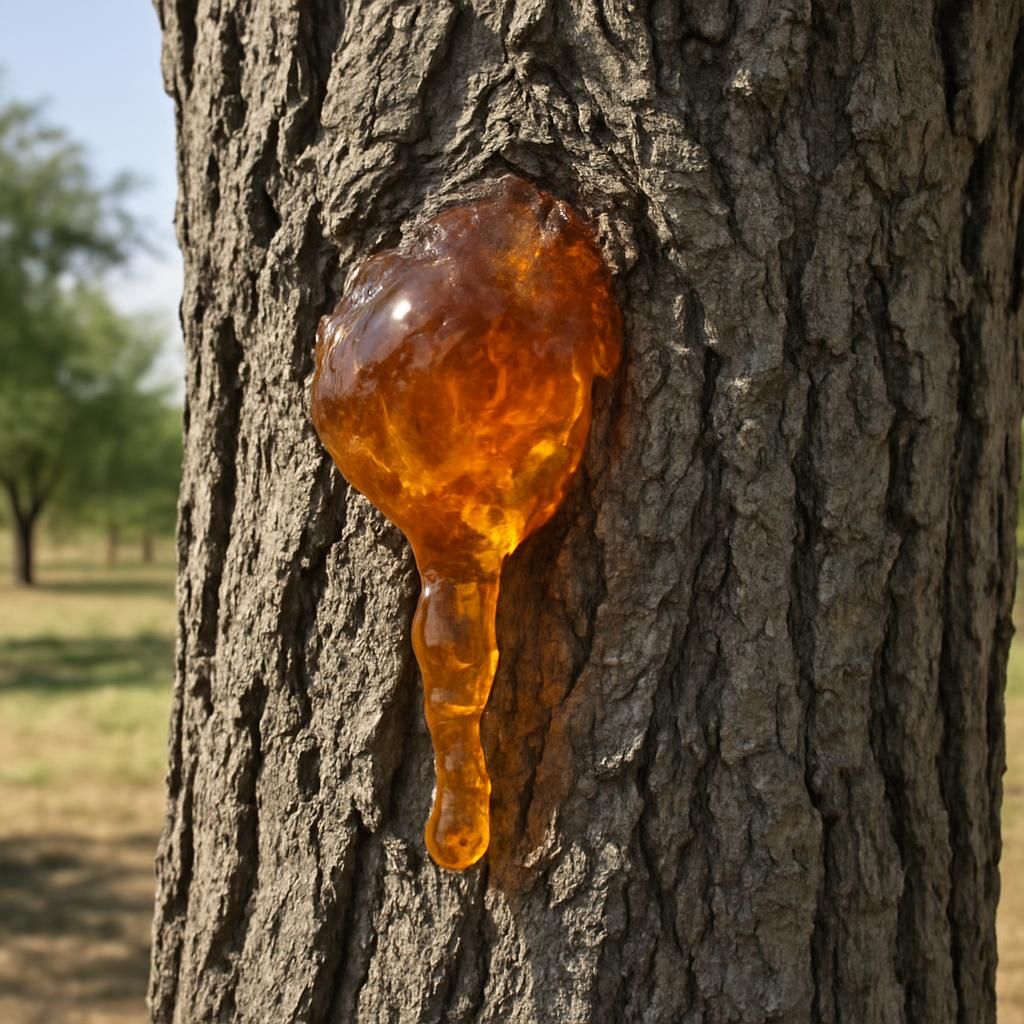
Introduction to Gum Arabic
Gum Arabic, also known as acacia gum, is a natural polysaccharide exuded from the bark of Senegalia senegal. This resilient tree has been harvested for centuries across the African Sahel for its versatile gum used as an emulsifier, stabilizer, and thickener. Commercial production remains concentrated in Sudan, Chad, and Nigeria where smallholder farmers rely on the crop for income during the long dry season. Its exceptional drought tolerance makes it an important species for agroforestry systems in arid and semi-arid zones.
Botanical Profile of Gum Arabic
Senegalia senegal is a small to medium-sized deciduous tree reaching 5–12 meters in height with a spreading crown and rough grey-brown bark. The species produces straight or slightly curved thorns in pairs and bipinnate leaves with 3–6 pairs of pinnae. Small, fragrant, cream-colored flowers appear in axillary spikes, followed by flat, papery pods containing 3–6 seeds. The tree exudes a clear to amber-colored gum when stressed by wounding or drought; this exudate is the commercial product known as Gum Arabic. The species is nitrogen-fixing and forms symbiotic relationships with rhizobia, improving soil fertility in marginal landscapes.
Soil, pH, and Climate Requirements for Gum Arabic
Gum Arabic trees perform best on well-drained sandy or loamy soils with low fertility. They tolerate alkaline conditions and can grow on sites where other crops fail. The following table summarizes ideal growing conditions:
| Parameter | Ideal Range | Notes |
|---|---|---|
| Soil Type | Sandy loam to loamy sand | Excellent drainage essential |
| Soil pH | 6.5–8.5 | Tolerates mild alkalinity |
| Temperature | 25–40 °C daytime | Survives brief frosts down to −5 °C |
| Annual Rainfall | 200–800 mm | Highly drought tolerant once established |
| Altitude | 0–1,500 m | Prefers lowland savanna |
| Sunlight | Full sun (minimum 6 hours) | Shading reduces gum yield |
Step-by-Step Planting & Propagation
- Site Selection: Choose open, well-drained land free of waterlogging. Clear competing vegetation and incorporate organic matter if available.
- Seed Preparation: Soak clean, mature seeds in hot water (80 °C) for 24 hours or scarify mechanically to break dormancy.
- Nursery Phase: Sow seeds 1–2 cm deep in polybags or raised beds. Germination occurs in 7–14 days. Seedlings are ready for transplanting at 30–45 cm height (4–6 months).
- Field Planting: Dig pits 60 × 60 × 60 cm spaced 4 × 4 m or 5 × 5 m. Mix topsoil with well-rotted manure. Plant at the onset of rains.
- Direct Seeding Alternative: In high-rainfall zones, direct sow 3–4 seeds per pit and thin to one vigorous seedling after establishment.
- Protection: Install tree guards against browsing livestock during the first two seasons.
Care & Maintenance regimes for Gum Arabic
Young trees require careful attention during the first three years. The following table outlines recommended water, fertilizer, and pruning schedules:
| Year | Watering | Fertilizer (per tree) | Pruning Schedule |
|---|---|---|---|
| 1 | 10 L/week for first 8 weeks | 50 g NPK 15-15-15 at planting | Formative pruning at 6 months |
| 2 | Supplemental during dry spells | 100 g compost or 25 g urea split | Remove lower branches to 1 m |
| 3+ | None required after establishment | 200 g organic manure annually | Light thinning every 2–3 years |
Mulch with crop residues or grass to conserve moisture and suppress weeds. Inter-row cultivation should be shallow to avoid root damage.
Pests, Diseases & Organic Management
Gum Arabic faces relatively few serious threats. Common issues include Aphids, termite attack on young seedlings, and occasional leaf spot diseases. Monitor for scale insects and mealybugs during flowering. Organic controls include neem-based sprays, introduction of predatory lady beetles, and maintaining tree vigor through proper spacing and nutrition. Termite barriers of crushed stone or ash around the base provide effective protection without chemicals.
Harvesting, Curing & Optimal Storage
Commercial tapping begins when trees reach 5–7 years of age. Using a specialized axe, make shallow incisions on the trunk during the dry season (October–March). Gum exudes over 3–6 weeks and is collected every 7–10 days. Fresh gum is sorted by color and size, then sun-dried on clean mats for 4–7 days until moisture content falls below 12 %. Store in jute or woven polypropylene bags in a cool, dry warehouse (below 25 °C, <65 % RH) away from direct sunlight. Properly cured gum maintains quality for 2–3 years.
Companion Planting for Gum Arabic
Gum Arabic integrates well into agroforestry systems. Compatible companions include drought-tolerant legumes such as pigeon pea and sesame that improve soil nitrogen and provide additional cash crops. Gliricidia planted on field borders supplies mulch and live fencing while marigold rows deter nematodes. Avoid planting near shallow-rooted annuals that compete for surface moisture during establishment. Intercropping with sorghum or millet in wide alleys is common in the Sahel and enhances overall system resilience.
For further reading on seasonal resilience strategies, see The Truth About Weather Patterns and Small Farm Resilience.