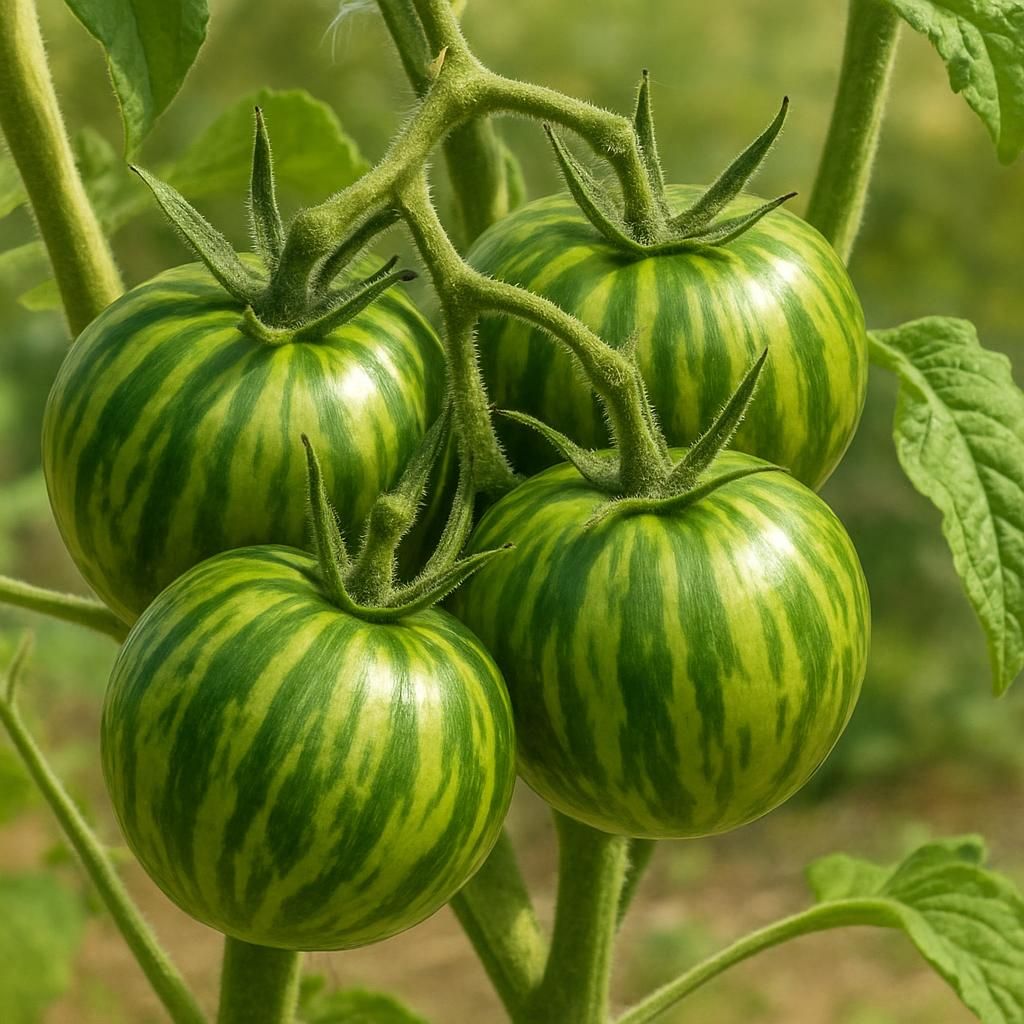
Introduction to Green Zebra Tomato
Green Zebra Tomato is an open-pollinated heirloom variety that delivers both visual appeal and complex flavor. Developed in the early 1980s by breeder Tom Wagner, the fruit features alternating dark- and light-green stripes that turn golden-yellow when fully ripe. Its balanced acidity and high sugar content make it a favorite for fresh eating, salsas, and gourmet presentations. Because it sets fruit reliably in a wide range of climates, Green Zebra has become a staple in market gardens seeking distinctive produce.
Botanical Profile of Green Zebra Tomato
Green Zebra belongs to the nightshade family (Solanaceae) and exhibits a compact, bushy growth habit with moderate foliage density. The plant produces clusters of 2–4 oz fruits that ripen from solid green to a striped pattern. Unlike many green-when-ripe varieties, the stripes intensify and the shoulders soften slightly at peak maturity, signaling optimal flavor. The variety shows moderate resistance to cracking and stores better than most heirlooms once harvested.
Soil, pH, and Climate Requirements for Green Zebra Tomato
Green Zebra thrives in well-drained, fertile loam enriched with organic matter. Consistent moisture and full sun are essential for uniform fruit development and disease prevention.
| Parameter | Ideal Range | Notes |
|---|---|---|
| Soil Type | Sandy loam to loam | High organic matter improves drainage |
| pH | 6.2–6.8 | Slightly acidic; test and amend annually |
| Temperature (Day) | 70–85 °F (21–29 °C) | Optimal fruit set; avoid >95 °F |
| Temperature (Night) | 60–70 °F (15–21 °C) | Prevents blossom drop |
| Sunlight | 8+ hours direct sun | Full exposure maximizes sugars |
| Spacing | 18–24 in (45–60 cm) between plants | Rows 36–48 in (90–120 cm) apart |
| Soil Temperature | 60 °F (15 °C) minimum at planting | Use black plastic or row cover to warm |
Step-by-Step Planting & Propagation
- Start seeds indoors 6–8 weeks before the last frost date. Sow ¼ inch deep in sterile seed-starting mix.
- Maintain 75–80 °F (24–27 °C) soil temperature until germination (7–10 days).
- Provide 14–16 hours of supplemental light; transplant seedlings when they reach 3–4 inches and have two true leaves.
- Harden off plants for 7–10 days, gradually increasing outdoor exposure.
- Transplant outdoors after all danger of frost has passed and soil temperature reaches 60 °F. Set plants slightly deeper than the original soil line to encourage adventitious roots.
- Install stakes or cages at transplanting to support future fruit load.
Care & Maintenance regimes for Green Zebra Tomato
Consistent irrigation, balanced nutrition, and timely pruning keep plants productive and disease-free.
| Task | Schedule | Details |
|---|---|---|
| Water | 1–1.5 in/week; deep soak 2–3× wk | Early morning preferred; mulch to retain moisture |
| Fertilizer | Transplant: balanced 10-10-10 | Side-dress with compost tea or fish emulsion at flowering and fruit set |
| Pruning | Weekly from week 4 onward | Remove suckers below first flower cluster; maintain 2–3 main stems |
| Mulch | Immediately after transplant | 2–3 in organic mulch (straw, shredded leaves) reduces weeds & evaporation |
| Support | At transplant & again at 24 in | Stake or cage; tie gently with soft twine |
Pests, Diseases & Organic Management
Common threats include Aphids, Hornworms, Spider Mites, and fungal issues such as Early Blight and Septoria Leaf Spot. Scout weekly and employ integrated strategies.
- Cultural: Rotate tomatoes every 3–4 years; remove crop debris at season end.
- Mechanical: Handpick hornworms; use yellow sticky traps for aphids and whiteflies.
- Biological: Release lady beetles and lacewings; apply Bt for caterpillars.
- Organic sprays: Neem oil or insecticidal soap for soft-bodied insects; copper or Bacillus subtilis products for bacterial and fungal spots.
Harvesting, Curing & Optimal Storage
Harvest when stripes turn bright yellow-green and fruit yields slightly to gentle pressure. Pick in the cool morning hours to reduce field heat. For short-term storage (up to 7 days), keep at 55–60 °F (13–16 °C) with 85–90 % humidity. Green Zebra tolerates light ripening off the vine; place stem-up on a counter away from direct sun. Avoid refrigeration below 50 °F, which causes flavor loss and mealy texture.
Companion Planting for Green Zebra Tomato
Pair Green Zebra with aromatic herbs and flowers that deter pests and improve soil health. Basil planted nearby repels aphids and enhances flavor perception. Marigold and Nasturtium provide nectar for beneficial insects while masking tomato scent from pests. Avoid planting near Fennel or walnuts, which inhibit tomato growth. Rotate with legumes such as Peas or Beans to replenish nitrogen and break disease cycles.