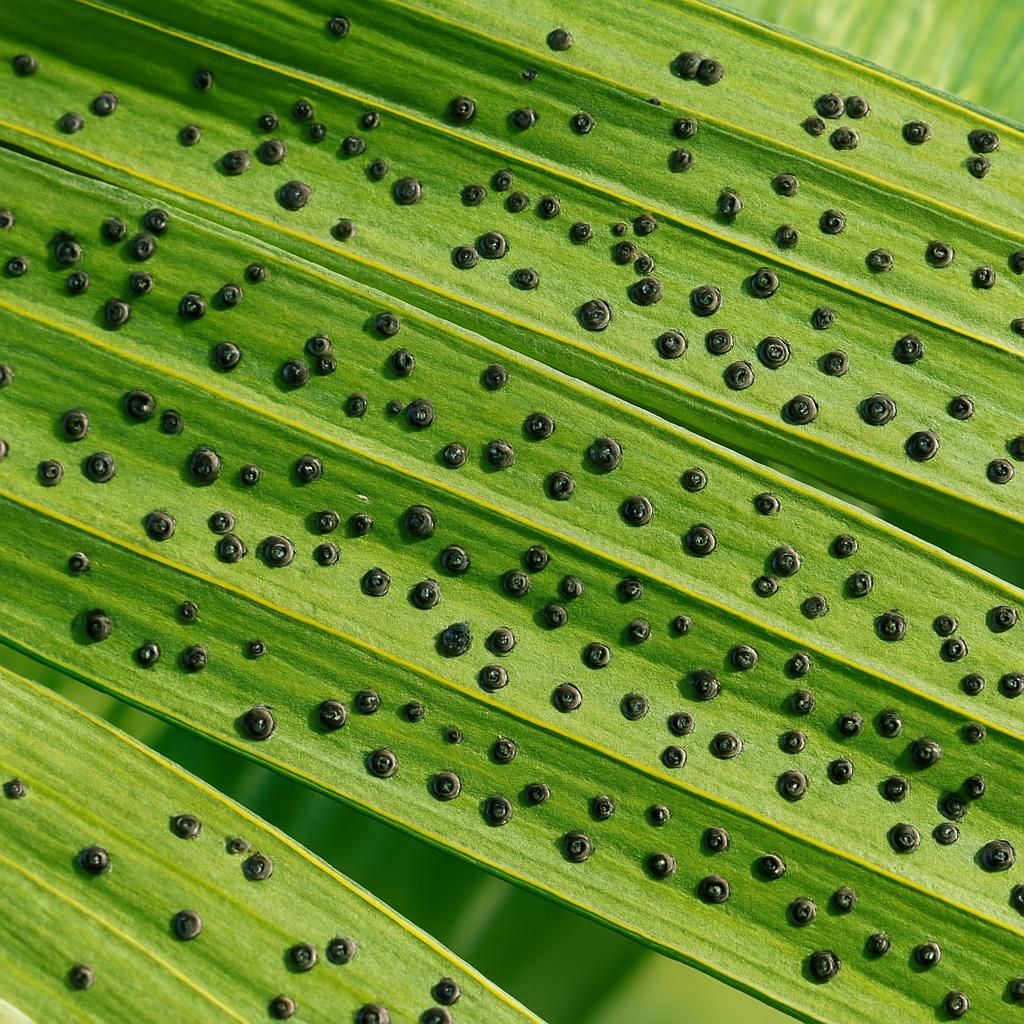
Introduction to Graphiola leaf spot
Graphiola leaf spot, caused by the fungus Graphiola phoenicis, is a common disease of palms worldwide. It manifests as small, black, raised pustules on the upper and lower surfaces of fronds, often giving leaves a sooty or speckled appearance. While rarely fatal, heavy infections reduce photosynthetic capacity, weaken palms, and diminish ornamental value in landscapes and commercial plantings.
The disease is especially problematic in tropical and subtropical regions where palms are grown for landscaping, date production, or ornamental trade. Early recognition and integrated management are essential to limit spread and maintain plant vigor.
Identifying Symptoms & Damage
Initial symptoms appear as tiny, pinhead-sized yellow spots on both leaf surfaces. These spots enlarge and develop into raised, black, crust-like fruiting bodies (sori) that contain masses of spores. Infected fronds may yellow prematurely, and severe infections can cause extensive necrosis along leaflet margins.
Damage is primarily cosmetic and physiological. Reduced photosynthesis leads to slower growth and lower fruit yield in date palms. In landscape settings, heavily spotted fronds become unsightly and may require removal, increasing maintenance costs.
Lifecycle and Progression of Graphiola leaf spot
The pathogen completes its lifecycle on living palm tissue. Spores are released from mature sori during wet weather and dispersed by wind or rain splash. Under favorable conditions, spores germinate and penetrate leaf surfaces, establishing new infections within 7–14 days.
| Lifecycle Stage | Description | Duration | Key Conditions |
|---|---|---|---|
| Spore Dispersal | Black sori rupture, releasing powdery spores | Hours to days after rain | High humidity, wind, or splashing water |
| Germination & Penetration | Spores land on leaf, germinate, and enter stomata or wounds | 7–14 days | 25–32 °C, free moisture on leaf |
| Colonization | Mycelium grows intercellularly, forming new sori | 3–6 weeks | Warm, humid microclimate |
| Sori Maturation | Raised black fruiting bodies develop and darken | 4–8 weeks | Persistent leaf wetness |
| Overwintering | Fungus survives in sori on living or recently shed fronds | Months | Mild winters, infected debris |
Environmental Triggers & Risk Factors
Graphiola leaf spot is favored by warm temperatures (25–35 °C) and prolonged leaf wetness. Overhead irrigation, high planting density, and poor air circulation increase humidity around fronds and promote infection. Palms stressed by nutrient deficiency, drought, or root damage are more susceptible.
| Factor | Optimal Range for Disease | Management Implication |
|---|---|---|
| Temperature | 25–35 °C | Avoid planting susceptible palms in hottest, most humid microclimates |
| Relative Humidity | >80 % for extended periods | Improve spacing and airflow; use drip irrigation |
| Leaf Wetness | >6 hours daily | Time irrigation for early morning; avoid evening watering |
| Soil pH | 6.0–7.5 (neutral) | Maintain balanced fertility to reduce stress |
| Planting Density | >2 m between palms | Thin stands to promote drying |
Organic Control & Treatment Plans
Organic management emphasizes sanitation and cultural practices. Remove and destroy heavily infected fronds to reduce inoculum. Apply approved organic fungicides such as neem oil, copper-based products, or Bacillus subtilis formulations at the first sign of disease.
| Treatment Option | Active Ingredient / Product | Application Frequency | Notes |
|---|---|---|---|
| Copper Hydroxide | Organic copper fungicide | Every 14–21 days during wet season | Rotate with other products to avoid resistance |
| Neem Oil | Azadirachtin 0.5–1 % | Every 7–14 days | Apply thoroughly to both leaf surfaces; avoid midday heat |
| Bacillus subtilis | Commercial biofungicide | Every 7–10 days | Preventive sprays during humid periods |
| Horticultural Oil | 1–2 % summer oil | Every 14 days | Improves coverage and reduces spore viability |
| Sanitation | Manual removal of infected fronds | As needed, at least monthly | Bag and dispose of debris away from palms |
Preventing Graphiola leaf spot in the Future
Prevention begins with selecting disease-free planting material and resistant palm varieties where available. Space palms adequately, prune lower fronds to improve airflow, and irrigate at the base rather than overhead. Maintain balanced nutrition, especially potassium and micronutrients, to support plant defenses.
Monitor new growth regularly during warm, wet months. Early detection allows timely sanitation and reduces the need for repeated fungicide applications. Mulching around the base helps conserve soil moisture without wetting foliage.
Crops Most Affected by Graphiola leaf spot
Graphiola leaf spot primarily affects palms, with date palm (Phoenix dactylifera), Canary Island date palm, and various ornamental species being most susceptible. While not a major disease of annual crops, similar leaf-spot symptoms can appear on Banana and Coconut in mixed plantings. In regions where palms are intercropped with Mango or Papaya, spores may occasionally splash onto nearby foliage, though true infection is rare.
For more information on integrated palm care, see the guide Stop Treating Tomato Blight Like a Spray Problem: Here Is What Works Better.