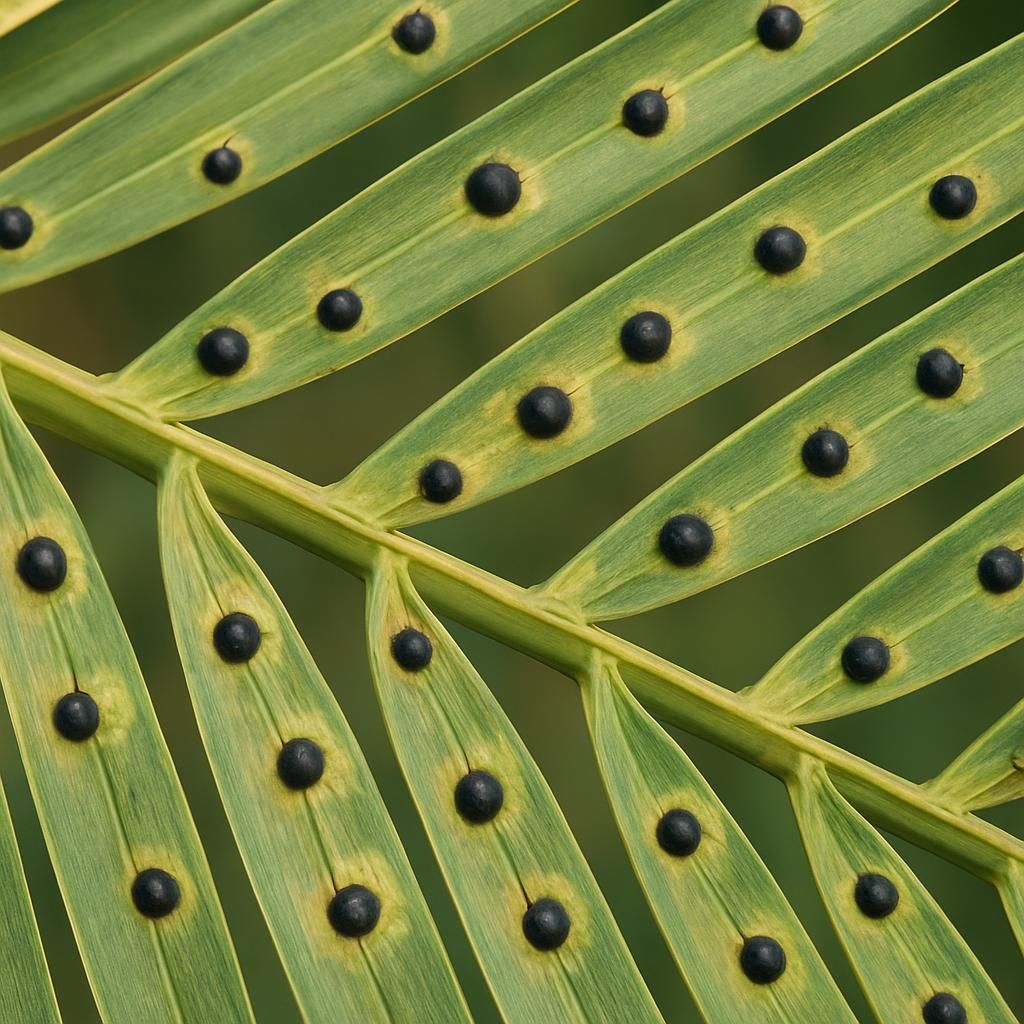
Introduction to Graphiola phoenicis
Graphiola phoenicis is an ascomycete fungus responsible for Graphiola leaf spot, a common disease of date palms (Phoenix dactylifera) and related palm species worldwide. This pathogen thrives in warm, humid environments and produces distinctive black, globose fruiting bodies that resemble soot or small warts on the upper and lower surfaces of fronds. While rarely lethal, heavy infections reduce photosynthetic capacity, weaken palms over multiple seasons, and diminish ornamental and commercial value.
The disease has been documented across arid and subtropical regions where palms are cultivated, including the Middle East, North Africa, parts of Asia, and the southern United States. Infections typically begin on older fronds and progress inward, creating a gradient of damage that can be used for early diagnosis. Because the pathogen overwinters in persistent fruiting structures, proactive sanitation is critical for long-term control.
Identifying Symptoms & Damage
Initial symptoms appear as small, pale yellow spots on both surfaces of palm fronds. These lesions expand slowly and develop into raised, black, globose fruiting bodies 1–2 mm in diameter that contain masses of dark spores. The fruiting bodies are often surrounded by a narrow halo of chlorotic tissue, giving infected fronds a speckled appearance.
As infection intensifies, fronds exhibit premature senescence, with tips browning and curling. Severe cases cause extensive necrosis that can reduce overall canopy density and weaken the palm’s ability to support fruit production. Economic losses are primarily aesthetic in ornamental settings but can translate to reduced date yields in commercial groves.
Laboratory confirmation involves microscopic examination of the characteristic muriform ascospores released from mature fruiting bodies. Symptoms can be confused with scale insects or sooty mold, but the raised, hard fruiting structures of Graphiola phoenicis are diagnostic.
Lifecycle and Progression of Graphiola phoenicis
The fungus completes its lifecycle entirely on living palm tissue. Spores are released during wet periods and dispersed by wind, rain splash, and human activity. Germination occurs on moist frond surfaces, followed by penetration through stomata or minor wounds. The pathogen colonizes mesophyll tissue and produces new fruiting bodies within 4–8 weeks under optimal conditions.
| Lifecycle Stage | Description | Duration | Environmental Conditions |
|---|---|---|---|
| Spore Release | Mature black fruiting bodies rupture and expel ascospores | 1–3 days after wetting | High humidity, temperatures 25–35 °C |
| Spore Dispersal | Wind, rain, and mechanical contact spread spores to healthy fronds | Hours to days | Wind speeds >5 km/h, rainfall events |
| Germination & Penetration | Spores germinate on leaf surface and enter through stomata | 24–72 hours | Leaf wetness >6 hours, moderate temperatures |
| Colonization | Hyphae grow intercellularly, forming dark stromata | 3–6 weeks | Warm, humid microclimate within canopy |
| Fruiting Body Maturation | Stromata develop into raised black sori containing ascospores | 2–4 weeks | Persistent humidity and moderate temperatures |
| Overwintering | Fruiting bodies remain viable on senescent fronds | Months | Dry or cool periods with minimal rainfall |
Environmental Triggers & Risk Factors
Graphiola phoenicis favors temperatures between 25 °C and 35 °C with relative humidity above 70 %. Prolonged leaf wetness from dew, irrigation, or rainfall is the primary trigger for spore germination and infection. Dense planting that restricts airflow and heavy nitrogen fertilization that promotes lush growth increase disease severity.
| Factor | Optimal Range for Disease | Management Implication |
|---|---|---|
| Temperature | 25–35 °C | Avoid overhead irrigation during peak heat |
| Relative Humidity | >70 % | Improve canopy ventilation and spacing |
| Leaf Wetness Duration | >6 hours | Schedule irrigation for early morning |
| Soil pH | 6.5–8.0 | Maintain balanced nutrition without excess nitrogen |
| Planting Density | <3 m between palms | Thin overcrowded groves to reduce humidity |
Organic Control & Treatment Plans
Organic management emphasizes sanitation, cultural practices, and approved biological or botanical products. Begin by removing and destroying severely infected fronds to reduce inoculum. Apply neem oil or potassium bicarbonate sprays at the first sign of new fruiting bodies, repeating every 10–14 days during humid periods.
| Treatment Option | Active Ingredient | Application Frequency | Rate per Liter | Notes |
|---|---|---|---|---|
| Neem Oil Emulsion | Azadirachtin | Every 10–14 days | 5 mL | Apply thoroughly to both leaf surfaces; avoid midday heat |
| Potassium Bicarbonate | KHCO₃ | Every 7–10 days | 5 g | Effective contact fungicide; reapply after heavy rain |
| Copper Soap | Copper octanoate | Every 14–21 days | 10 mL | Use only on non-fruiting palms; follow label for residue limits |
| Horticultural Oil | Mineral oil | Every 14 days | 10 mL | Suppresses spore release; combine with sanitation |
| Bacillus subtilis | Beneficial bacteria | Every 7–10 days | 5 g | Preventive spray during high-risk weather |
Preventing Graphiola phoenicis in the Future
Prevention centers on reducing leaf wetness duration and eliminating overwintering inoculum. Space palms to allow free air movement and prune lower fronds to improve light penetration. Avoid overhead irrigation; use drip or basin systems instead. Remove and destroy fallen fronds at the end of each growing season.
Maintain balanced fertility with moderate nitrogen and adequate potassium to avoid excessive succulent growth. Monitor new plantings closely during the first two years when palms are most susceptible. Integrating resistant cultivars where available further reduces long-term disease pressure.
Crops Most Affected by Graphiola phoenicis
Graphiola phoenicis primarily infects members of the Arecaceae family. The date palm Phoenix dactylifera is the most economically important host, but infections also occur on Canary Island date palm, Senegal date palm, and various ornamental palms. While the disease is host-specific to palms, similar leaf-spot symptoms on other crops such as Tomato or Banana are caused by unrelated pathogens and require different management approaches.
For additional guidance on integrated disease management in warm climates, see the blog post Crop Diseases Under the Microscope: 9 Organic Fixes for Small Farm Resilience.