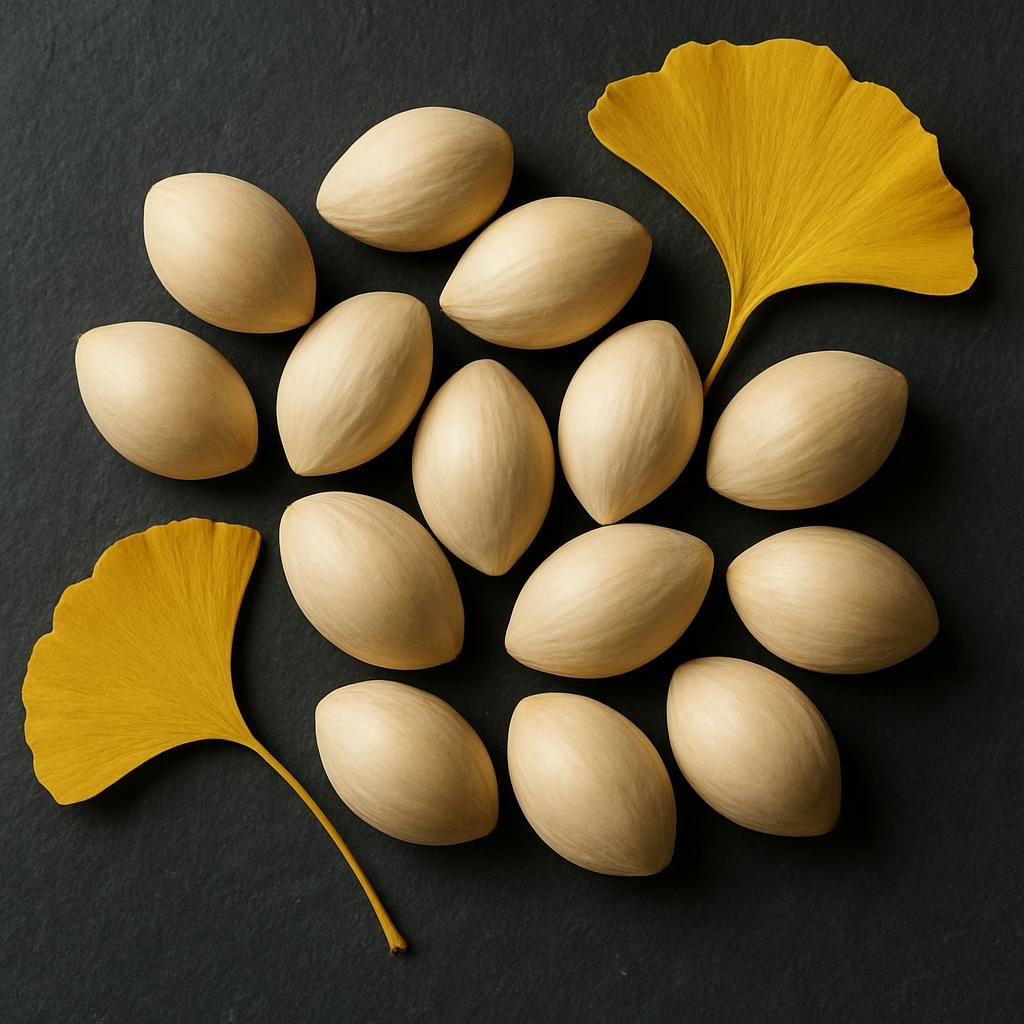
Introduction to Ginkgo Nut (Ginkgo biloba)
Ginkgo biloba, often called the maidenhair tree, is the sole surviving species of an ancient lineage dating back over 270 million years. While the tree is renowned worldwide for its distinctive fan-shaped leaves and use in herbal medicine, the female trees produce a fleshy seed whose kernel—commonly referred to as the ginkgo nut—is prized in East Asian cuisine. The nuts are harvested in autumn, processed to remove the outer sarcotesta, and valued for their mild, slightly sweet flavor and nutritional profile rich in starch, protein, and minerals.
Commercial cultivation of Ginkgo biloba for nut production remains specialized, with the majority of global supply originating from China, Korea, and Japan. The tree’s extreme longevity, resistance to urban pollution, and relatively low pest pressure make it an attractive long-term investment for growers seeking diversified nut crops. However, successful production requires patience: trees typically require 15–20 years to reach reliable bearing age, and only female trees produce the edible nuts. Male trees are usually planted in a 1:10 to 1:20 ratio to ensure adequate pollination without excessive fruit litter.
Botanical Profile of Ginkgo Nut (Ginkgo biloba)
Ginkgo biloba is a dioecious gymnosperm belonging to the family Ginkgoaceae. Mature trees can reach 20–35 meters in height with a broad, spreading crown. The bark is gray-brown and fissured with age. Leaves are unique among seed plants: they are fan-shaped, 5–10 cm wide, with dichotomous venation and a notched apex. In autumn, foliage turns brilliant golden-yellow before abscising.
Female trees bear paired ovules on short stalks that develop into seeds enclosed in a fleshy, malodorous outer layer (sarcotesta) surrounding a hard, cream-colored shell. The edible kernel inside is approximately 2–3 cm long. Unlike true nuts, ginkgo “nuts” are technically seeds. The species exhibits strong apical dominance and slow initial growth, followed by vigorous vertical extension once established. Ginkgo is wind-pollinated; male catkins release copious pollen in early spring.
Soil, pH, and Climate Requirements for Ginkgo Nut (Ginkgo biloba)
Ginkgo biloba is remarkably adaptable but performs best under specific conditions that support both vegetative vigor and consistent nut production.
| Parameter | Ideal Range | Notes |
|---|---|---|
| Soil Type | Deep, well-drained loam or sandy loam | Avoid heavy clay or waterlogged sites |
| Soil pH | 5.5 – 7.5 | Slightly acidic to neutral preferred |
| USDA Hardiness Zones | 4 – 9 | Extremely cold hardy; tolerates heat |
| Annual Rainfall | 600 – 1200 mm | Supplemental irrigation beneficial in dry summers |
| Temperature Range | −30 °C to 35 °C | Requires 800–1200 chilling hours |
| Sunlight | Full sun (minimum 6–8 hours) | Partial shade reduces nut yield |
| Spacing (orchard) | 8–10 m between trees | Rows 10–12 m apart for machinery access |
The tree tolerates a wide range of soil textures provided drainage is excellent. Heavy soils should be amended with organic matter and raised beds or mounds used in marginal sites. Ginkgo is moderately drought tolerant once established but benefits from consistent moisture during the first five years and during nut development.
Step-by-Step Planting & Propagation
Propagation of Ginkgo biloba for nut production is almost exclusively accomplished by seed or grafting. Seed propagation is straightforward but results in approximately 50 % male seedlings; therefore, many commercial orchards begin with seedlings and later graft known female scions onto selected rootstocks.
- Seed Collection and Stratification: Harvest ripe seeds in late autumn. Remove the sarcotesta immediately to prevent fermentation. Stratify cleaned seeds at 4 °C for 60–90 days in moist sand or peat.
- Sowing: Plant stratified seeds 3–5 cm deep in well-drained nursery beds or containers in early spring. Germination occurs in 4–8 weeks at 15–20 °C.
- Seedling Care: Grow seedlings in full sun with consistent moisture. Transplant to permanent positions at 2–3 years of age when stems reach pencil thickness.
- Grafting: Use whip-and-tongue or cleft grafts on 2–3-year-old rootstocks in late winter. Female cultivars such as ‘Jingzhou’ or ‘Daejo’ are commonly grafted onto seedling rootstocks for earlier bearing and uniform nut quality.
- Orchard Layout: Plant grafted female trees at 8–10 m spacing with 1–2 male pollinators per 15–20 females. Install irrigation and windbreaks if site conditions warrant.
Care & Maintenance regimes for Ginkgo Nut (Ginkgo biloba)
Young trees require formative pruning to establish a strong central leader and well-spaced scaffold branches. Mature trees need minimal pruning beyond removal of dead, diseased, or crossing wood. Irrigation is critical during the first five years and during summer drought. Fertilization should be based on annual leaf or soil analysis.
| Season | Watering Schedule | Fertilizer Application | Pruning Activity |
|---|---|---|---|
| Spring | 25–40 mm/week if rainfall insufficient | 10-10-10 NPK at 200 g/tree for young trees | Remove frost-damaged shoots |
| Summer | Deep soak every 10–14 days | Side-dress with compost or aged manure | Minimal; tip-prune only if needed |
| Autumn | Reduce to harden off before dormancy | Light application of potassium-rich fertilizer | Remove dead wood; shape canopy |
| Winter | None required (dormant) | None | Dormant pruning of structural branches |
Mulch with 8–10 cm of organic material in a 1 m radius around the trunk to conserve moisture and suppress weeds. Avoid nitrogen excess, which promotes vegetative growth at the expense of nut production.
Pests, Diseases & Organic Management
Ginkgo biloba is relatively pest- and disease-resistant compared with many nut crops. However, several issues merit attention.
Major pests include scale insects, spider mites, and occasional defoliators such as caterpillars. Scale populations are managed with horticultural oil sprays during dormancy. Spider mites are suppressed by maintaining adequate irrigation and releasing predatory mites when populations exceed 5 mites per leaf.
The most common disease is leaf spot caused by Alternaria, which appears as small necrotic lesions in humid conditions. Cultural controls include improving air circulation through proper spacing and removing fallen leaves. Root rot from Phytophthora can occur in poorly drained soils; raised beds and soil solarization are effective preventive measures.
Organic management emphasizes monitoring, cultural practices, and biological controls. Sticky traps and pheromone lures help track insect activity. Neem oil and insecticidal soaps provide contact control for soft-bodied pests. Compost teas and beneficial microbe inoculants enhance root health and suppress soil-borne pathogens.
Harvesting, Curing & Optimal Storage
Ginkgo nuts are harvested when the sarcotesta begins to soften and emit its characteristic odor, typically October–November in temperate regions. Collect fallen seeds daily to prevent fermentation and animal predation. Wear gloves during collection; the fleshy outer layer contains urushiol-like compounds that can cause dermatitis in sensitive individuals.
Post-harvest processing involves soaking seeds in water for 24–48 hours to loosen the sarcotesta, followed by mechanical or manual removal. Rinse kernels thoroughly and dry in a well-ventilated area at 25–30 °C for 5–7 days until moisture content reaches 10–12 %. Store dried nuts in breathable sacks or perforated containers at 0–5 °C and 60–70 % relative humidity. Properly cured nuts maintain quality for 6–12 months. For longer storage, vacuum-seal and freeze at −18 °C.
Companion Planting for Ginkgo Nut (Ginkgo biloba)
Although ginkgo orchards are typically managed as monocultures, strategic understory planting can improve biodiversity and soil health. Low-growing legumes such as clover fix nitrogen and provide habitat for beneficial insects. Aromatic herbs including thyme and rosemary may deter certain pests through volatile compounds. Deep-rooted cover crops such as hairy vetch improve soil structure when incorporated in autumn.
Avoid planting shallow-rooted crops that compete with young ginkgo trees for moisture. In mature orchards, inter-row plantings of nasturtium can attract aphids away from the main crop while providing edible flowers. Maintaining a diverse understory also supports pollinators and predatory insects that contribute to natural pest suppression.
Ginkgo biloba represents a unique opportunity for growers interested in long-lived, low-maintenance nut production with additional value from leaf harvest for medicinal markets. With proper site selection, patient establishment, and integrated management, orchards can remain productive for centuries.