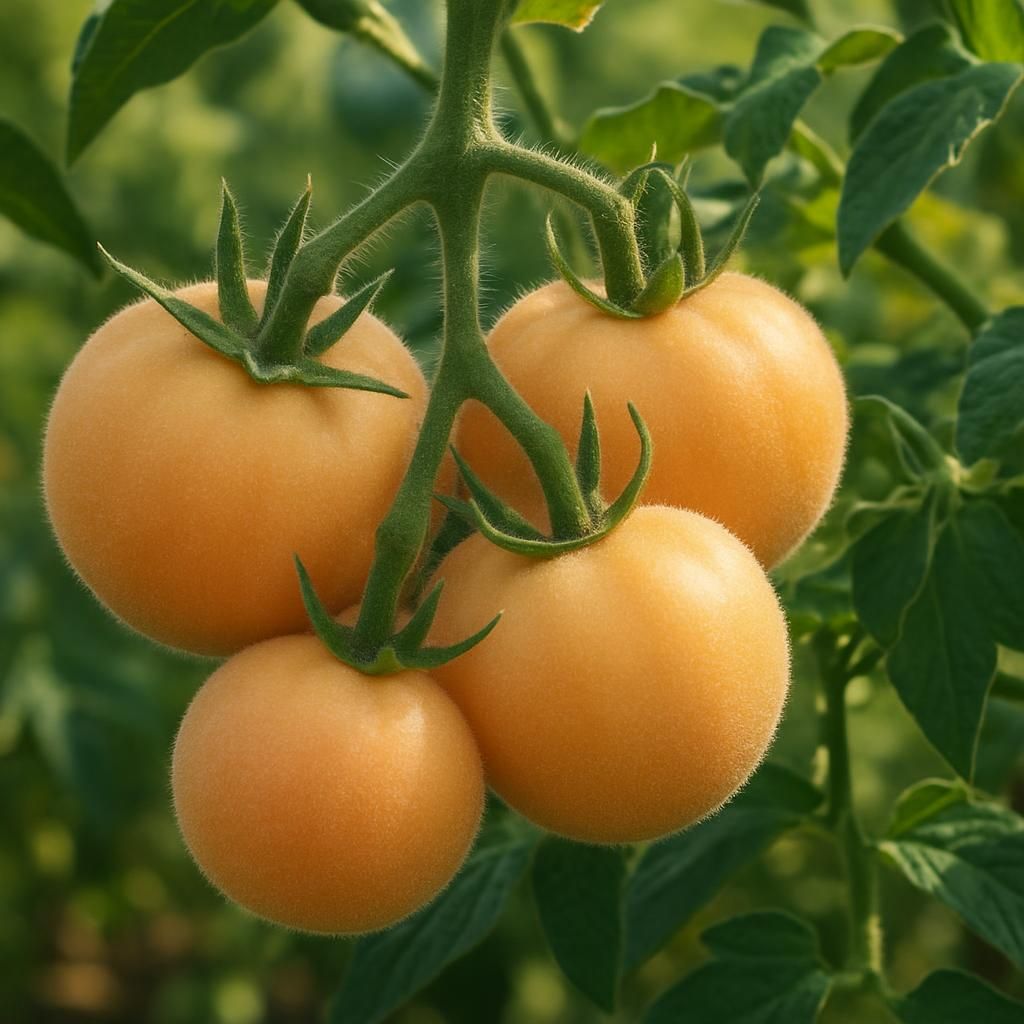
Introduction to Garden Peach Tomato
Garden Peach Tomato is an heirloom variety celebrated for its unique fuzzy exterior, delicate peach hue, and exceptionally sweet flavor profile. Originating from South American landraces and refined through generations of seed saving, this tomato produces golf-ball sized fruits that ripen to a soft yellow-orange with a light pubescence reminiscent of actual peaches. Its compact growth habit and early maturity make it ideal for gardeners seeking reliable yields in short seasons or challenging climates.
Beyond its novelty appeal, Garden Peach Tomato offers practical advantages including resistance to cracking and tolerance to common fungal pressures. Its thin skin and juicy interior lend themselves equally to fresh eating, preserves, and light cooking applications. Seed savers value its stable genetics and the opportunity to select for enhanced sweetness and skin texture over successive seasons.
Botanical Profile of Garden Peach Tomato
Garden Peach Tomato belongs to the Solanaceae family and is classified as a botanical variant of the common tomato. Plants exhibit an indeterminate growth habit with vigorous branching and a sprawling canopy that benefits from support. Leaves are compound and slightly smaller than standard beefsteak types, often displaying a subtle silvery cast due to fine trichomes.
Flowers are typical of the species—bright yellow with fused anthers—forming in clusters of 6–10 along the stems. Fruits develop a distinctive velvety skin that protects against sunscald while contributing to the variety’s signature aroma. Mature plants reach 4–6 feet in height with a spread of 3–4 feet when properly staked or caged.
Soil, pH, and Climate Requirements for Garden Peach Tomato
Successful cultivation begins with well-drained, fertile soil enriched with aged compost. The variety performs best in full sun with at least 8 hours of direct light daily and moderate humidity levels that discourage fungal development.
| Parameter | Ideal Range | Notes |
|---|---|---|
| Soil Type | Loamy, well-drained | Incorporate 2–3 inches of compost |
| Soil pH | 6.2 – 6.8 | Test annually; adjust with lime or sulfur |
| Temperature Range | 65–85 °F (18–29 °C) | Protect below 50 °F; avoid >95 °F |
| Spacing | 24–36 inches between plants | Rows 48 inches apart |
| Sunlight | Full sun (8+ hours) | Morning sun preferred in hot climates |
| Frost Tolerance | None | Transplant after last frost |
Step-by-Step Planting & Propagation
Start seeds indoors 6–8 weeks before the last expected frost. Sow ¼ inch deep in sterile seed-starting mix and maintain soil temperature at 75–80 °F. Germination occurs in 7–10 days under consistent moisture and bright light.
Harden seedlings for 7–10 days before transplanting. Dig planting holes twice the width of the root ball and amend with a handful of balanced organic fertilizer. Bury stems up to the first true leaves to encourage adventitious root development. Water thoroughly after transplanting and apply a 2-inch layer of organic mulch to conserve moisture and suppress weeds.
Care & Maintenance regimes for Garden Peach Tomato
Consistent moisture and balanced nutrition are essential for high-quality fruit. Mulch heavily and monitor soil moisture to prevent blossom end rot. Prune suckers selectively to improve airflow while retaining enough foliage for photosynthesis.
| Task | Frequency | Details |
|---|---|---|
| Watering | 1–2 inches/week | Deep, infrequent watering; morning application |
| Fertilizer | Every 3–4 weeks | Balanced organic (4-4-4) at transplant; side-dress with compost tea at flowering |
| Pruning | Weekly | Remove lower leaves and excess suckers; stake or cage early |
Pests, Diseases & Organic Management
Common challenges include Aphids, Spider Mites, and Hornworms. Practice crop rotation and introduce beneficial insects such as lady beetles and lacewings. Neem oil and insecticidal soaps provide effective organic control when applied at first sign of infestation.
Fungal pressures such as Early Blight and Septoria Leaf Spot are mitigated through proper spacing, morning watering, and removal of infected foliage. Copper-based fungicides offer additional protection during extended wet periods.
Harvesting, Curing & Optimal Storage
Harvest Garden Peach Tomatoes when fruits reach full color and yield slightly to gentle pressure. Pick at the breaker stage for extended storage or allow full ripening on the vine for peak flavor. Remove stems carefully to avoid puncturing adjacent fruits.
Store ripe tomatoes at 55–70 °F away from direct sunlight. For longer-term preservation, can whole or halved fruits in a boiling-water bath or dehydrate into sweet, chewy snacks. Avoid refrigeration, which diminishes flavor and texture.
Companion Planting for Garden Peach Tomato
Pair Garden Peach Tomato with aromatic herbs and flowers to enhance pest resistance and pollination. Basil repels aphids and improves flavor, while Marigold deters nematodes and whiteflies. Nasturtium serves as a trap crop for aphids.
Avoid planting near Fennel or members of the Brassica family, which may inhibit tomato growth. Lettuce and Carrot make excellent understory companions that maximize space in raised beds.