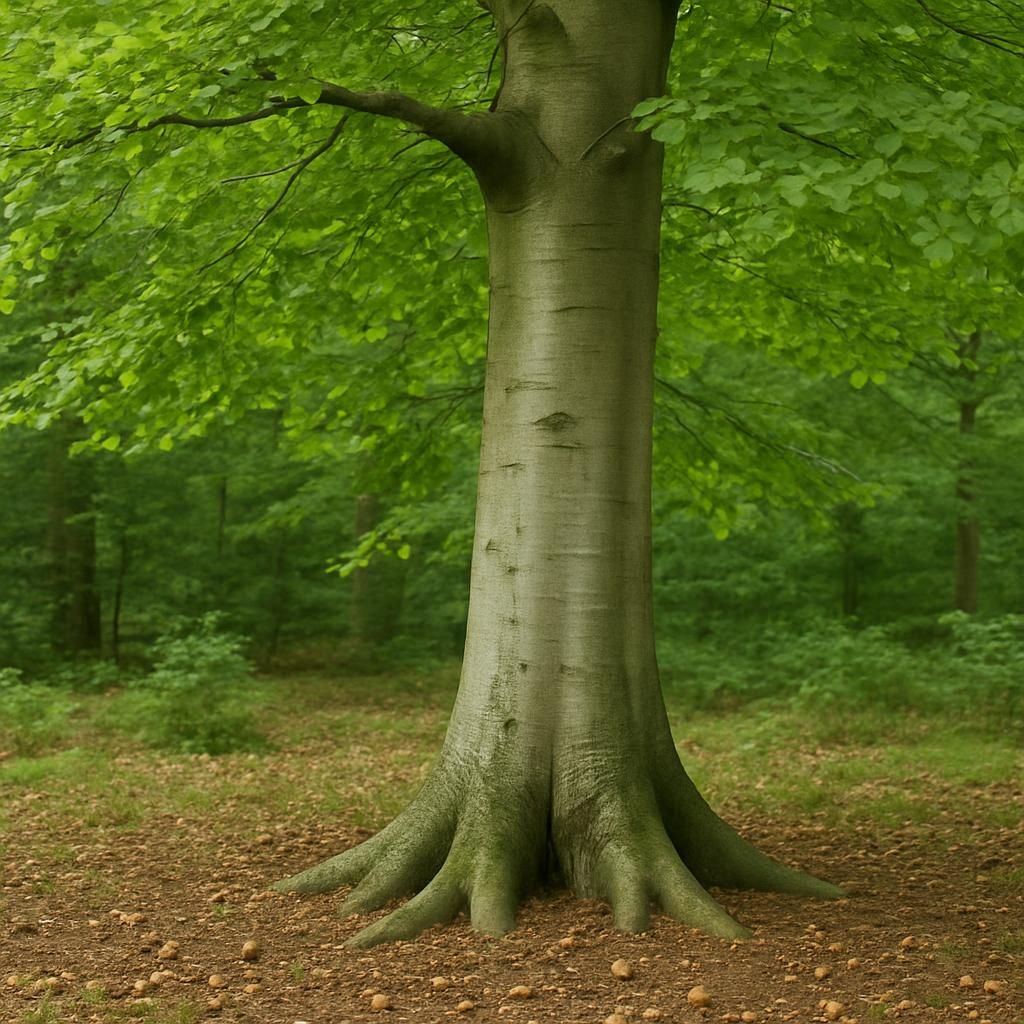
Introduction to European Beech
European Beech (Fagus sylvatica) is one of the most iconic and ecologically important trees of temperate Europe. Valued for its smooth silver-gray bark, dense canopy, and high-quality timber, it also supports rich biodiversity by producing beechnuts that feed birds, mammals, and insects. Professional growers establish European Beech for high-value hardwood production, reforestation, parkland planting, and as a specimen tree in large landscapes.
Botanical Profile of European Beech
European Beech is a large deciduous tree in the Fagaceae family, typically reaching 25–35 meters in height with a broad, rounded crown. The alternate, ovate leaves are dark green in summer, turning coppery-bronze in autumn. Flowers are inconspicuous; male catkins and female clusters appear in spring, leading to triangular beechnuts enclosed in spiny husks. The root system is shallow and wide-spreading, making the species sensitive to soil compaction and drought.
Soil, pH, and Climate Requirements for European Beech
European Beech performs best on deep, fertile, loamy soils with good aeration and drainage. It tolerates a range of textures but struggles in heavy clays or waterlogged sites. The species prefers slightly acidic to neutral conditions and cool, humid temperate climates.
| Parameter | Ideal Range | Notes |
|---|---|---|
| Soil Type | Loam to sandy loam | Avoid compacted or poorly drained soils |
| Soil pH | 5.5 – 7.0 | Tolerates up to 7.5 on chalky sites |
| Temperature Range | -20 °C to 30 °C | Young trees sensitive to late spring frost |
| Annual Rainfall | 600 – 1,200 mm | Supplemental irrigation needed in drought |
| USDA Hardiness Zones | 5 – 7 | Performs poorly in subtropical climates |
| Sun Exposure | Full sun to partial shade | Full sun promotes denser crown |
| Spacing (mature) | 8 – 12 m between trees | Wider for timber stands |
Step-by-Step Planting & Propagation
- Site Selection: Choose a sheltered location with deep soil and protection from strong winds.
- Soil Preparation: Test pH and amend with well-rotted compost if needed; avoid fresh manure.
- Propagation: Sow fresh beechnuts in autumn or stratify seeds for 90–120 days at 4 °C before spring sowing. Grafting is used for named cultivars.
- Planting: Dig holes twice the width of the root ball. Plant bare-root trees in late autumn or early spring when dormant. Stake young trees and apply a 10 cm mulch ring.
- Initial Watering: Water deeply at planting and maintain even moisture for the first two growing seasons.
Care & Maintenance regimes for European Beech
Regular monitoring and timely interventions keep European Beech healthy and productive. Focus on moisture conservation, balanced nutrition, and structural pruning during the first 10–15 years.
| Task | Schedule | Details |
|---|---|---|
| Watering | Year 1–3: weekly deep soak | 20–30 L per tree; reduce frequency after establishment |
| Fertilizer | Early spring (March–April) | Apply balanced NPK (10-10-10) at 50–100 g/m² canopy area; repeat lightly in July for young trees |
| Mulching | Renew annually in spring | 8–10 cm organic mulch extending to drip line; keep 10 cm clear of trunk |
| Pruning (Formative) | Late winter (dormant season) | Remove crossing branches; establish central leader in years 1–5 |
| Pruning (Maintenance) | Every 3–5 years after year 10 | Thin interior canopy to improve light penetration and air flow |
Pests, Diseases & Organic Management
European Beech is relatively resilient but can suffer from Aphids, Scale insects, and Beech bark disease caused by the scale insect Cryptococcus fagisuga and associated Neonectria fungi. Monitor for woolly beech aphid and leaf-mining weevils. Organic controls include horticultural oil sprays in dormant season, introduction of ladybird beetles, and removal of heavily infested branches. Maintain tree vigor through proper watering and mulching to reduce stress-related susceptibility.
Harvesting, Curing & Optimal Storage
Beechnuts ripen in autumn and are collected by shaking branches or gathering from the ground. Dry nuts in thin layers at 20–25 °C with good airflow until moisture content reaches 8–10 %. Store in cool, dry conditions (5–10 °C, <60 % RH) in breathable sacks or sealed containers with silica gel. For timber, harvest trees at 80–120 years when diameter at breast height reaches 50–70 cm. Air-dry lumber slowly under cover for 12–24 months.
Companion Planting for European Beech
European Beech forms excellent mixed stands with Oak and Hornbeam. Underplant with shade-tolerant woodland species such as Wild Garlic or Wood Anemone to increase biodiversity. Avoid planting shallow-rooted crops directly beneath the canopy due to competition for moisture and light. In agroforestry systems, interplant with nitrogen-fixing shrubs like Clover in alleyways to improve soil fertility without shading young beech.