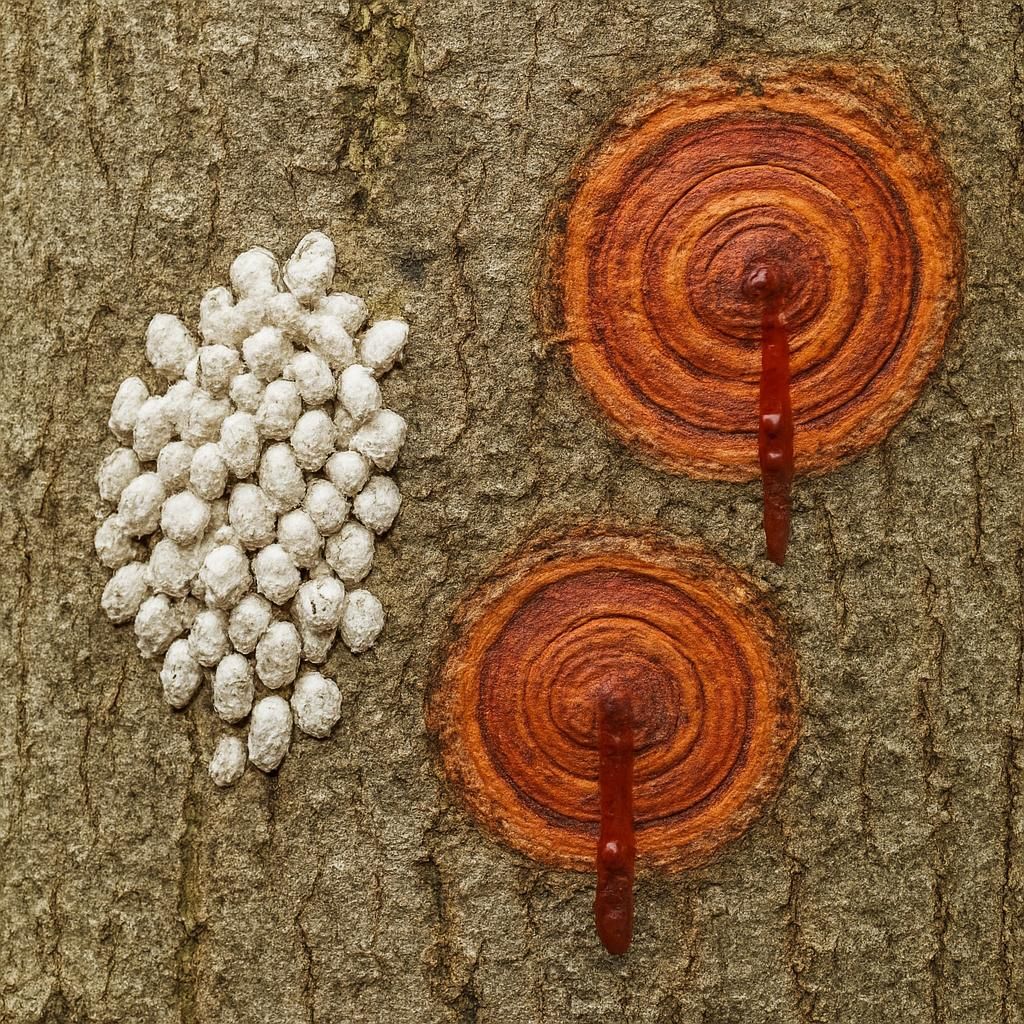
Introduction to Beech bark disease
Beech bark disease (BBD) is a devastating complex that has significantly altered North American beech forests since its introduction from Europe in the late 1800s. The disease results from the synergistic interaction between the non-native beech scale insect Cryptococcus fagisuga and two species of Neonectria fungi. Once established, the scale creates feeding wounds that allow fungal spores to penetrate the bark, leading to the formation of perennial cankers. Over time these cankers coalesce, girdle stems, and kill mature trees. The disease has caused widespread mortality in beech-dominated stands across the northeastern United States and southeastern Canada, reshaping forest composition and reducing timber and wildlife value.
Identifying Symptoms & Damage
Early detection relies on recognizing both insect and fungal signs. The first visible indicator is the presence of white, woolly masses of beech scale insects on the bark, typically concentrated on the lower trunk. As feeding progresses, small reddish-brown spots appear where scales have inserted stylets. Fungal colonization produces target-shaped cankers with concentric rings of callus tissue; these cankers often exude a reddish-brown fluid. Advanced stages show extensive bark cracking, sunken lesions, and epicormic branching. Severely affected trees exhibit crown dieback, reduced foliage density, and eventual mortality within 3–5 years of visible canker formation.
Lifecycle and Progression of Beech bark disease
The disease cycle begins with crawler-stage scale insects dispersing to new hosts in late summer. Once settled, scales overwinter as nymphs and resume feeding the following spring. Fungal spores are primarily dispersed by wind and rain splash during wet periods in spring and fall. The table below outlines the key stages.
| Stage | Timing | Key Events | Management Window |
|---|---|---|---|
| Crawler Dispersal | Late July–September | Mobile nymphs settle on bark | Apply horticultural oil or insecticidal soap |
| Overwintering | October–March | Nymphs protected under woolly covering | Monitor for scale density |
| Fungal Infection | April–June & September–November | Neonectria spores infect scale wounds | Remove heavily infested branches |
| Canker Expansion | Year-round | Perennial cankers enlarge | Sanitation pruning and resistant tree selection |
Environmental Triggers & Risk Factors
Beech bark disease thrives under specific site and stand conditions. High humidity and frequent rainfall favor both scale reproduction and fungal sporulation. Stands with dense beech regeneration and high basal area experience faster spread. Trees stressed by drought, defoliation by gypsy moth, or soil compaction show increased susceptibility. Northern aspects and lower slope positions retain moisture longer, creating microclimates conducive to infection. Forest fragmentation and deer overbrowsing further exacerbate vulnerability by reducing species diversity and favoring beech dominance.
Organic Control & Treatment Plans
Integrated management combines cultural, mechanical, and limited biological tactics. No single treatment eradicates established infections, but coordinated actions can slow spread and protect high-value trees. The table below summarizes organic options and recommended frequencies.
| Treatment Option | Application Method | Frequency | Notes |
|---|---|---|---|
| Horticultural Oil (2% dormant rate) | High-pressure spray to trunk and lower branches | Once in late winter before bud break | Targets overwintering scales; avoid during freezing temperatures |
| Insecticidal Soap (1% solution) | Thorough coverage of infested bark | Every 7–10 days during crawler emergence | Repeat 3–4 times per generation; test on small area first |
| Sanitation Pruning | Remove and destroy branches with >30% canker coverage | Annually in dormant season | Dispose of material off-site to reduce inoculum |
| Resistant Beech Selection | Plant or retain trees showing smooth bark and minimal scale | Ongoing | Source locally adapted seed from survivor trees |
| Biological Control (Chilocorus stigma) | Release or conserve native lady beetles | Monitor populations yearly | Provides supplemental scale suppression in mixed stands |
Preventing Beech bark disease in the Future
Long-term prevention centers on maintaining diverse, resilient forests. Promote mixed-species stands through selective harvesting that favors non-beech hardwoods. Reduce beech density to below 40% of basal area where feasible. Monitor for early scale infestations using visual surveys each fall. Maintain healthy soil conditions by avoiding compaction and retaining organic matter. Where feasible, establish buffer zones of non-host species around high-value beech groves. Educate landowners about early reporting and collaborative regional management.
Crops Most Affected by Beech bark disease
Beech bark disease primarily impacts American beech (Fagus grandifolia) in natural and managed forest settings. While not a traditional agricultural crop, the disease affects American Chestnut restoration plantings and can indirectly influence understory crops such as wild ginseng and forest medicinals by altering canopy structure and light regimes. No major fruit, nut, or vegetable crops are directly infected, but forest landowners managing mixed hardwood systems should integrate beech health monitoring into broader crop rotation realities and resilience planning.