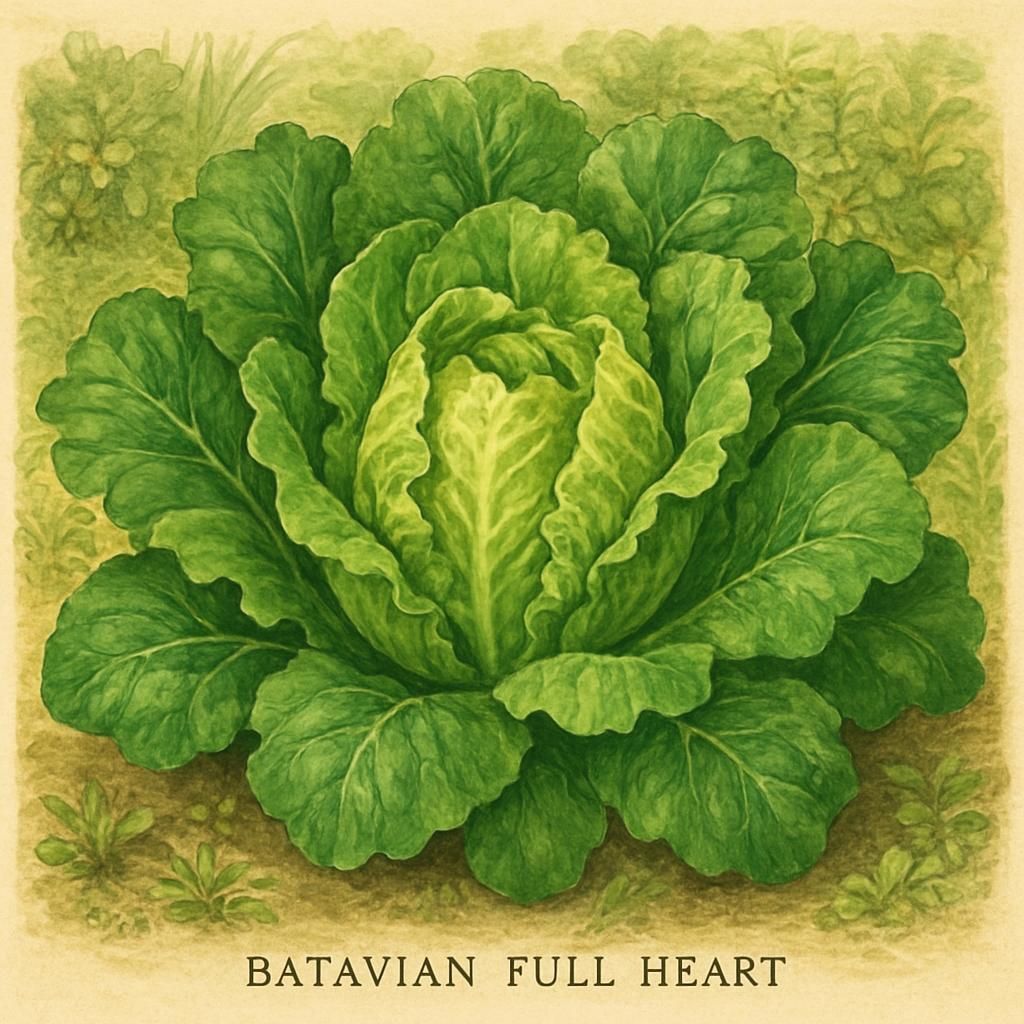
Introduction to Endive (Batavian Full Heart)
Endive, specifically the Batavian Full Heart variety, is a leafy green vegetable widely appreciated for its robust flavor and versatility in culinary applications. It has a distinctive crisp texture and slightly bitter taste, making it a popular choice in salads and cooked dishes.
Botanical Profile of Endive (Batavian Full Heart)
Scientifically known as Cichorium endivia var. latifolium, Batavian Full Heart endive is a member of the Asteraceae family. It is related to chicory and has a similar growth pattern, featuring broad leaves that form a dense head.
Soil, pH, and Climate Requirements for Endive (Batavian Full Heart)
Endive thrives in well-drained, fertile soil and is best suited to climates with cool temperatures. It requires full sun for optimal growth, although it can tolerate partial shade.
| Aspect | Ideal Condition |
|---|---|
| Soil Type | Well-draining loam |
| Soil pH | 6.0 - 6.8 |
| Temperature Range | 7°C - 24°C (45°F - 75°F) |
| Light Requirements | Full sun to partial shade |
Step-by-Step Planting & Propagation
- Seed Selection: Choose quality Batavian Full Heart endive seeds from a reputable supplier.
- Site Preparation: Ensure the soil is well-cultivated, free of weeds, and enriched with compost.
- Sowing Seeds: Sow seeds directly into the ground in rows, spacing them 1 to 2 feet apart. Lightly cover with soil.
- Thinning: Once seedlings reach 2 inches in height, thin them to about 12 inches apart to allow room for mature growth.
- Transplanting (if applicable): If starting indoors, transplant when seedlings have 4-5 true leaves, ensuring roots are well-established.
Care & Maintenance regimes for Endive (Batavian Full Heart)
Caring for Batavian Full Heart endive involves regular watering, judicious fertilization, and pest management.
| Care Aspect | Schedule |
|---|---|
| Watering | 1 inch per week, consistent moisture |
| Fertilizing | Every 4-6 weeks with balanced NPK |
| Pruning | Remove damaged leaves as needed |
Pests, Diseases & Organic Management
Endive can be susceptible to a variety of pests and diseases. Common pests include Aphids and Spider Mites. Diseases like powdery mildew can also affect endive.
- Aphid Control: Encourage beneficial insects like ladybugs, or use neem oil sprays.
- Powdery Mildew: Ensure good air circulation and avoid overhead watering.
- For detailed organic management strategies, visit our blog on Crop Diseases Under the Microscope: 9 Organic Fixes for Small Farm Resilience.
Harvesting, Curing & Optimal Storage
- Harvesting: Trim leaves from the outer part of the plant using a clean, sharp knife. Endive is ready for harvest when leaves are around 6-8 inches long.
- Curing: Not necessary for endive, but ensure leaves are dry before storage.
- Storage: Store in a refrigerator, wrapped in a slightly damp cloth or in a perforated container for up to a week.
Companion Planting for Endive (Batavian Full Heart)
Endive grows well with a variety of vegetables and herbs. Pairing with certain plants can enhance growth and deter pests.
- Good Companions: Onion, Garlic, and Carrot.
- Poor Companions: Avoid planting near brassicas such as Cabbage, as they compete for nutrients. Explore more about Summer Companion Planting: 10 Organic Pairings to Boost Small Farm Resilience.