Introduction to Egyptian Walking Onion
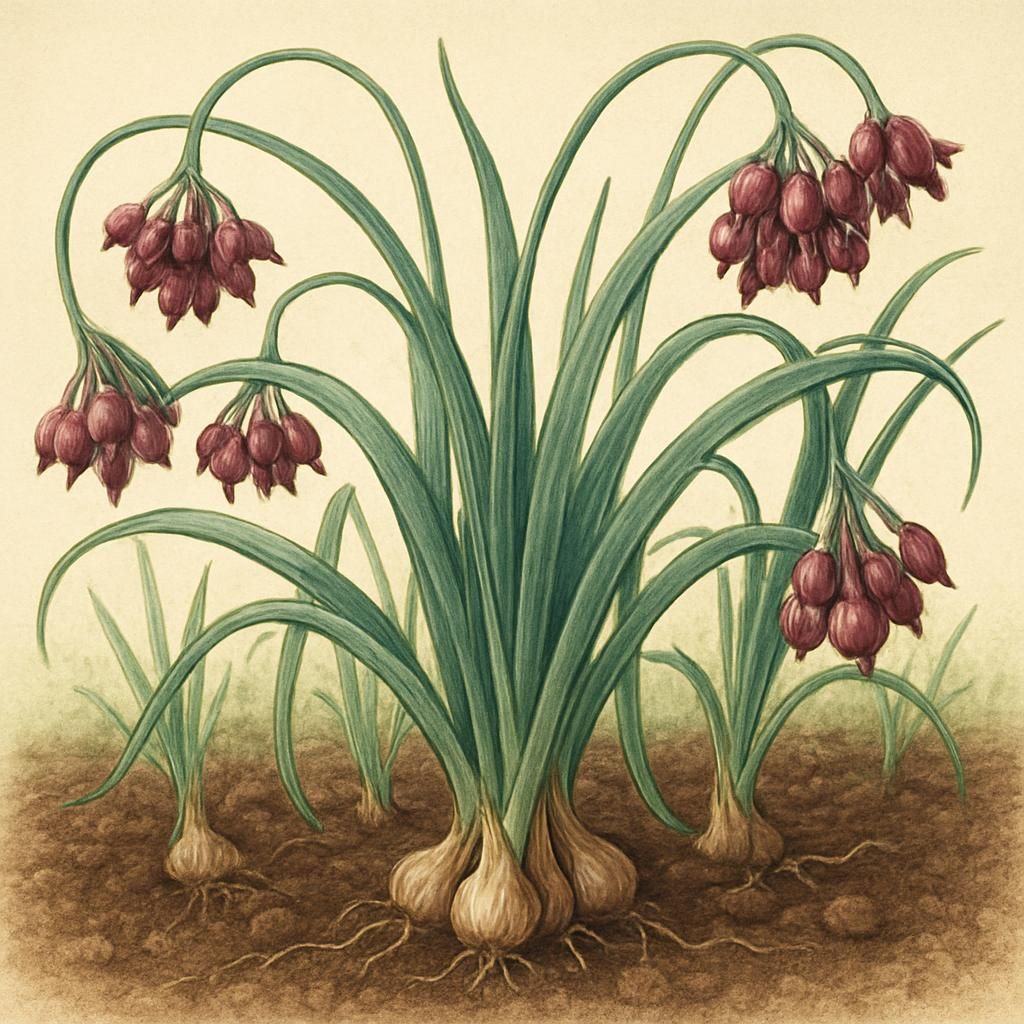
Egyptian Walking Onion (Allium × proliferum) is an ancient, cold-hardy perennial that has been cultivated for centuries for its edible bulbs, greens, and distinctive top-set bulbils. Unlike standard Onion varieties, this allium produces clusters of small aerial bulbils instead of flowers, which weigh down the scape until it bends and roots in new soil—creating the signature "walking" effect.
Gardeners value Egyptian Walking Onion for its resilience, ability to overwinter in USDA zones 3–9, and continuous supply of mild-flavored greens and bulbs throughout the growing season. It requires little maintenance once established and serves as an excellent low-input crop for both home gardens and small farms.
Botanical Profile of Egyptian Walking Onion
Egyptian Walking Onion belongs to the Amaryllidaceae family and is a hybrid between Allium cepa and Allium fistulosum. The plant grows 2–4 feet tall with hollow, blue-green leaves and produces sturdy flower stalks (scapes) that terminate in umbels of 10–30 bulbils rather than true flowers.
These bulbils range from pea- to marble-sized and are typically reddish-purple or brown. The underground bulbs are small to medium, often 1–2 inches in diameter, with papery skins and a mild, slightly sweet flavor. Because the plant is sterile, it reproduces vegetatively through its bulbils and basal offsets.
Soil, pH, and Climate Requirements for Egyptian Walking Onion
Egyptian Walking Onion performs best in fertile, well-drained loam but tolerates a wide range of soil types provided drainage is adequate. Heavy clay soils should be amended with organic matter to prevent waterlogging.
| Parameter | Ideal Range | Notes |
|---|---|---|
| Soil Type | Loam to sandy loam | Well-drained; avoid compacted or waterlogged soils |
| Soil pH | 6.0–7.0 | Slightly acidic to neutral; tolerates 5.5–7.5 |
| Temperature Range | 15–75°F (-9–24°C) | Extremely cold hardy; prefers cool springs and falls |
| Sunlight | Full sun (6–8 hours) | Tolerates light afternoon shade in hot climates |
| USDA Zones | 3–9 | Perennial in most temperate regions |
| Spacing | 6–8 inches between plants | Rows 12–18 inches apart |
Step-by-Step Planting & Propagation
Egyptian Walking Onion is best propagated from bulbils rather than seed. Plant bulbils in early spring or fall, 1–2 inches deep and 6–8 inches apart. Choose a site with full sun and amended soil.
- Prepare beds by incorporating 2–3 inches of compost or aged manure.
- Plant bulbils pointed end up; water thoroughly after planting.
- Mulch with 2–3 inches of straw or leaf mold to retain moisture and suppress weeds.
- Bulbils will root quickly and produce greens within 4–6 weeks.
- Established clumps can be divided every 2–3 years in spring or fall to maintain vigor.
Care & Maintenance regimes for Egyptian Walking Onion
Once established, Egyptian Walking Onion needs minimal care. Consistent moisture during active growth and periodic division keep plants productive.
| Task | Frequency | Details |
|---|---|---|
| Watering | Weekly during growth | Provide 1 inch of water; reduce in dormancy |
| Fertilizer | Early spring & mid-summer | Apply balanced organic fertilizer (5-5-5) or compost tea |
| Pruning | As needed | Remove spent scapes after bulbils drop; divide clumps every 2–3 years |
Pests, Diseases & Organic Management
Egyptian Walking Onion is relatively pest- and disease-resistant but may occasionally attract Aphids or suffer from Botrytis in overly wet conditions. Practice crop rotation and maintain good airflow to prevent issues.
Organic controls include insecticidal soap for aphids and removal of affected foliage for fungal problems. Avoid overhead watering to reduce disease pressure.
Harvesting, Curing & Optimal Storage
Harvest greens throughout the season by cutting outer leaves at the base. Underground bulbs are ready when tops begin to yellow in late summer. Aerial bulbils can be harvested once they turn firm and colored.
Cure bulbs in a warm, dry, shaded area for 7–10 days. Store in mesh bags or braided strands in a cool (35–45°F), dry location with good ventilation. Bulbils store best at 50–60°F and remain viable for planting up to one year.
Companion Planting for Egyptian Walking Onion
Egyptian Walking Onion pairs well with Carrot, Lettuce, and Strawberry due to its pest-repelling properties and shallow root system. Avoid planting near Beans or peas, which may be inhibited by allium root exudates.
For more companion planting strategies, see Summer Companion Planting: 10 Organic Pairings to Boost Small Farm Resilience.