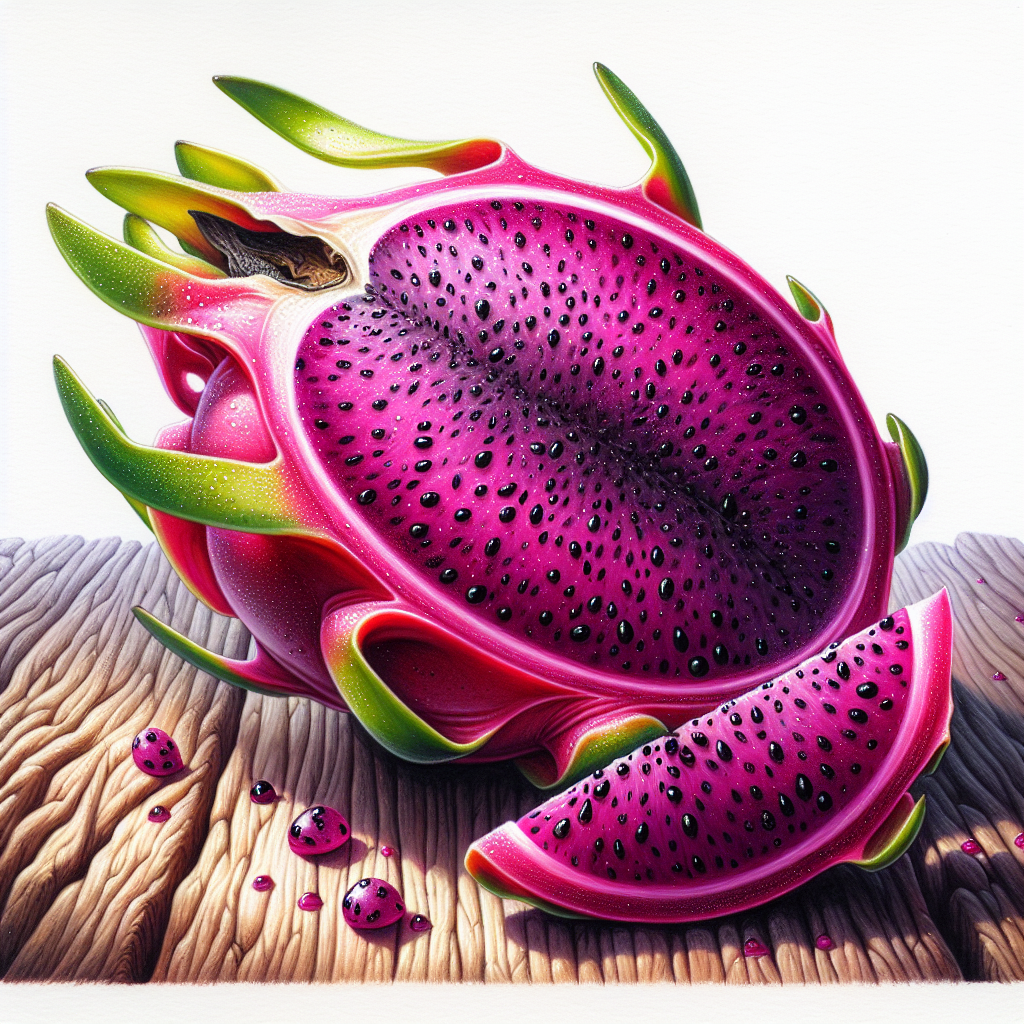
Introduction to Dragon Fruit (Purple Haze)
Dragon Fruit Purple Haze, a captivating cultivar of the Hylocereus cactus, stands out in the world of exotic fruits for its mesmerizing appearance and delectable taste. Unlike standard dragon fruit with white flesh, Purple Haze boasts deep violet-purple pulp that offers a complex flavor profile blending sweet kiwi, pear, and berry notes with a subtle floral undertone. Originating from selective breeding programs aimed at enhancing color and sweetness, this variety has gained popularity among commercial growers and home enthusiasts alike for its high yields, disease resistance, and stunning visual appeal.
Native to Central and South America but now cultivated globally in tropical and subtropical regions, Purple Haze dragon fruit plants can reach 20 feet in length, climbing via aerial roots. Each mature plant can produce 20-30 fruits per season, with individual fruits weighing 0.5-1.5 pounds. The plant's nocturnal flowers, which bloom for one night only, add a magical element to cultivation, attracting pollinators like bats and moths. For small-scale farmers, Purple Haze represents a lucrative crop due to its premium market price—often $5-10 per fruit retail—and relatively low input requirements. Successful cultivation hinges on providing strong structural support, well-drained soil, and protection from frost, making it accessible even for beginners in suitable climates.
This guide provides professional-grade, step-by-step advice for growing Dragon Fruit Purple Haze from propagation to harvest, optimized for both backyard orchards and commercial operations. Whether you're diversifying your farm with high-value exotics or simply want to grow your own superfood, Purple Haze delivers exceptional ROI with proper management. For general insights on the species, see the Dragon Fruit (crop) wiki page.
Botanical Profile of Dragon Fruit (Purple Haze)
Dragon Fruit Purple Haze belongs to the Hylocereus genus within the Cactaceae family, specifically a selected clone of Hylocereus undatus known for its self-sterile flowers and purple flesh. The plant is an epiphytic, vining cactus with three-angled stems that grow up to 6 inches thick, covered in small, scale-like leaves and aerial roots for climbing. Stems are green to blue-green, turning reddish under sun stress, providing a robust structure that supports heavy fruit loads.
Flowers are large (up to 14 inches long), white, and fragrant, opening from dusk to dawn in summer. Pollination requires cross-pollination with another Hylocereus variety, as Purple Haze is self-incompatible—hand-pollination boosts yields significantly. Fruits mature 30-50 days post-pollination, featuring leathery, pink-to-purple skin with green-tipped scales and vivid magenta flesh dotted with tiny black seeds. Nutritionally, Purple Haze excels with high levels of antioxidants (betalains), vitamin C (20% DV per fruit), fiber, and iron, surpassing many berries in health benefits.
Growth habits include rapid vegetative expansion (up to 10 feet per year) and perennial longevity (20+ years with care). It's CAM-photosynthesizing, meaning it opens stomata at night to conserve water, ideal for arid tropics. Root systems are shallow and wide-spreading, demanding excellent drainage to prevent rot. Compared to white-fleshed varieties, Purple Haze shows superior flavor and shelf life but requires more sun for optimal pigmentation. Learn more about companion planting to enhance its performance.
Soil, pH, and Climate Requirements for Dragon Fruit (Purple Haze)
Purple Haze dragon fruit demands well-draining, sandy loam or cactus mix soils to mimic its native epiphytic habitats. Heavy clay leads to root rot, so amend with 50% perlite, pumice, or coarse sand. Ideal pH is 6.0-7.0—slightly acidic to neutral; test and adjust with dolomite lime if below 6.0. Organic matter like aged compost (20-30%) improves fertility without waterlogging.
Climate-wise, it's a USDA Zone 10-11 tropical perennial, thriving at 65-90°F (18-32°C) daytime temps. It tolerates brief dips to 32°F (-0°C) but suffers below 50°F (10°C), with frost killing unprotected plants. High humidity (60-80%) aids flowering, but it endures dry spells thanks to CAM metabolism. Full sun (6-8+ hours) is essential for fruit color and sweetness; partial shade reduces yields by 50%. In marginal areas, use greenhouses or frost blankets. Annual rainfall of 30-50 inches suits it, supplemented by drip irrigation during dry periods. Wind protection prevents stem desiccation—plant near fences or hedges.
Soil preparation: Raised beds (12-18 inches high) or mounds ensure drainage. Mulch with gravel or wood chips to regulate moisture and suppress weeds. For container growing, use 20-25 gallon pots with trellis integration.
Step-by-Step Planting & Propagation
Propagation is straightforward via stem cuttings, the preferred method for Purple Haze uniformity. Select healthy, 12-18 inch cuttings (pencil-thick) from mature plants in late spring. Callus ends for 7-10 days in shade, then plant 2-3 inches deep in cactus mix. Rooting occurs in 2-4 weeks at 75-85°F; mist lightly.
Planting: Space 8-10 feet apart along sturdy T-posts or concrete poles (8-10 feet tall) with cross-arms for branching. Dig holes 2x pot width, backfill with amended soil. Orient cuttings vertically, securing with soft ties. For seeds (less common), sow in sterile mix at 75°F; germination in 10-14 days, but seedlings take 5-7 years to fruit.
Optimal timing: Post-frost spring in warm climates. Water sparingly until established (first month), then deeply weekly. Fertilize at planting with balanced 10-10-10 slow-release. Grafting onto tolerant rootstocks enhances cold hardiness. Expect first flowers in 1-2 years from cuttings.
Care & Maintenance regimes for Dragon Fruit (Purple Haze)
Watering: Deeply but infrequently—1-2 inches weekly during growth/flowering, less in winter. Drought stress improves fruit quality; overwatering causes splitting. Use drip systems to target roots.
Fertilization: Monthly NPK 10-5-20 during active growth (spring-fall), reducing nitrogen to promote fruiting. Foliar sprays of micronutrients (iron, magnesium) prevent chlorosis. Organic options: Compost tea, fish emulsion.
Pruning: Annually post-harvest, remove dead/leggy stems, thin crowded branches to 4-6 per arm. Top plants at 12-15 feet to encourage lateral fruiting. Training: Weave stems over supports for even distribution.
Support: Essential—use 4x4 posts with chicken wire or palm fronds for natural trellises. Pollination: Hand-pollinate at night with soft brush, transferring pollen between varieties.
Winter care: In cool areas, wrap bases with burlap, prune heavily. Potted plants overwinter indoors above 50°F.
Pests, Diseases & Organic Management
Common pests include ants, mealybugs, and scale insects. Monitor stems; treat with neem oil or insecticidal soap weekly. Birds and bats love ripe fruit—use netting. For root-knot nematodes, solarize soil pre-planting.
Diseases: Primary threat is Phytophthora root rot from poor drainage—ensure elevation and fungicides like phosphorous acid. Anthracnose causes stem lesions; prune infected parts, apply copper sprays. Avoid overhead watering to prevent fungal issues. Organic IPM: Introduce predatory insects, companion plant with marigolds. See Why 90% of Small Farms Fail at Pest Management for strategies.
Harvesting, Curing & Optimal Storage
Harvest when skin shifts from green to purple (80% color change), 30-50 days post-pollination. Twist or cut with pruners—yields peak in 3-5 year old plants. Fruits store 1-2 weeks at room temp, 4-6 weeks at 45-50°F (7-10°C) with 85% humidity. For export, cure at 50°F for 3 days to reduce decay. Yields: 20-40 fruits/plant/year commercially.
Companion Planting for Dragon Fruit (Purple Haze)
Pair Purple Haze with nitrogen-fixers like pigeon pea for soil enrichment and marigold for nematode control. Low herbs like thyme suppress weeds without competing. Avoid water-hungry crops like corn. Benefits: Enhanced pollination, pest deterrence, microclimate moderation. Check Fall Companion Planting Guide for seasonal tips.