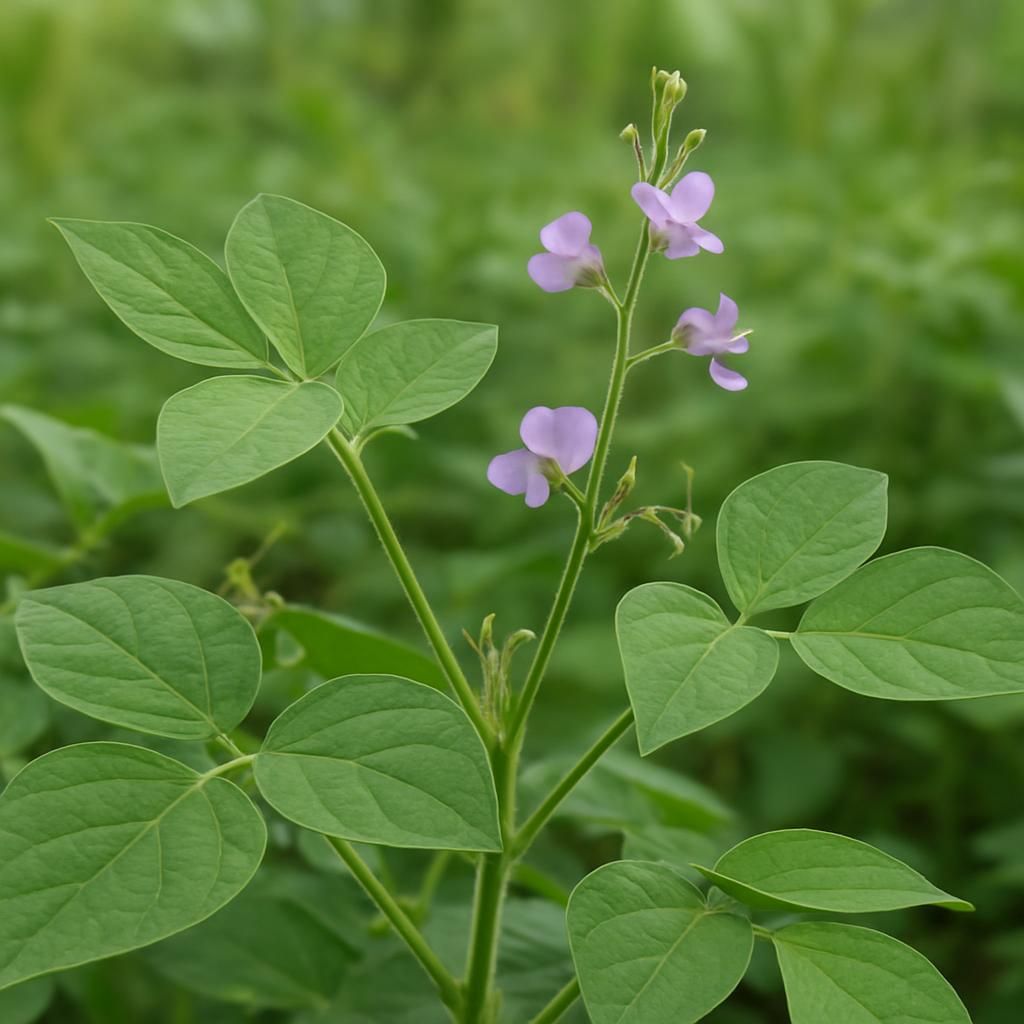
Introduction to Desmodium intortum
Desmodium intortum, commonly known as greenleaf desmodium or intortum, is a vigorous perennial legume native to Central and South America. It has become a cornerstone forage and soil-improving crop across tropical and subtropical agriculture because of its high protein content, excellent nitrogen-fixing ability, and adaptability to a wide range of soils. Farmers value it for both livestock production and as a component of sustainable cropping systems that reduce dependence on synthetic fertilizers.
Botanical Profile of Desmodium intortum
Desmodium intortum belongs to the Fabaceae family and features trifoliate leaves with broad, ovate leaflets that are dark green above and silvery beneath. The plant produces numerous prostrate to ascending stems that root at the nodes, allowing rapid vegetative spread. Small purple to lilac flowers appear in axillary racemes, followed by segmented pods that twist when mature, aiding seed dispersal. The deep taproot system enables the plant to access subsoil moisture and nutrients, contributing to its drought tolerance once established.
Soil, pH, and Climate Requirements for Desmodium intortum
Desmodium intortum performs best in well-drained, fertile soils with moderate fertility. It tolerates a range of textures but prefers loams and sandy loams that retain moisture without waterlogging. The crop thrives in humid tropical and subtropical climates with annual rainfall between 1000–2500 mm and temperatures of 20–32 °C. It shows good tolerance to moderate shade, making it suitable for agroforestry systems.
| Parameter | Ideal Range | Notes |
|---|---|---|
| Soil Type | Loam to sandy loam | Well-drained; avoid heavy clays |
| Soil pH | 5.5 – 7.0 | Slightly acidic to neutral |
| Annual Rainfall | 1000 – 2500 mm | Even distribution preferred |
| Temperature Range | 20 – 32 °C | Sensitive to frost below 10 °C |
| Altitude | 0 – 2000 m | Performs well up to mid-elevation tropics |
| Light Requirement | Full sun to partial shade | Tolerates 30–50 % shade in mixed systems |
Step-by-Step Planting & Propagation
Propagation of Desmodium intortum is achieved primarily through seed, although stem cuttings can be used for rapid multiplication. Begin land preparation by clearing vegetation and incorporating organic matter to improve soil structure. Sow seeds at a depth of 1–2 cm with row spacing of 50–75 cm and intra-row spacing of 20–30 cm. Inoculate seed with the appropriate rhizobium strain (Desmodium-specific) before planting to ensure effective nodulation. Germination occurs within 7–14 days under adequate moisture. For vegetative propagation, select healthy 15–20 cm stem cuttings with at least two nodes and plant them directly into moist soil.
Care & Maintenance regimes for Desmodium intortum
Regular management ensures high biomass production and persistence. Maintain soil moisture during the first 8–10 weeks after planting. Apply phosphorus at establishment (40–60 kg P₂O₅/ha) and potassium based on soil tests. Light grazing or cutting at 8–10 week intervals promotes branching and prevents woody stem development. Weed control is critical during the first 3 months; thereafter the dense canopy suppresses most weeds.
| Activity | Frequency / Timing | Recommended Rate / Method |
|---|---|---|
| Irrigation | Every 7–10 days during dry spells | 25–30 mm per application; avoid waterlogging |
| Fertilizer (N) | None after establishment | Relies on biological N fixation |
| Fertilizer (P & K) | At planting & every 12 months | 40–60 kg P₂O₅/ha; 30–50 kg K₂O/ha |
| Pruning / Cutting | Every 8–10 weeks or at 40–50 cm height | Cut to 10–15 cm stubble height |
| Weed Control | First 90 days; then as needed | Manual weeding or selective herbicides |
Pests, Diseases & Organic Management
Desmodium intortum is relatively resistant to many pests but can be affected by Aphids, Spider mites, and leaf-feeding caterpillars in dry conditions. Fungal issues such as leaf spot diseases and root rot may occur in poorly drained soils. Organic management includes regular monitoring, introduction of beneficial insects, and application of neem-based sprays. Crop rotation and removal of crop residues help break disease cycles. Maintaining good soil drainage and balanced nutrition further reduces susceptibility.
Harvesting, Curing & Optimal Storage
Harvest Desmodium intortum for forage when plants reach 40–60 cm height or just before flowering for maximum nutritional quality. Cut in the morning and allow material to wilt for 4–6 hours before baling or ensiling. For hay production, dry to 15–18 % moisture content under shade to preserve leaf quality. Store bales in a well-ventilated, dry area elevated off the ground. Silage should be compacted and sealed promptly to achieve anaerobic conditions. Seed harvest occurs 90–110 days after flowering when pods turn brown; thresh and store at 8–10 % moisture in cool, dry conditions.
Companion Planting for Desmodium intortum
Desmodium intortum excels in mixed cropping systems. It is frequently intercropped with Corn, Sorghum, and grasses such as Napier or Rhodes grass to improve overall forage quality and soil nitrogen. In agroforestry, it grows well under Gliricidia and other leguminous trees. Its ability to fix nitrogen and provide ground cover makes it an excellent companion for Cassava and Banana plantations, reducing erosion and enhancing biodiversity. Avoid planting with heavy feeders that compete aggressively for light and moisture during establishment.