Introduction to Custard Apple (Pink's Mammoth)
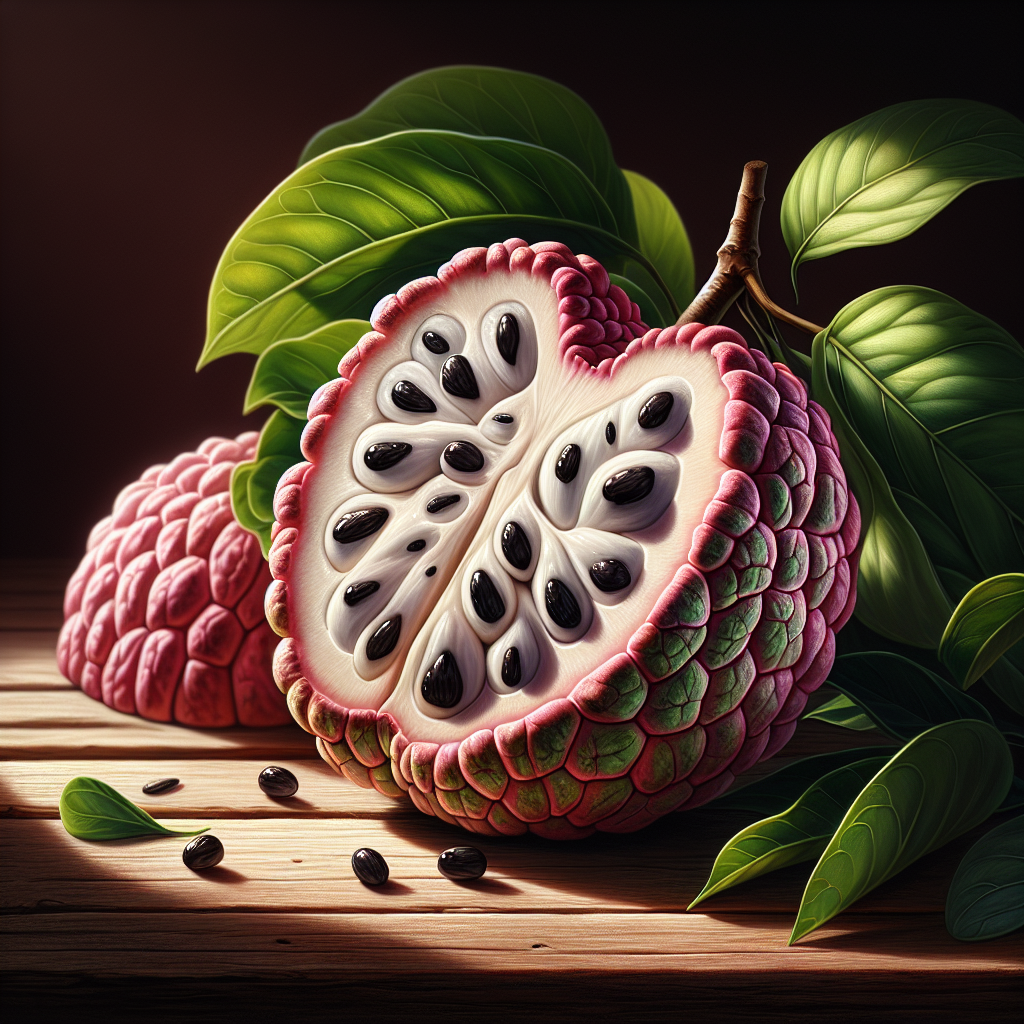
Custard Apple (Pink's Mammoth), scientifically known as Annona reticulata 'Pink's Mammoth', stands out as one of the most impressive cultivars in the Annonaceae family. Originating from selections made by Australian breeder Dwight Pink in the mid-20th century, this variety has gained international acclaim for producing the largest fruits among custard apple types—often exceeding 2 kg (4.4 lbs) per fruit, with some specimens reaching 5 lbs or more. The tree's name reflects its mammoth-sized, heart-shaped fruits covered in a reticulated skin that ripens to a pinkish-purple hue, enclosing creamy white, custard-like flesh studded with shiny black seeds.
Pink's Mammoth distinguishes itself from standard custard apples through superior fruit size, enhanced flavor profile blending sweet pineapple-banana notes with a velvety texture, and exceptional vigor. Commercial growers in Australia, Florida, and Southeast Asia report yields of 50-100 fruits per mature tree annually, making it economically viable for small to medium orchards. Home gardeners appreciate its manageable size (15-25 feet tall) and relative ease of cultivation compared to finicky relatives like cherimoya. For optimal production, focus on subtropical climates with proper pollination management, as this cultivar benefits from hand-pollination techniques to maximize fruit set. Mango (crop) growers often transition successfully to Pink's Mammoth due to similar tropical requirements.
This comprehensive guide covers everything from propagation to harvest, empowering both novice and experienced growers to achieve bountiful crops of this exotic delicacy.
Botanical Profile of Custard Apple (Pink's Mammoth)
Annona reticulata 'Pink's Mammoth' belongs to the Annonaceae family, a genus encompassing tropical fruits like soursop, sugar apple, and atemoya. The species A. reticulata originates from Central and South America, with Pink's Mammoth selected for its oversized fruits and productivity. Trees exhibit a spreading, somewhat irregular growth habit, reaching 15-25 feet in height and width at maturity, with a trunk diameter of 12-18 inches. Leaves are large (4-8 inches long), glossy green, obovate, and arranged alternately, emitting a mild fruity aroma when crushed.
Flowers emerge year-round in flushes, particularly spring through fall, appearing on new growth as pendulous, three-petaled blooms (1-1.5 inches diameter) in shades of cream to yellow-green. Pink's Mammoth is partially self-fertile but produces best with cross-pollination from other A. reticulata cultivars or related species. Fruits develop from compound inflorescences, forming large, irregularly heart-shaped syncarps with thick, reticulated skin that turns dull green to pinkish-purple at maturity. Interior flesh is snow-white, custard-soft, surrounding 20-50 large black seeds; flavor peaks at Brix levels of 18-24°, surpassing wild types.
Root system is shallow and wide-spreading (up to 20 feet radius), sensitive to waterlogging but efficient at drought tolerance once established. Phenology includes vegetative flushes every 6-8 weeks, flowering 4-6 weeks after, and fruit maturation in 120-150 days. This cultivar shows hybrid vigor, with scion growth rates 20-30% faster than standard selections, contributing to its 'mammoth' reputation.
Soil, pH, and Climate Requirements for Custard Apple (Pink's Mammoth)
Pink's Mammoth custard apple demands well-drained, fertile soils rich in organic matter, thriving in sandy loams to clay loams with 2-5% organic content. Avoid heavy clays prone to waterlogging, which induce root rot. Optimal pH ranges 5.5-7.5, with 6.0-6.8 ideal; test soil annually and amend with dolomite lime if below 5.5 or sulfur if exceeding 7.5. Incorporate 4-6 inches of compost or well-rotted manure pre-planting, targeting CEC >15 meq/100g for nutrient retention.
Climate preferences subtropical to tropical: USDA zones 9b-11, with average temperatures 68-86°F (20-30°C). Survives brief lows to 28°F (-2°C) but defoliates below 32°F (0°C); protect young trees from frost. Requires 40-60 inches annual rainfall, evenly distributed, or equivalent irrigation. Full sun (8+ hours daily) essential; humidity 60-80% optimal, though it tolerates drier conditions better than cherimoya. Wind protection critical during fruit development to prevent scarring. For heatwaves, reference strategies in Why Summer Heatwaves Are Silently Killing Small Farm Yields - And 7 Organic Strategies to Fight Back. Mulch heavily (4-6 inches organic material) to maintain soil moisture and temperature stability.
Soil preparation: deep rip to 3 feet, incorporate gypsum (2-4 lbs/100 sq ft) in sodic soils, and establish cover crops like clover for nitrogen fixation.
Step-by-Step Planting & Propagation
Propagation
Primary method: grafting onto A. reticulata or A. montana rootstocks for vigor and nematode resistance. Use cleft or veneer grafting in late winter, achieving 85-95% success. Seed propagation viable for rootstock (germination 2-4 weeks at 77-86°F), but select large seeds from superior fruits. Air-layering (marcotting) succeeds on mature branches, rooting in 8-12 weeks with IBA (0.2%).
Planting
- Site Selection: Choose elevated, frost-free sites with windbreaks. Space trees 15-20 feet apart (12x12m for commercial).
- Pit Preparation: Dig 3x3x3 ft holes, fill with 50% native soil + 50% compost + 1 lb bone meal + 0.5 lb potash.
- Planting Time: Early spring post-frost or monsoon onset.
- Planting Technique: Position graft union 4-6 inches above soil; stake immediately. Water deeply post-planting.
- Initial Care: Irrigate weekly (1-2 gallons/tree) first year; apply 4-4-4 fertilizer monthly.
Expect first fruits in 2-3 years from grafts, 4-5 from seeds. Prune at planting to balance root-shoot ratio.
Care & Maintenance regimes for Custard Apple (Pink's Mammoth)
Irrigation: Deep, infrequent watering; 20-40 gallons/week per mature tree during dry spells. Drip systems optimal, maintaining 60-80% field capacity. Deficit irrigate pre-harvest for flavor concentration.
Fertilization: Annual program: young trees 1 lb 10-10-10 NPK/year, increasing to 3-5 lbs mature. Split into 4 applications; include micronutrients (Zn, Fe, Mn via foliar). Organic option: compost tea + fish emulsion.
Pruning: Annual winter pruning removes deadwood, watersprouts, and inward branches. Open center for light penetration; tip new growth to promote flowering.
Pollination: Hand-pollinate evenings using soft brush to transfer pollen from male to female-phase flowers. One pollinator tree/10 mains boosts set 40-60%.
Weed Control: Mulch circle 4-6 ft radius; mow between rows. Cover crops suppress competition. Thinning: Remove small fruits (<2 inches) to 1-2 per cluster for mammoth size.
Pests, Diseases & Organic Management
Key Pests:
- Mealybugs: Alcohol sprays + lacewings.
- Scale insects: Horticultural oil + ladybugs.
- Fruit flies: Bait traps + protein hydrolysate.
- Leafminers: Neem oil rotations.
Major Diseases:
- Anthracnose: Copper fungicide + pruning airflow.
- Phytophthora root rot: Phosphonate drenches + drainage.
- Powdery mildew: Potassium bicarbonate + sulfur. Pink's Mammoth shows resistance to many Annona pathogens. Scout weekly; IPM prioritizes beneficials. Learn more in Why 90% of Small Farms Fail at Pest Management - And 8 Organic Fixes That Actually Work.
Harvesting, Curing & Optimal Storage
Harvest when skin shows 20-30% pink blush and fruit detaches easily (120-150 days post-set). Yield: 50-150 fruits/tree. Cut with shears, leaving short stem. Cure 3-5 days at 68-77°F, 85-90% RH to soften skin.
Storage: Mature green fruits 2-3 weeks at 50-55°F; ripe 5-7 days at 45°F. Market fresh or process into ice cream, smoothies. Shelf life doubles with waxing.
Companion Planting for Custard Apple (Pink's Mammoth)
Enhance orchard health with:
- Nitrogen Fixers: Pigeon pea, gliricidia.
- Pest Repellents: Marigold, thyme, nasturtium.
- Pollinator Attractors: Thai basil.
- Groundcovers: Sweet potato for weed suppression. Avoid legumes prone to shared nematodes. Details in Why Companion Planting Feels Like Guesswork for Small Farms - And How AI Makes It Foolproof.