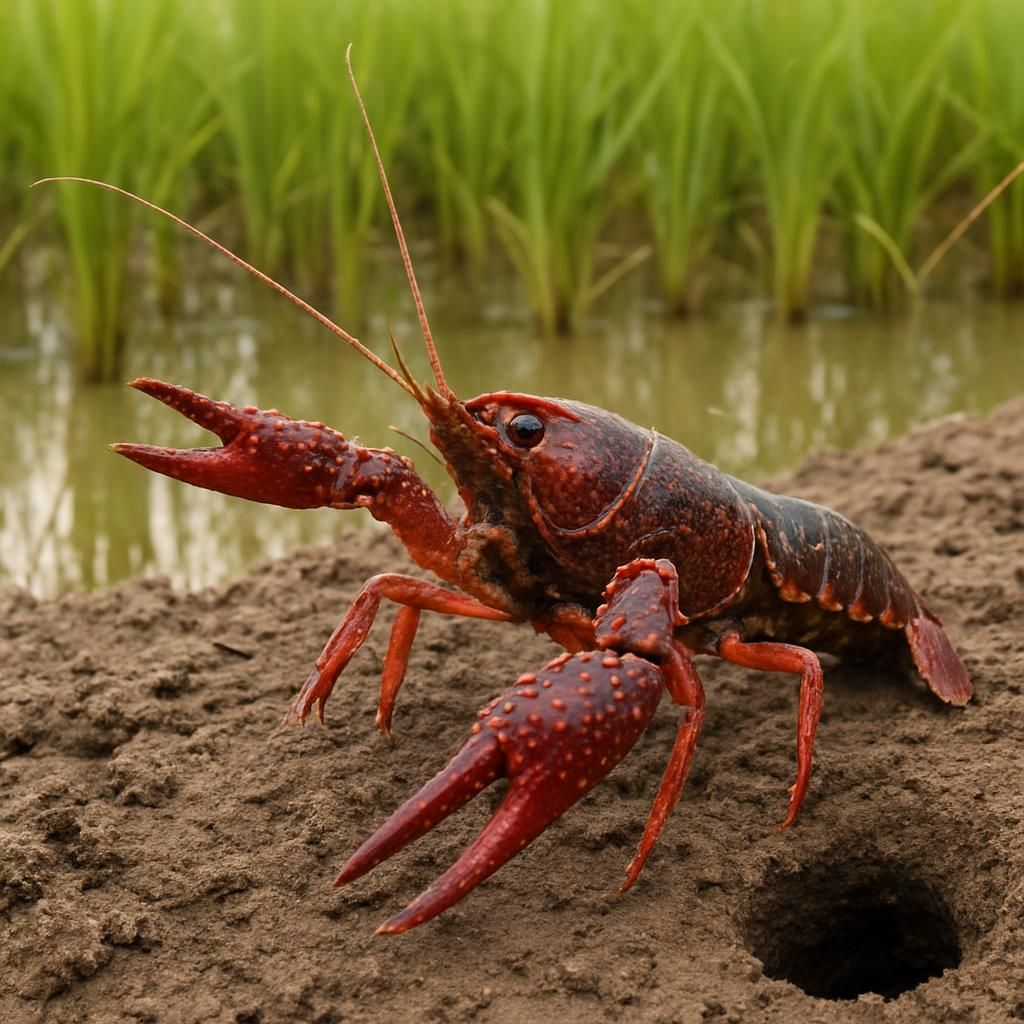
Introduction to crayfish
Crayfish are decapod crustaceans belonging primarily to the family Cambaridae. In agricultural contexts, the red swamp crayfish (Procambarus clarkii) is the most problematic species due to its aggressive burrowing behavior and high reproductive capacity. These pests thrive in warm, shallow freshwater environments and frequently invade Rice paddies, irrigation canals, and low-lying vegetable fields. Their activities can compromise levee integrity, increase water loss, and directly consume seedlings and roots.
Farmers in subtropical and temperate zones with extensive irrigation systems face the greatest challenges. Crayfish populations can rapidly expand when conditions favor burrowing and reproduction, leading to both structural damage and direct crop losses. Understanding their biology and environmental preferences is the foundation for developing effective diagnostic and management programs.
Identifying Symptoms & Damage
Crayfish damage is most visible during early crop establishment and after heavy irrigation events. Characteristic signs include numerous burrow openings along levees and field edges, often 2–5 cm in diameter, surrounded by excavated soil mounds. In Rice fields, burrows weaken banks and cause water seepage that reduces irrigation efficiency.
Young plants exhibit wilting, stunted growth, or complete disappearance when crayfish consume shoots and roots at night. In vegetable crops such as Tomato and Lettuce, irregular feeding holes on stems near the soil line and uprooted seedlings are common. Secondary effects include increased weed pressure in disturbed areas and higher risk of soil-borne pathogens entering through damaged roots.
Lifecycle and Progression of crayfish
Crayfish progress through distinct developmental stages that influence both monitoring timing and control decisions. Females carry eggs attached to their pleopods before releasing juveniles that immediately begin burrowing. Adults remain active in warm months and enter burrows during cold or dry periods.
| Stage | Duration | Key Characteristics | Agricultural Impact |
|---|---|---|---|
| Egg | 2–3 weeks | Attached to female swimmerets | Low direct impact; indicates future juveniles |
| Juvenile | 4–8 weeks | 1–3 cm; highly mobile; rapid burrowing | High seedling consumption and bank damage |
| Sub-adult | 6–10 weeks | 3–7 cm; aggressive feeding; expanding range | Increased levee damage and water loss |
| Adult | 6–18 months | 7–12 cm; peak reproduction; deep burrows | Severe structural damage and crop loss |
| Overwintering | Seasonal | Adults seal burrows; reduced activity | Hidden populations ready to emerge |
Environmental Triggers & Risk Factors
Crayfish populations surge when soil remains saturated for extended periods and water temperatures exceed 18 °C. Heavy spring rains combined with poorly maintained irrigation infrastructure create ideal conditions for rapid invasion. Fields with high organic matter content in the topsoil and abundant aquatic vegetation provide both food and cover.
Low-lying areas adjacent to permanent waterways or drainage ditches experience the highest pressure. Soil types with high clay content facilitate stable burrow construction, while sandy soils allow easier initial penetration but less structural longevity. Continuous monoculture of Rice or other flooded crops removes natural breaks in the pest’s life cycle.
Organic Control & Treatment Plans
Integrated organic strategies combine physical, cultural, and biological tactics. Early detection through weekly scouting of levees and field margins allows timely intervention before populations reach damaging levels. Maintaining 15–20 cm of standing water during vulnerable crop stages can limit juvenile access to seedlings.
| Treatment Option | Application Method | Frequency | Notes |
|---|---|---|---|
| Physical Barriers | Install fine-mesh screens at water inlets | At planting and after each flood | Prevents entry of juveniles |
| Traps (Baited) | Wire-mesh or plastic traps with fish bait | Weekly during active season | Remove adults and reduce breeding stock |
| Habitat Modification | Dry fallow periods and deep tillage | Post-harvest | Destroys burrows and exposes individuals |
| Biological Control | Introduce predatory fish (e.g., bass) | At pond or canal establishment | Provides ongoing natural suppression |
| Organic Repellents | Garlic or neem-based soil drenches | Every 10–14 days during outbreaks | Reduces feeding activity near seedlings |
Preventing crayfish in the Future
Long-term prevention relies on proactive water management and structural maintenance. Regular inspection and repair of levees eliminate entry points and reduce suitable burrowing sites. Implementing crop rotation with non-flooded species such as Wheat or Corn interrupts the pest’s preferred habitat cycle.
Installing perimeter drainage ditches with steep banks discourages colonization while facilitating rapid field drying. Avoiding continuous flooding outside the growing season and promptly removing aquatic weeds further reduces food sources. Coordinated community-level monitoring along shared waterways prevents re-infestation from neighboring properties.
Crops Most Affected by crayfish
Crayfish cause the greatest economic losses in flooded systems. Rice is the primary host, with direct consumption of seedlings and indirect losses from levee failure. Vegetable crops established in low-lying, irrigated beds—including Tomato, Lettuce, and Cucumber—suffer severe stand reduction when juveniles are abundant.
Root and tuber crops such as Potato and Sweet Potato experience feeding damage to developing tubers when fields remain moist. Ornamental and nursery stock near irrigation sources can also be affected, although impacts are typically lower than in staple food crops.