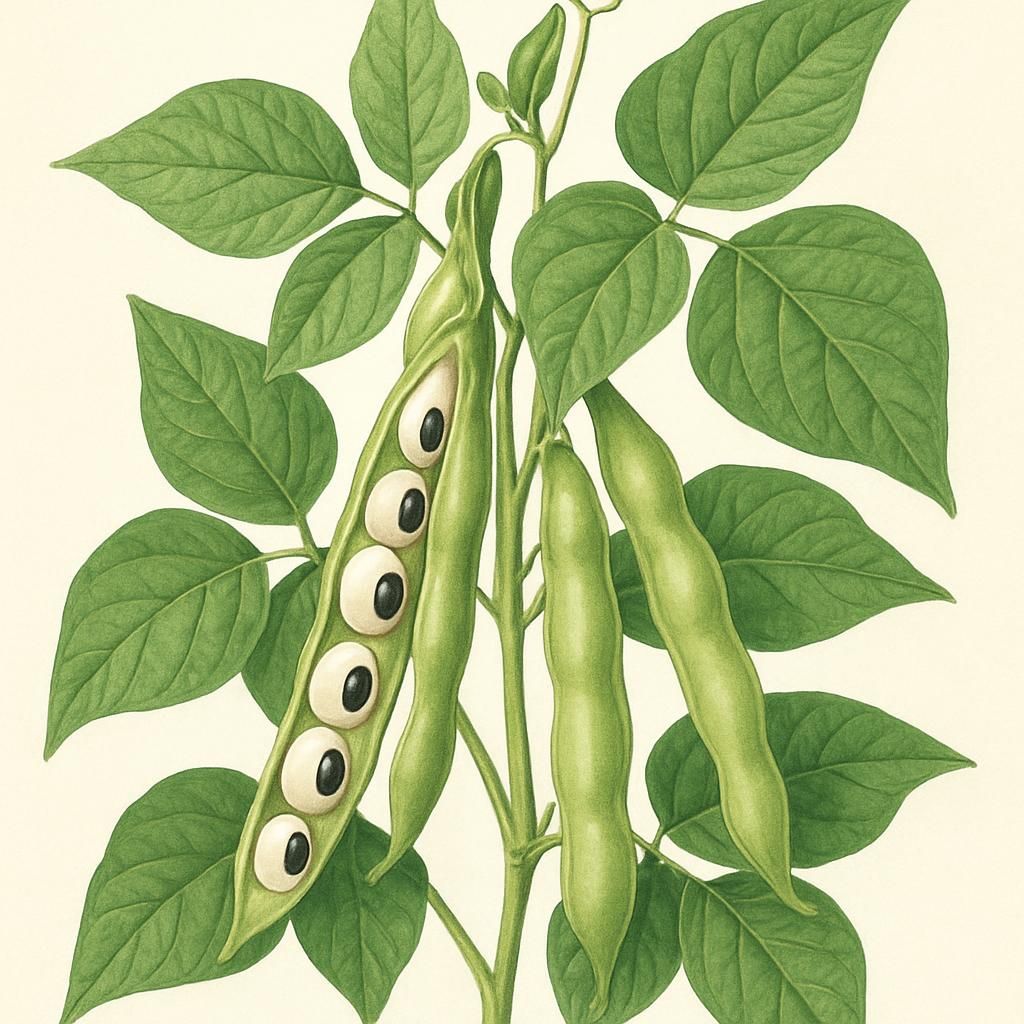
Introduction to Cowpea (Black-Eyed Pea)
Cowpea, also known as Black-Eyed Pea, is a highly adaptable legume found in many parts of the world. Originating from Africa, it's valued not only for its nutrient-rich seeds but also as a forage and cover crop. This resilient plant plays a crucial role in sustainable agriculture by improving soil health and acting as a nitrogen fixer.
Botanical Profile of Cowpea (Black-Eyed Pea)
Cowpea is a member of the Fabaceae family. Its scientific name, Vigna unguiculata, encompasses several subspecies and varieties, with the black-eyed pea being the most well-known. This annual crop is herbaceous and can be erect, semi-erect, or prostrate, adapting to various environmental conditions and forming symbiotic relationships with root nodulating bacteria.
Soil, pH, and Climate Requirements for Cowpea (Black-Eyed Pea)
Cowpeas thrive in well-drained soils and are known for their drought tolerance and heat resistance. They can grow on various soil types but prefer slightly acidic to neutral pH levels. Here's a table outlining the ideal conditions:
| Factor | Ideal Conditions |
|---|---|
| Soil Type | Loamy, Sandy, Well-drained |
| pH Level | 5.5 to 7.0 |
| Temperature | 21°C to 35°C (70°F to 95°F) |
| Rainfall | 300mm to 750mm annually |
Step-by-Step Planting & Propagation
Planting cowpeas involves preparing the soil by tilling and removing weeds. Seeds should be sown directly into the soil after the last frost, as cowpeas are sensitive to cold temperatures. The seed depth should be about 2.5 to 5 cm (1 to 2 inches), with row spacing of 60 to 100 cm (24 to 40 inches) to facilitate air circulation and reduce disease.
Care & Maintenance regimes for Cowpea (Black-Eyed Pea)
Cowpeas require minimal care due to their hardy nature. Regular maintenance includes adequate watering, especially during flowering and pod development, and occasional fertilization. Here is a scheduling table:
| Task | Schedule |
|---|---|
| Watering | Moderate, increase during flowering |
| Fertilizer | Apply nitrogen fertilizer once in growing season |
| Weeding | Bi-weekly, especially in early growth stages |
Pests, Diseases & Organic Management
Cowpeas face several pests such as Aphids and Bean Beaters, and diseases like Fusarium wilt. Management involves crop rotation, timely weeding, and biological controls like neem oil for pest management. For further organic strategies, refer to Crop Diseases Under the Microscope: 9 Organic Fixes for Small Farm Resilience.
Harvesting, Curing & Optimal Storage
Harvest cowpeas as soon as pods turn brown and seeds are fully developed. Shelling should occur only after curing the pods to reduce moisture levels. Storage involves keeping dried seeds in airtight containers to prevent pest infestation.
Companion Planting for Cowpea (Black-Eyed Pea)
Cowpea pairs well with crops like Corn and Cabbage due to its nitrogen-fixing ability, enhancing soil fertility for neighboring plants. Avoid planting with Onion and Garlic as they can inhibit growth. For more on companion planting, check out Summer Companion Planting: 10 Organic Pairings to Boost Small Farm Resilience.