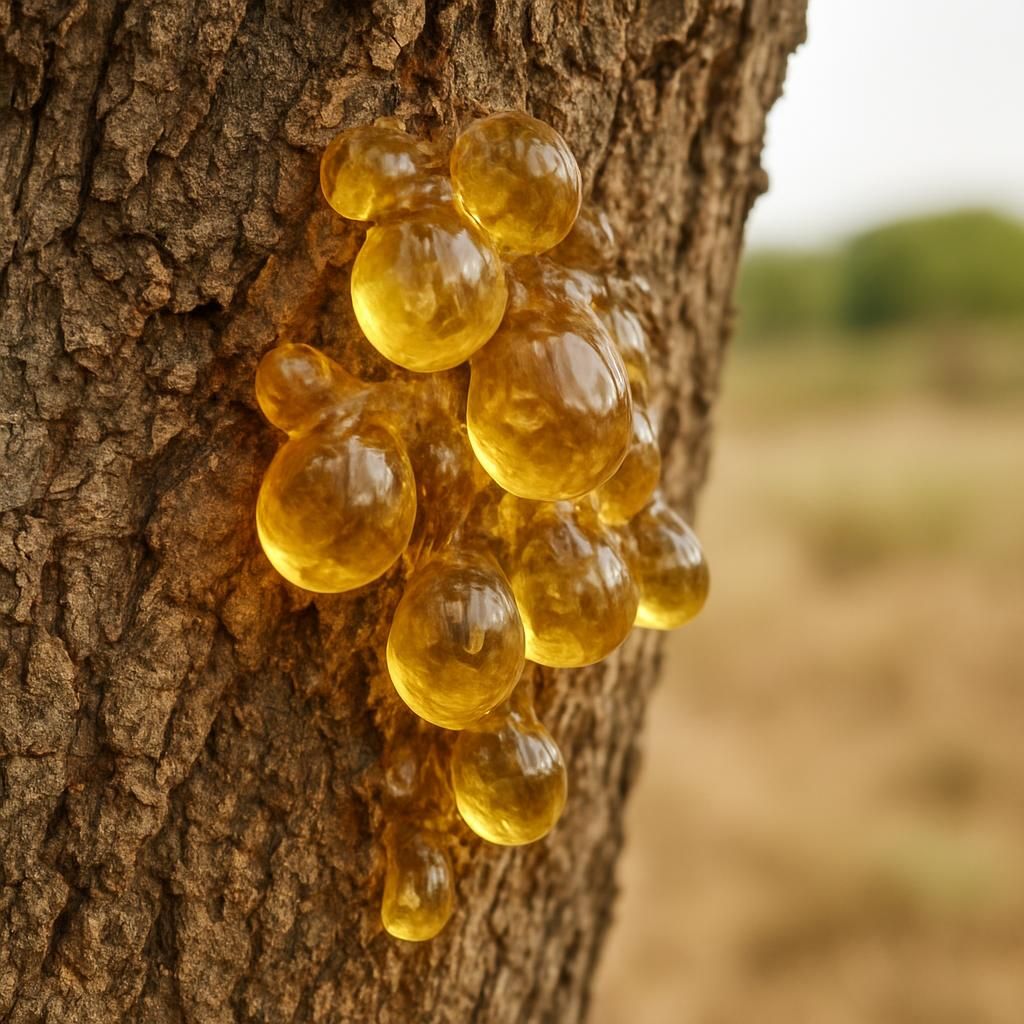
Introduction to Copal Resin
Copal resin is a translucent, aromatic oleoresin produced by several species in the Burseraceae family, most notably Protium copal. The resin has been used for millennia in Mesoamerican rituals, as a high-quality natural varnish, and in modern aromatherapy. Commercial production is concentrated in Mexico, Guatemala, and parts of Central America, but small-scale growers in USDA zones 10–11 are successfully cultivating the trees for both resin and ornamental value.
Botanical Profile of Copal Resin
Protium copal is an evergreen canopy tree that reaches 15–25 m in height with a straight trunk and spreading crown. Leaves are alternate, pinnately compound with 5–9 elliptic leaflets. Small, white, five-petaled flowers appear in axillary panicles and are followed by small drupes containing one or two seeds. The resin ducts are located in the bark and heartwood; tapping stimulates the tree to exude a milky latex that hardens into aromatic copal.
Soil, pH, and Climate Requirements for Copal Resin (MUST INCLUDE A MARKDOWN TABLE OF IDEAL CONDITIONS)
Copal trees thrive in well-drained, fertile soils with consistent moisture but never waterlogging. The ideal pH range is slightly acidic to neutral. Temperature must remain above 15 °C year-round, with optimal growth between 24–32 °C.
| Parameter | Ideal Range | Notes |
|---|---|---|
| Soil Type | Sandy loam to loam | High organic matter; excellent drainage |
| Soil pH | 5.8 – 7.0 | Avoid alkaline soils; lime only if <5.5 |
| Temperature | 24 – 32 °C daytime | Minimum 15 °C; frost kills young trees |
| Annual Rainfall | 1500 – 2500 mm | Even distribution; supplement in dry season |
| Humidity | 70 – 90 % | Essential for resin flow and leaf health |
| Elevation | 0 – 800 m | Higher elevations slow growth |
Step-by-Step Planting & Propagation
- Seed Collection & Treatment: Harvest ripe drupes in late dry season. Remove pulp, soak seeds 24 h in warm water, then scarify lightly with sandpaper.
- Germination: Sow in 50 % sand / 50 % compost mix at 28 °C; germination occurs in 14–28 days. Maintain 80 % humidity under shade cloth.
- Seedling Stage: Transplant at 15–20 cm height into 20 cm pots. Use the same soil mix amended with 10 % aged manure.
- Field Planting: Space trees 6 m × 6 m in full sun to partial shade. Dig 60 cm deep holes; backfill with topsoil plus 2 kg compost per hole.
- Grafting (optional): Use whip-and-tongue grafts on 1-year-old rootstock of Protium heptaphyllum for faster resin production.
Care & Maintenance regimes for Copal Resin (MUST INCLUDE A MARKDOWN TABLE OF WATER, FERTILIZER, AND PRUNING SCHEDULES)
Young trees require regular irrigation until established. Mature trees tolerate short dry periods but produce more resin with consistent moisture. Fertilize with balanced organic inputs and prune to maintain a single leader and open canopy.
| Stage | Water Schedule | Fertilizer Schedule | Pruning Schedule |
|---|---|---|---|
| Year 1–2 | 15–20 L/tree, 2× weekly | 200 g 5-5-5 organic NPK every 8 weeks | Remove lower branches at 1 m height |
| Year 3–5 | 30 L/tree weekly in dry season | 500 g compost + 100 g rock phosphate twice/year | Thin crossing branches; shape central leader |
| Mature (>5 yr) | 40–50 L/tree every 10–14 days | 2 kg well-rotted manure + mulch annually | Light annual prune after resin harvest |
Pests, Diseases & Organic Management
Copal trees are relatively resistant but can suffer from scale insects, mealybugs, and occasional spider mites during hot, dry spells. Root rot from Phytophthora occurs in poorly drained soils. Use neem oil sprays (0.5 % solution) every 14 days for soft-bodied insects. Encourage predatory mites and lady beetles. Improve drainage and apply 5 cm wood-chip mulch to suppress soil-borne pathogens.
Harvesting, Curing & Optimal Storage
Resin tapping begins in year 4–5. Make shallow V-shaped cuts 1–2 mm deep on the trunk during the early rainy season; collect hardened resin after 7–10 days. Air-dry collected resin on screens in shade for 3–4 weeks until moisture <8 %. Store in airtight glass or food-grade plastic containers in a cool, dark place. Properly cured copal retains fragrance for 5–10 years.
Companion Planting for Copal Resin
Interplant with nitrogen-fixing Gliricidia or pigeon pea to improve soil fertility and provide light shade for young trees. Aromatic herbs such as thyme and rosemary deter scale insects. Low-growing clover or nasturtium serve as living mulch and attract beneficial insects. Avoid heavy feeders such as corn or banana within 3 m of the trunk.