Introduction to Commiphora
Commiphora species are woody, resin-producing plants native to arid regions of Africa, the Arabian Peninsula, and parts of India. The genus includes over 200 species, with the most economically important being Commiphora myrrha (myrrh), Commiphora wightii (guggul), and Commiphora guidottii. These plants have been central to traditional medicine, perfumery, and religious practices for thousands of years. Their ability to survive in extreme drought conditions makes them valuable for sustainable agriculture in marginal lands.
Modern interest in Commiphora focuses on sustainable resin production, essential oil extraction, and ecological restoration projects. The plants also contribute to soil stabilization in desert margins and provide habitat for specialized insects. Growing Commiphora offers both economic returns through resin sales and ecological benefits in dryland farming systems.
Botanical Profile of Commiphora
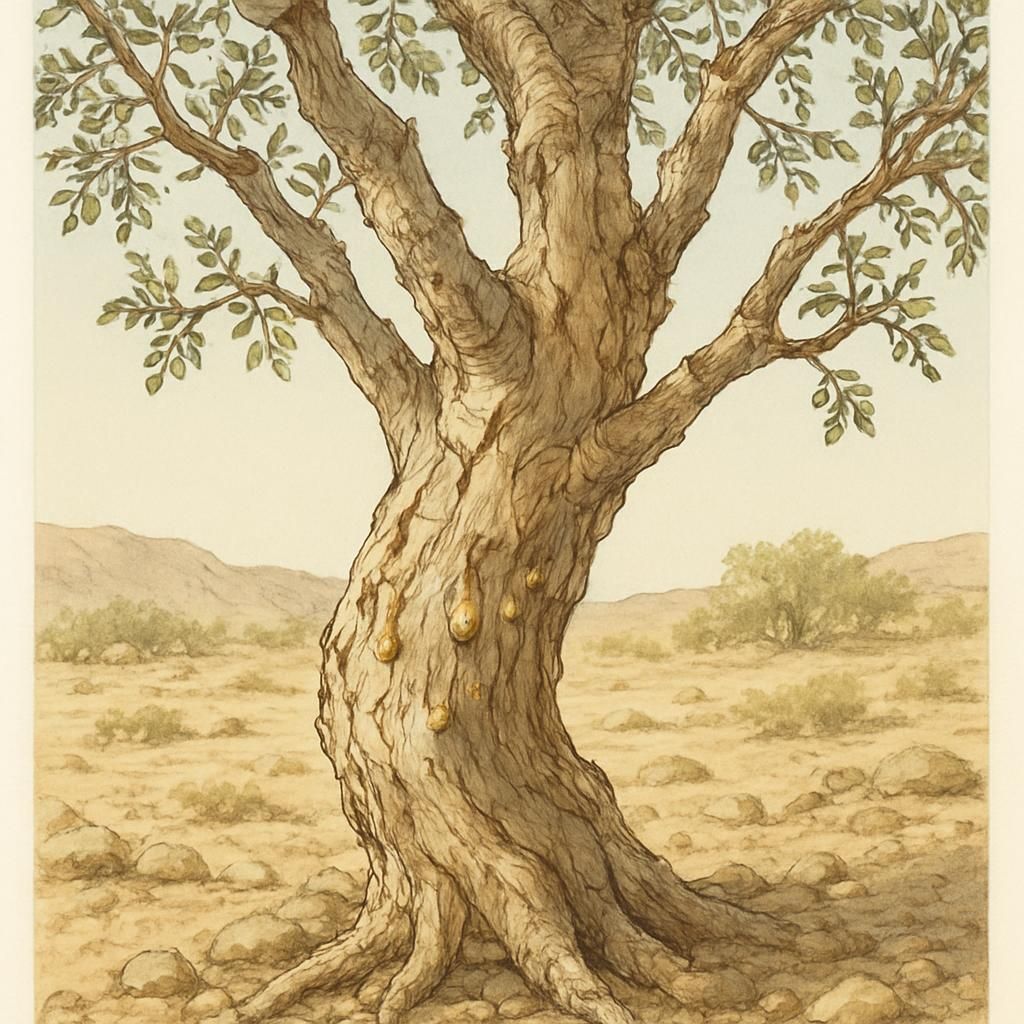
Commiphora plants are typically deciduous shrubs or small trees reaching 2–5 meters in height. They feature thick, often spiny branches, papery bark that peels in thin sheets, and compound leaves that drop during prolonged dry periods. Small, inconspicuous flowers appear before or with new leaves and are followed by drupes containing a single seed. The defining characteristic is the production of aromatic oleo-gum-resin from the bark and wood when wounded.
The resin ducts are located in the secondary xylem and phloem, releasing a milky or yellowish exudate that hardens into fragrant tears. Different species vary in resin chemistry: C. myrrha produces myrrh with high furanosesquiterpene content, while C. wightii yields guggulsterones used in Ayurvedic medicine. Growth is slow to moderate, with plants reaching tappable size in 4–8 years depending on species and conditions.
Soil, pH, and Climate Requirements for Commiphora
Commiphora species demand well-drained, low-fertility soils that mimic their native rocky or sandy habitats. Heavy clay or waterlogged soils cause rapid decline. They tolerate alkaline conditions and are highly salt-tolerant once established.
| Parameter | Ideal Range | Notes |
|---|---|---|
| Soil Type | Sandy loam, gravelly, rocky | Excellent drainage essential |
| Soil pH | 7.0 – 8.8 | Tolerates up to pH 9.5 |
| Temperature Range | 15–40 °C daytime | Frost sensitive below 5 °C |
| Annual Rainfall | 150–450 mm | Supplemental irrigation needed in first 2 years |
| Altitude | 0–1500 m | Some species grow to 2000 m |
| Light | Full sun | Minimum 6 hours direct sunlight |
Step-by-Step Planting & Propagation
Commiphora is most reliably propagated from semi-hardwood cuttings taken in late spring or early summer. Select healthy 15–25 cm shoots from the current season’s growth, remove lower leaves, and dip the basal end in a rooting hormone containing 0.3 % IBA. Insert cuttings into a sterile mix of coarse sand and perlite (3:1) and maintain bottom heat at 28–30 °C with high humidity. Rooting occurs in 6–10 weeks.
Seed propagation is possible but slower. Fresh seeds should be soaked in warm water for 24 hours, then sown 1 cm deep in sandy soil at 25–30 °C. Germination takes 14–30 days. Seedlings grow slowly and require protection from direct sun for the first 4–6 weeks. Transplant seedlings or rooted cuttings into permanent positions when they reach 30–40 cm tall, spacing plants 2.5–3.5 m apart in rows 4 m wide.
Care & Maintenance regimes for Commiphora
Once established, Commiphora requires minimal intervention. Focus on weed control during the first two years and occasional deep watering during extreme drought. Pruning is performed to shape the plant and encourage multiple stems for higher resin yield.
| Operation | Schedule | Details |
|---|---|---|
| Watering | Year 1: every 10–14 days | Deep soak to 30 cm; reduce after year 2 |
| Watering | Established plants: none | Rely on natural rainfall unless <100 mm/year |
| Fertilizer | Year 1–2: 50 g NPK 10-10-10 | Apply at start of rainy season |
| Fertilizer | Mature plants: none | Over-fertilization reduces resin quality |
| Pruning | Annual: late dry season | Remove dead wood; thin center for airflow |
| Pruning | Every 3 years | Rejuvenation cut to 50 cm height |
Pests, Diseases & Organic Management
Commiphora is relatively pest-resistant due to its resinous nature, but young plants can suffer from Aphids and Spider Mites. Monitor new growth weekly during the growing season. A strong water spray or neem oil emulsion (0.5 %) applied at 7–10 day intervals provides effective control.
Root and collar rots caused by Phytophthora and Pythium can occur in poorly drained soils. Prevent these by ensuring excellent drainage and avoiding over-irrigation. Termites may attack stressed plants; maintain plant vigor and use diatomaceous earth barriers around the base. Regular removal of fallen leaves reduces fungal spore load.
Harvesting, Curing & Optimal Storage
Resin tapping begins when stems reach 4–6 cm diameter, usually at 5–8 years of age. Make shallow V-shaped incisions 2–3 mm deep on opposite sides of the trunk during the hot, dry season. Collect hardened resin tears after 10–14 days. Each tree can be tapped 2–3 times per year without compromising health.
Fresh resin is sorted by color and clarity, then air-dried in shade for 5–7 days. Store in breathable cloth bags or paper-lined boxes in a cool, dark, dry location (below 25 °C and <60 % RH). Properly cured myrrh or guggul retains potency for 2–3 years. For essential oil production, distill within six months of harvest.
Companion Planting for Commiphora
Commiphora pairs well with other drought-tolerant species that share similar soil and water needs. Sesame and Pigeon pea improve soil nitrogen and provide light shade during establishment. Low-growing Marigold and Thyme help deter soil pests and improve biodiversity. Avoid planting moisture-loving crops such as Rice or Banana nearby, as they compete for water and may increase humidity-related disease pressure. In agroforestry systems, Commiphora can be interplanted with Gliricidia for wind protection and additional soil improvement.