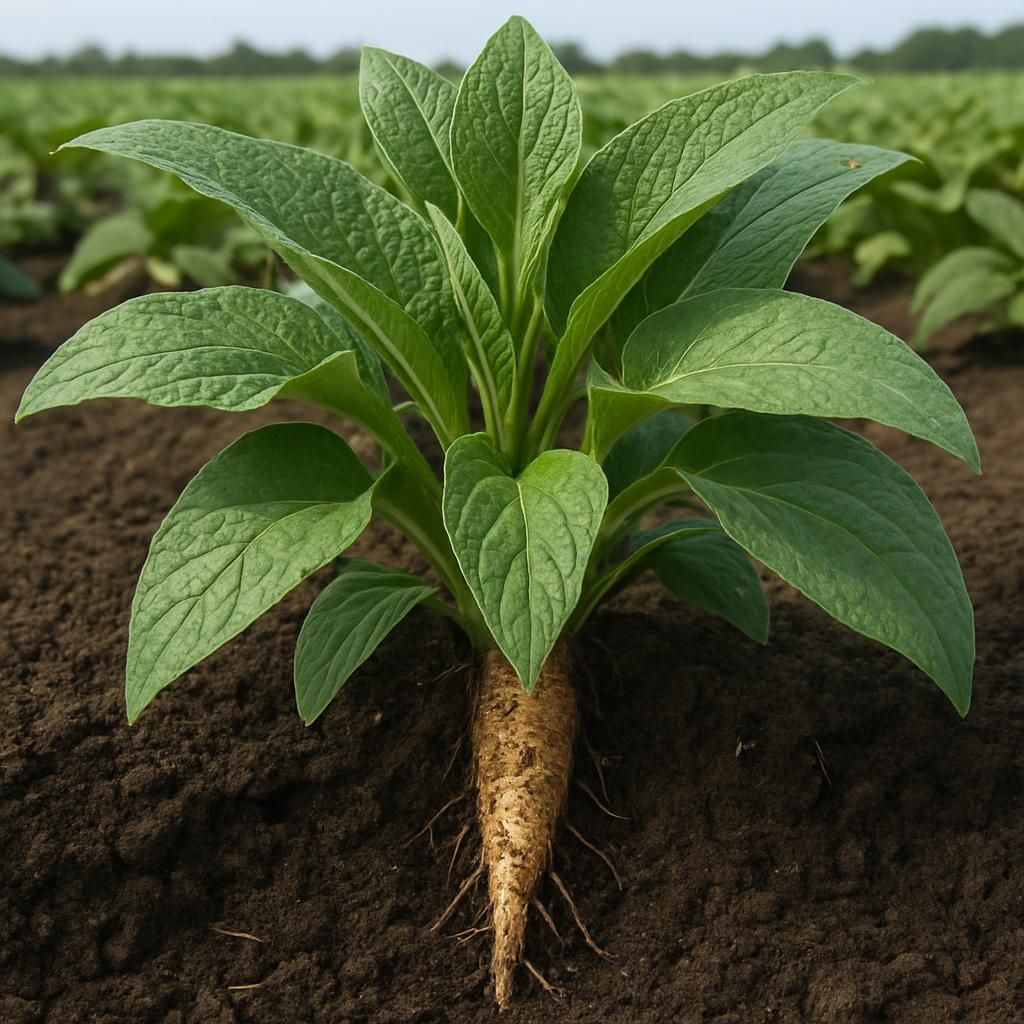
Introduction to Comfrey Root (Bocking)
Bocking 14 comfrey (Symphytum × uplandicum 'Bocking 14') is a sterile hybrid cultivar developed for commercial and regenerative agriculture. Unlike common comfrey, it produces no viable seed, eliminating the risk of uncontrolled spread while delivering superior leaf and root biomass. Professional growers value this cultivar for its ability to mine deep soil nutrients, produce high volumes of mulch material, and serve as a dynamic accumulator in perennial systems.
Comfrey root has a long history of use in European and North American agriculture as a source of potassium-rich fertilizer, livestock feed supplement, and medicinal preparations. Modern applications focus on its role in soil regeneration, carbon sequestration, and organic nutrient cycling. Because the plant is sterile, all propagation occurs vegetatively through root divisions or crown cuttings, ensuring genetic uniformity and predictable performance.
This definitive growing guide covers every stage from site selection through long-term maintenance, providing professional-grade recommendations suitable for market gardens, small farms, and regenerative operations.
Botanical Profile of Comfrey Root (Bocking)
Bocking 14 belongs to the Boraginaceae family and exhibits a robust, clump-forming growth habit. Mature plants reach 1.2–1.5 m in height with broad, hairy leaves up to 30 cm long. The deep, fleshy taproot can extend 1–2 m or more, accessing water and minerals unavailable to shallow-rooted crops.
The plant produces clusters of purple-blue flowers in late spring and early summer, but these flowers are sterile and do not set seed. This sterility is the defining characteristic that distinguishes Bocking 14 from common comfrey (Symphytum officinale). The absence of seed production makes Bocking 14 the preferred cultivar for controlled agricultural settings.
Comfrey’s rapid growth cycle allows multiple harvests per season. Under optimal conditions, a single planting can remain productive for 15–20 years with proper management. The plant’s high allantoin content and potassium concentration make both leaves and roots valuable for composting, liquid fertilizer production, and soil amendment.
Soil, pH, and Climate Requirements for Comfrey Root (Bocking)
Bocking 14 thrives in well-drained yet moisture-retentive soils with high organic matter content. The plant tolerates a wide range of soil textures but performs best in loams and sandy loams that allow deep root penetration. Heavy clay soils require amendment with organic matter and raised beds to prevent waterlogging around the crown.
| Parameter | Ideal Range | Notes |
|---|---|---|
| Soil pH | 6.0–7.5 | Slightly acidic to neutral; avoid below 5.5 |
| Soil Texture | Loam to sandy loam | Deep, friable structure preferred |
| Organic Matter | 4–8% | Incorporate compost or aged manure |
| Drainage | Good to excellent | Avoid standing water; use raised beds if needed |
| Temperature Range | 15–28 °C daytime | Hardy to –20 °C once established |
| Annual Rainfall | 600–1200 mm | Supplemental irrigation in dry periods |
| Sunlight | Full sun to partial shade | Minimum 6 hours direct sun for maximum yield |
Comfrey is winter dormant in temperate climates and resumes growth when soil temperatures reach approximately 8 °C. In regions with short growing seasons, early spring planting or fall establishment allows roots to develop before summer heat stress.
Step-by-Step Planting & Propagation
Bocking 14 is exclusively propagated vegetatively. Root cuttings or crown divisions are the standard commercial methods. Begin by selecting healthy, disease-free parent plants at least two years old. Dig carefully around the crown in early spring or late autumn when the plant is dormant.
Cut the thick taproot into 5–8 cm sections, ensuring each piece contains at least one visible bud or growing point. Plant root cuttings horizontally in prepared beds at a depth of 5–8 cm and space 30–45 cm apart within rows that are 60–90 cm apart. Firm the soil and water thoroughly after planting.
For crown divisions, lift the entire clump and separate sections containing 2–3 buds and a portion of root. Replant immediately at the same depth as the original crown. Water consistently for the first four to six weeks until new shoots emerge. Once established, plants rapidly fill the allotted space and require minimal intervention.
Care & Maintenance regimes for Comfrey Root (Bocking)
Established Bocking 14 comfrey requires minimal inputs but responds well to strategic management. The following table outlines recommended schedules for irrigation, fertility, and pruning.
| Season | Watering Schedule | Fertilizer Application | Pruning / Harvest Schedule |
|---|---|---|---|
| Spring | 25–40 mm per week if rainfall insufficient | Top-dress with 2–3 cm well-rotted manure or compost | Cut back to 10 cm after first flowering; remove spent foliage |
| Summer | 40–60 mm per week during peak growth | Optional side-dress of potassium-rich organic fertilizer mid-season | Harvest leaves every 4–6 weeks; leave 10 cm stubble |
| Autumn | Reduce to 15–25 mm per week | Light compost application before dormancy | Final cut in early autumn; allow foliage to senesce naturally |
| Winter | None required once dormant | None | Remove dead foliage in late winter to reduce overwintering pests |
Mulch with 5–8 cm of organic material to conserve moisture, suppress weeds, and moderate soil temperature. Avoid nitrogen-heavy fertilizers that promote excessive leafy growth at the expense of root development. Monitor for compaction around the crown and aerate gently if necessary.
Pests, Diseases & Organic Management
Bocking 14 is generally resilient, but several pests and diseases can affect plant health. Aphids may colonize tender new growth in spring; strong water sprays and releases of lady beetles provide effective control. Spider mites can appear during hot, dry periods; increasing humidity and introducing predatory mites are recommended organic strategies.
Root and crown rots caused by Pythium or Phytophthora species occur in poorly drained soils. Prevention through proper site selection and raised beds is the most effective management. Slugs and snails may damage young shoots; beer traps and diatomaceous earth barriers reduce populations.
Fungal leaf spots occasionally appear under prolonged wet conditions. Remove affected foliage and improve air circulation through proper spacing. Avoid overhead irrigation late in the day. The plant’s natural allantoin content provides some resistance to minor infections.
Harvesting, Curing & Optimal Storage
Harvest comfrey leaves when plants reach 60–90 cm in height, typically every 4–6 weeks during the growing season. Cut stems 8–10 cm above soil level to encourage regrowth. For maximum nutrient concentration, harvest in the morning after dew has dried.
Roots are harvested from plants at least two years old. Dig carefully around the crown, removing 30–50% of the root mass while leaving sufficient material for the plant to regenerate. Wash roots thoroughly and slice into thin pieces for drying. Air-dry at 35–40 °C in a well-ventilated space or dehydrator until brittle. Store dried leaves and roots in airtight containers away from light and moisture.
Liquid fertilizer can be prepared by steeping fresh leaves in water for 3–4 weeks. Strain and dilute 1:10 before application. Both dried material and liquid preparations retain potency for up to 12 months when stored correctly.
Companion Planting for Comfrey Root (Bocking)
Comfrey serves as an excellent dynamic accumulator and living mulch in perennial systems. Its deep roots bring potassium and other minerals to the surface, benefiting neighboring plants. Compatible companions include Tomato, Strawberry, and Blueberry, where comfrey mulch supplies potassium and improves soil structure.
Avoid planting near shallow-rooted annuals that may be shaded by comfrey’s rapid spring growth. Use comfrey in orchard understories, forest gardens, and perennial vegetable beds where its biomass can be cut and dropped as green manure. The plant’s flowers also attract pollinators, supporting overall garden biodiversity.
When integrating comfrey into existing systems, maintain 60–90 cm spacing from other perennials to prevent competition for light and moisture during establishment. Regular cutting keeps plants manageable and maximizes nutrient cycling benefits.