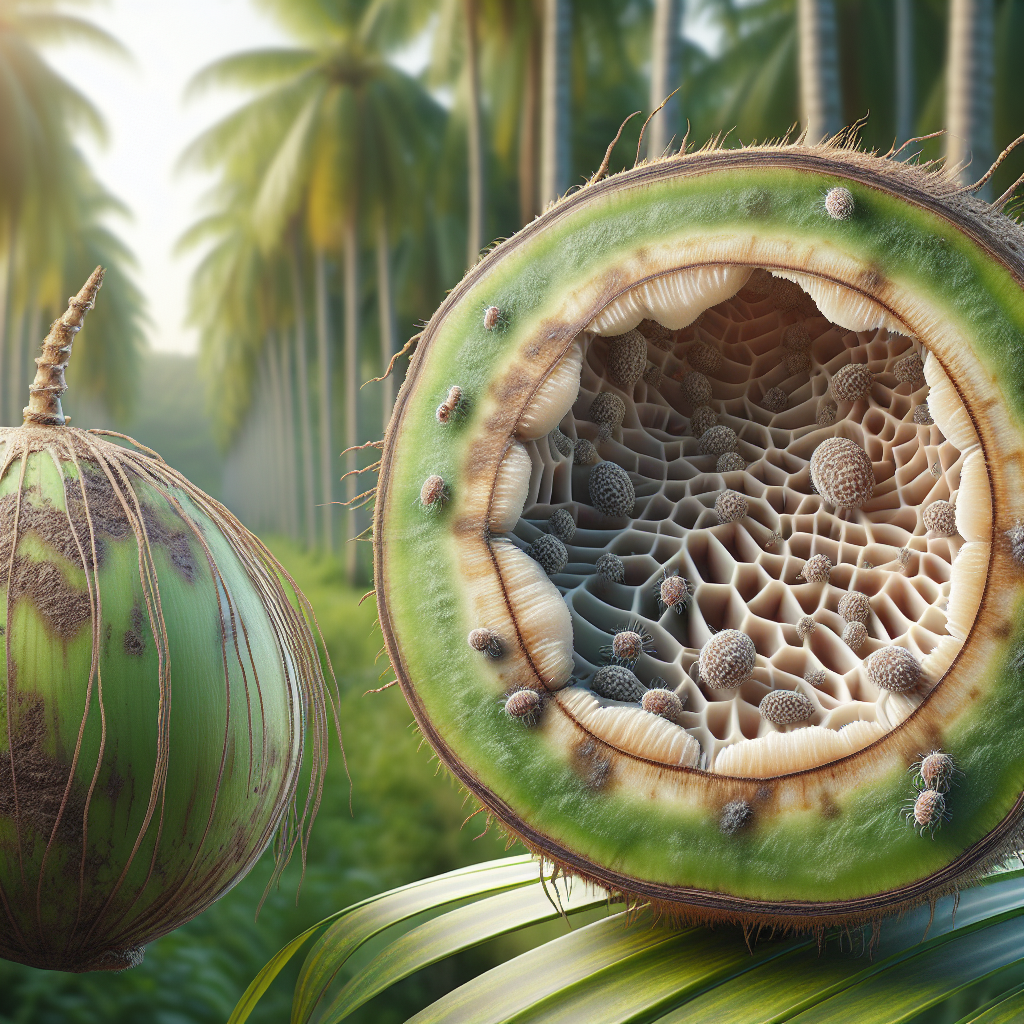
Introduction to Coconut Eriophyid Mite
The Coconut Eriophyid Mite, scientifically known as Aceria guerreronis, represents one of the most destructive pests affecting coconut palms (Cocos nucifera) globally. These tiny, worm-like mites, often invisible to the naked eye, infest the developing fruits by tunneling into the soft husk beneath the perianth, leading to premature fruit drop, deformed nuts, and substantial reductions in copra yield—sometimes up to 50% or more in severe outbreaks. First identified in Mexico in 1964, this eriophyid mite has since spread to major coconut-producing regions including Africa, Asia, the Pacific Islands, and parts of Latin America, posing a severe threat to smallholder farmers and commercial plantations alike.
Unlike larger pests, A. guerreronis thrives in tropical humid environments, exploiting the coconut's fruit structure for protection. Infestations often go unnoticed until fruits show characteristic scarring and splitting, by which time populations explode. This guide equips growers with professional-grade diagnostics, lifecycle understanding, and proven management strategies. For related mite issues, see Eriophyid mites. Early intervention is critical, as uncontrolled outbreaks can devastate entire orchards, emphasizing the need for vigilant scouting and integrated pest management (IPM). In high-risk areas, losses can exceed millions in economic value annually, underscoring the urgency for effective control.
Identifying Symptoms & Damage
Diagnosing Coconut Eriophyid Mite infestations requires keen observation of fruit symptoms, as the mites themselves measure just 0.2-0.3 mm and are barely visible without magnification. Initial signs appear 8-12 weeks after fruit set, when mites penetrate under the perianth (calyx cup). Look for triangular or oval grayish-brown lesions or necrotic spots on the husk surface directly beneath the perianth—often 5-10 mm in diameter. These lesions expand, causing the husk to split longitudinally, exposing the kernel to secondary infections like fungi or bacteria.
Affected nuts become lightweight, undersized, and deformed, with husks that are brittle and easily peel away. Severe damage leads to kernel blackening, reduced copra content (down to 10-20% of normal), and premature nut fall. Cross-sections of infested fruits reveal tunnels lined with mite feeding scars, white powdery frass, and sometimes associated fungi. Differentiate from other issues: unlike spider mites, which cause leaf stippling, A. guerreronis targets fruits exclusively. Yield impacts are profound—infested bunches show 30-60% nut loss, with copra quality dropping due to discoloration and mold.
Field scouting involves splitting 20-30 young nuts (10-12 months old) per palm monthly. A 5-10% infestation rate warrants action. Use a 10x hand lens to spot mites as elongated, translucent bodies moving actively. Symptoms worsen in dense canopies with poor air circulation, mimicking anthracnose but distinguished by mite tunnels. Document damage with photos for threshold-based decisions.
Lifecycle and Progression of Coconut Eriophyid Mite
Aceria guerreronis completes its lifecycle in 10-20 days under optimal tropical conditions (27-32°C, 80-90% humidity), with overlapping generations year-round. Adult females (0.25 mm long, legless, annulated bodies) lay 1-5 eggs daily inside husk tunnels for 10-15 days. Eggs hatch in 2-3 days into larvae, which molt twice into nymphs before becoming adults—all stages feed voraciously on husk cells, secreting enzymes that disrupt growth.
Mites disperse via wind, splashing rain, or human/insect vectors, colonizing new fruits within hours. Peak populations occur during rainy seasons when humidity favors egg survival. Progression starts subtly: eggs under perianth hatch, larvae tunnel radially (1-2 mm/day), causing lesions by week 4. By maturity (7 months), 50-100 mites per nut expand damage. Overwintering occurs in fallen nuts or debris.
Understanding this rapid cycle informs timing: target eggs/larvae for best control. Generations overlap 20-30 times yearly, building explosive populations. Monitor with sticky traps or nut dissections to track progression from 1% (early) to 50% (critical) infestation.
Environmental Triggers & Risk Factors
Coconut Eriophyid Mite thrives in warm, humid tropics (25-35°C, >80% RH), with outbreaks triggered by prolonged wet periods that enhance dispersal and survival. High rainfall (>2000 mm/year) and poor drainage create ideal microclimates under dense canopies, reducing predation. Close planting (<7m spacing) limits airflow, trapping humidity and favoring mites over natural enemies like predatory mites.
Risk factors include susceptible varieties like Tall Coconut hybrids, drought-stressed palms (weaker defenses), and nearby infested orchards. Windy conditions spread mites 1-2 km rapidly. Nutrient imbalances, especially potassium deficiency, weaken husks. Introduce mites as a general category for broader context. Secondary triggers: mechanical injury from harvesting aids entry; monsoon winds amplify invasion. Climate change intensifies risks via erratic rains. Assess farm microclimate—elevated, ventilated sites fare better.
Organic Control & Treatment Plans
Organic management of Coconut Eriophyid Mite relies on IPM, integrating cultural, biological, and botanical tactics for sustainable control. Start with sanitation: remove and destroy infested fallen nuts weekly to break lifecycle. Apply sulfur-based miticides (e.g., wettable sulfur 0.2-0.5%) every 15-20 days during peak (rainy season), targeting under-perianth via high-volume sprays (2000 L/ha). Botanicals like neem oil (5 ml/L + soap adjuvant) or garlic-chili extracts disrupt feeding/oviposition—apply 3x at 10-day intervals.
Biologicals shine: release predatory mites (Neoseiulus paspalivorus, 1000/ha) or Amblyseius largoensis for 70-80% suppression. Systemic organics like abamectin (low-dose, OMRI-listed) penetrate husks effectively. Treatment plan: Scout weekly; at 5% infestation, prune for airflow + sulfur spray; >10%, add predators + neem rotations. For small farms, hand-injection of coconut oil under perianth controls localized spots. Combine with trunk injection of potassium phosphite for plant immunity. Monitor efficacy via nut dissections—aim for <5% reinfestation. Rotate tactics to prevent resistance. See Spring Pest Patrol: Organic AI Strategies to Shield Your Crops from Common Invaders for advanced tips.
Preventing Coconut Eriophyid Mite in the Future
Prevention hinges on exclusion, resilience, and monitoring. Quarantine new plantings; inspect seedlings from nurseries. Plant resistant varieties like Malayan Dwarf or hybrids (e.g., MYD x Talls) with thicker husks. Maintain 8-10m spacing for ventilation; interplant with banana or mango to disrupt mite corridors. Prune lower fronds annually to reduce humidity.
Boost defenses: apply balanced NPK + micronutrients (Mg, B) quarterly; mulches suppress soil mites. Deploy yellow sticky traps (20/ha) for early detection. Encourage predators via flowering borders (marigolds, thyme). Hot water treatment (48°C, 20 min) for infested nuts pre-market. Farm certification programs enforce scouting thresholds. Long-term: breed mite-resistant rootstocks. Annual audits prevent reintroduction.
Crops Most Affected by Coconut Eriophyid Mite
Primarily devastating to Coconut (all varieties: Tall Coconut, Dwarf Coconut, hybrids), with near-total focus on Cocos nucifera. Minor reports on date palms and oil palms, but coconut accounts for 95% of global damage. No significant impact on non-palm crops.