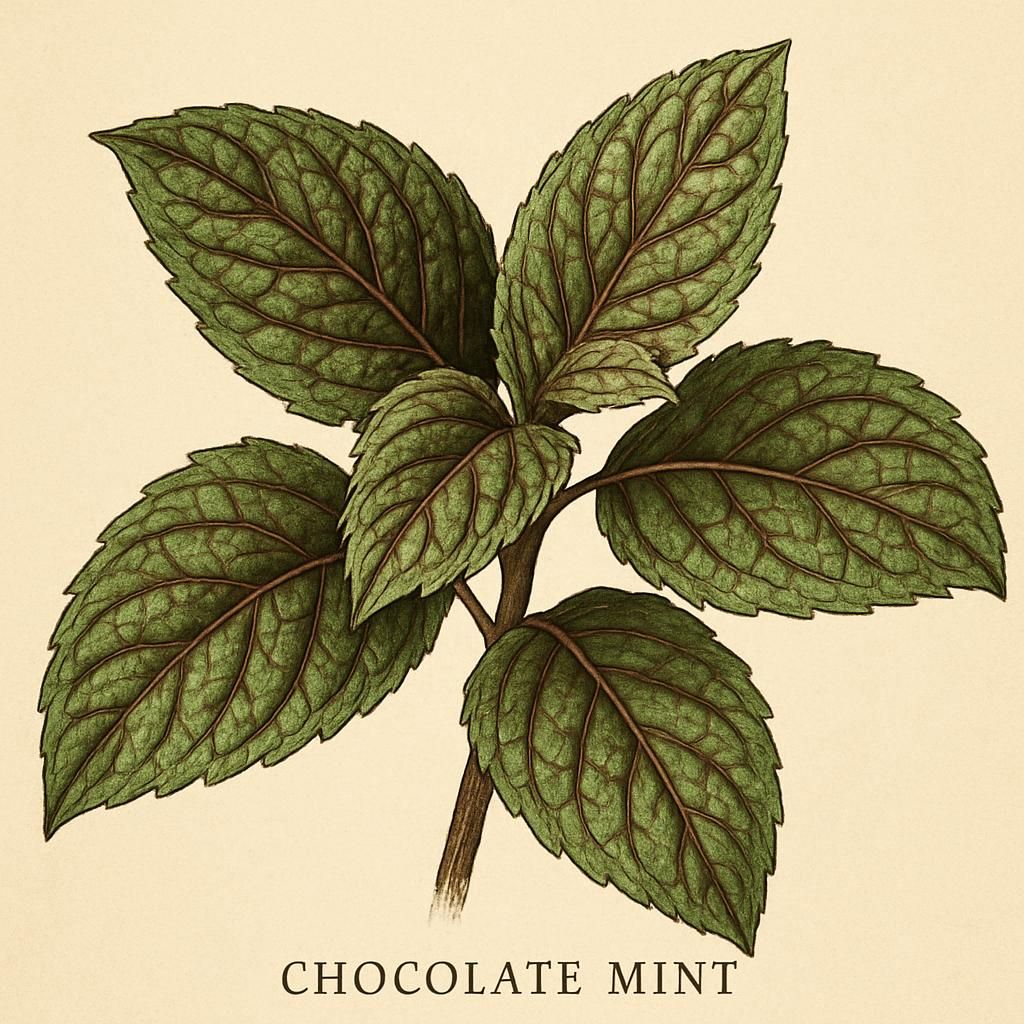
Introduction to Chocolate Mint
Chocolate Mint is a delightful variety of peppermint, scientifically known as Mentha × piperita 'Chocolate'. This herb is coveted for its aromatic leaves that emit a warm chocolate-mint scent, making it a favorite for culinary, medicinal, and decorative purposes.
Botanical Profile of Chocolate Mint
Chocolate Mint belongs to the Lamiaceae family, which encompasses many herbs used in cuisines around the world. Its vigorous nature enables it to thrive in various environments, with serrated, dark green leaves accented with burgundy veins. It is a herbaceous perennial, often used in teas, desserts, and as a garnish.
Soil, pH, and Climate Requirements for Chocolate Mint
Optimal growth of Chocolate Mint is contingent on specific soil and climate conditions:
| Condition | Optimal Range |
|---|---|
| Soil Type | Well-draining, loamy soil |
| pH Level | 6.5 to 7.5 |
| Temperature Range | 55°F-70°F (13°C-21°C) |
| Sunlight | Full sun to partial shade |
| Humidity | Moderate |
Chocolate Mint thrives in USDA Hardiness Zones 3-9, where it can grow as a perennial.
Step-by-Step Planting & Propagation
- Selecting a Site: Choose a location with adequate sunlight and well-draining soil for planting Chocolate Mint.
- Propagation by Cuttings: Use sharp scissors to trim a healthy cutting, remove the lower leaves, and place the cut end in water until roots appear, then transplant.
- Soil Preparation: Amend the soil with organic matter to enhance fertility and drainage.
- Planting: Transplant rooted cuttings into prepared soil, ensuring the crown is level with the ground.
- Spacing: Maintain a space of about 18-24 inches between plants to accommodate growth.
- Watering: Immediately after planting, water deeply to encourage root establishment.
Care & Maintenance Regimes for Chocolate Mint
Maintaining Chocolate Mint involves routine care to optimize growth and yield:
| Care Routine | Schedule |
|---|---|
| Watering | Weekly; increase during dry periods |
| Fertilization | Monthly with a balanced, organic fertilizer |
| Pruning | Regularly trim to encourage bushier growth |
Chocolate Mint spreads quickly, so regular pruning is crucial for managing its size and preventing invasiveness.
Pests, Diseases & Organic Management
Chocolate Mint can face pest and disease challenges, including:
- Common Pests: Aphids, Spider Mites, and Whiteflies.
- Diseases: Mint is generally resistant, but overcrowding can lead to fungal problems like powdery mildew.
Organic management includes using insecticidal soap for pests and maintaining good air circulation around plants to prevent fungal diseases.
Harvesting, Curing & Optimal Storage
- Harvesting: Begin when plants reach at least 6 inches in height. Clip leaves as needed.
- Best Practices for Curing: Air-dry leaves in a cool, dark place; this preserves oils and enhances flavor.
- Storage: Store dried leaves in airtight containers, away from direct light to maintain potency.
Companion Planting for Chocolate Mint
Chocolate Mint pairs well with:
These plants can deter pests, enhance growth, and improve flavor profiles within a shared garden space. For additional companion planting tips, consider exploring blog posts like Summer Companion Planting: 10 Organic Pairings to Boost Small Farm Resilience.