Introduction to Cherry of the Rio Grande
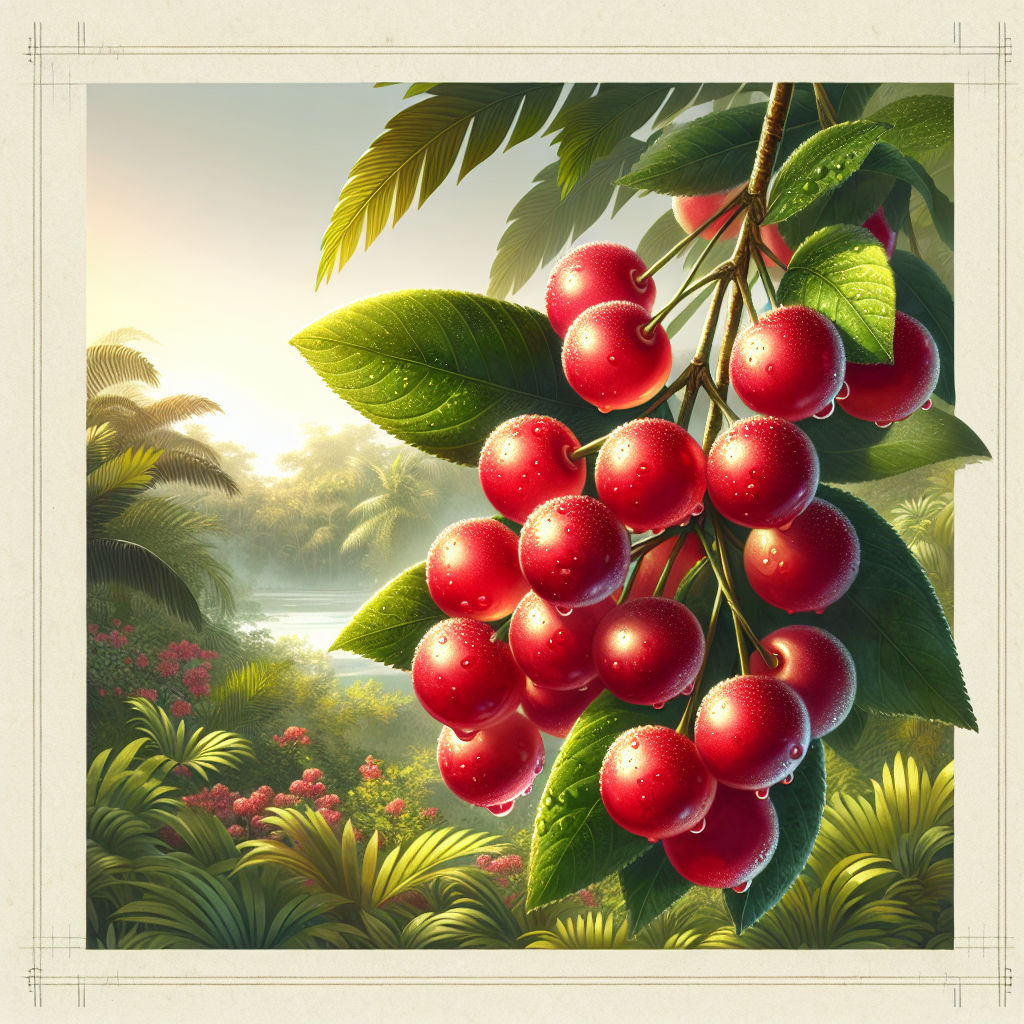
Cherry of the Rio Grande (Malpighia glabra 'Rio Grande') is a vigorous selection of the Barbados cherry, renowned for its exceptional fruit quality and adaptability to subtropical and warm temperate regions. Native to the tropical Americas, this shrubby plant produces abundant clusters of small, glossy red fruits that burst with tangy-sweet flavor and ten times the vitamin C content of oranges. Unlike true cherries from the Cherry family, these are acerola cherries, prized for fresh eating, juicing, and processing into powders or supplements.
Ideal for small farms, permaculture systems, and backyard orchards, Cherry of the Rio Grande offers year-round harvests in frost-free areas, with peak production from spring through fall. Plants are self-fertile, drought-tolerant once established, and resistant to many common pests, making them a low-maintenance powerhouse crop. Yields can reach 20-50 pounds per mature bush annually, with fruits ripening in 3-4 weeks from flower set. This deep-dive guide equips growers with professional strategies for propagation, care, pest management, and maximum productivity, drawing on decades of agricultural expertise.
Botanical Profile of Cherry of the Rio Grande
Cherry of the Rio Grande belongs to the Malpighiaceae family, characterized by its upright, multi-stemmed growth habit reaching 6-10 feet tall and wide in ideal conditions. Leaves are glossy, elliptical, 2-4 inches long, evergreen in warm climates, and arranged oppositely on reddish branches. The plant flowers profusely with small, pinkish-white blooms in axillary clusters, featuring five petals and prominent stamens that attract bees and other pollinators.
Fruits are drupes, 0.5-1 inch in diameter, initially green, turning brilliant crimson at maturity. Each contains 3-5 small seeds surrounded by juicy, vitamin C-packed pulp (up to 1,000-4,500 mg/100g fresh weight). The 'Rio Grande' cultivar is selected for larger fruits, higher yields, and improved flavor compared to wild types. Roots form a dense, fibrous system extending 2-3 feet deep, supporting drought resistance. Growth is rapid in youth, slowing after 3-5 years, with plants living 20+ years. Phenology includes vegetative flush in spring, flowering triggered by day length and warmth, and fruit set favored by mild nights.
Soil, pH, and Climate Requirements for Cherry of the Rio Grande
Cherry of the Rio Grande excels in well-drained, fertile soils with pH 5.5-7.5, tolerating slight acidity from organic matter decomposition. Sandy loams or loamy sands with 2-5% organic content prevent waterlogging, crucial as roots are prone to rot in heavy clays. Incorporate compost or aged manure at planting to boost microbial activity and nutrient retention; aim for 20,000-30,000 lbs/acre equivalent in farm settings.
Optimal climate features USDA zones 9-11, with daytime highs of 75-95°F and nights above 55°F for fruit set. It withstands brief dips to 28°F but suffers damage below 25°F; mulch heavily in marginal areas. Full sun (6-8+ hours) is essential for fruiting—partial shade reduces yields by 50%. Annual rainfall of 40-60 inches suits it, supplemented by 1 inch/week during dry spells via drip irrigation. High humidity promotes fungal issues, so ensure good airflow. For container growing, use 15-25 gallon pots with potting mix amended with perlite for drainage. Read more on Soil Health Mastery: 5 Proven Strategies for Small Farms to Build Fertile Ground Without Breaking the Bank for broader techniques.
Step-by-Step Planting & Propagation
Propagation: Seeds germinate in 2-4 weeks at 75-85°F but produce variable offspring; use fresh seeds from ripe fruit, stratified in moist sphagnum for 30 days. Air-layering yields true-to-type plants in 6-8 weeks: girdle a pencil-thick branch, apply rooting hormone, wrap in moist sphagnum, and secure with plastic. Cuttings root in 4-6 weeks under mist—take 4-6 inch semi-hardwood tips in summer, dip in 3,000 ppm IBA, plant in 1:1:1 perlite-peat-sand.
Planting: Select 1-2 year-old nursery stock. Dig holes 2x root ball width, 12-18 inches deep, amending with 20% compost. Space bushes 8-12 feet apart for hedges or orchards; plant atop slight mounds in heavy soils. Water deeply post-planting, mulch 4-6 inches thick with wood chips or straw, keeping it 6 inches from trunks. For small farms, plant in rows 10 feet apart to allow machinery access. Harden off container plants gradually. Best planting window: early spring or post-frost fall in zones 9+.
Care & Maintenance regimes for Cherry of the Rio Grande
Watering: Establish with 1-2 gallons daily for first 3 months, then deeply but infrequently—1 inch/week. Drought stress reduces fruit size; use tensiometers targeting -10 to -20 cbars. Mulch conserves moisture and suppresses weeds.
Fertilization: Apply balanced 10-10-10 or 6-6-6 in March, June, September at 1-2 lbs per mature plant, or compost tea biweekly. Foliar sprays of micronutrients (chelated iron, zinc) correct deficiencies evident as yellowing leaves. Avoid excess nitrogen post-bloom to prevent vegetative overgrowth.
Pruning: Annually after harvest, remove dead wood, thin interior for light penetration, and tip-prune to encourage bushiness. Maintain 5-7 main scaffolds; severe heading cuts stimulate fruiting wood. In hedges, shear lightly.
Training: Stake young plants; espalier on wires for small spaces. Monitor for wind damage in exposed sites.
Pests, Diseases & Organic Management
Pests: Common invaders include aphids, whiteflies, and fruit flies. Blast with water jets or apply neem oil (0.5% solution) weekly. Introduce ladybugs or lacewings for biocontrol. Netting prevents bird damage. Monitor for mealybugs on new growth; treat with insecticidal soap.
Diseases: Anthracnose causes fruit rot—ensure airflow, apply copper fungicide at bud break. Powdery mildew appears in humid conditions; sulfur sprays or potassium bicarbonate control it. Prevent root rot with proper drainage. Cultural practices like morning watering and debris removal are key. For advanced strategies, see Why 90% of Small Farms Fail at Pest Management - And 8 Organic Fixes That Actually Work.
Integrated Approach: Scout weekly, use row covers, and companion plant with marigolds to repel nematodes.
Harvesting, Curing & Optimal Storage
Harvest when fruits turn fully red and soften slightly, twisting gently or clipping clusters. Pick every 3-5 days during peak to avoid overripening and pest attraction. Yields peak in years 3-7; one bush supplies a family.
For fresh use, rinse and refrigerate up to 1 week. Juice immediately or freeze whole. Dehydrate at 135°F for 12-24 hours into chewy snacks, or puree and freeze into pulp for smoothies. Process into powder: dry at <120°F, grind finely, store airtight. Commercial drying yields 10:1 fresh-to-powder ratio. Avoid bruising to prevent fermentation.
Companion Planting for Cherry of the Rio Grande
Pair with nitrogen-fixers like pigeon peas or Thai Basil for pest repulsion and soil enrichment. Nasturtium traps aphids; beans climb nearby for space efficiency. Avoid nightshades like tomato due to shared pathogens. Sunflowers provide shade and bird distraction. In guilds: underplant with sweet potatoes for ground cover, edge with marigolds against nematodes. This boosts biodiversity and yields 20-30%. Explore Why Companion Planting Feels Like Guesswork for Small Farms - And How AI Makes It Foolproof for more.