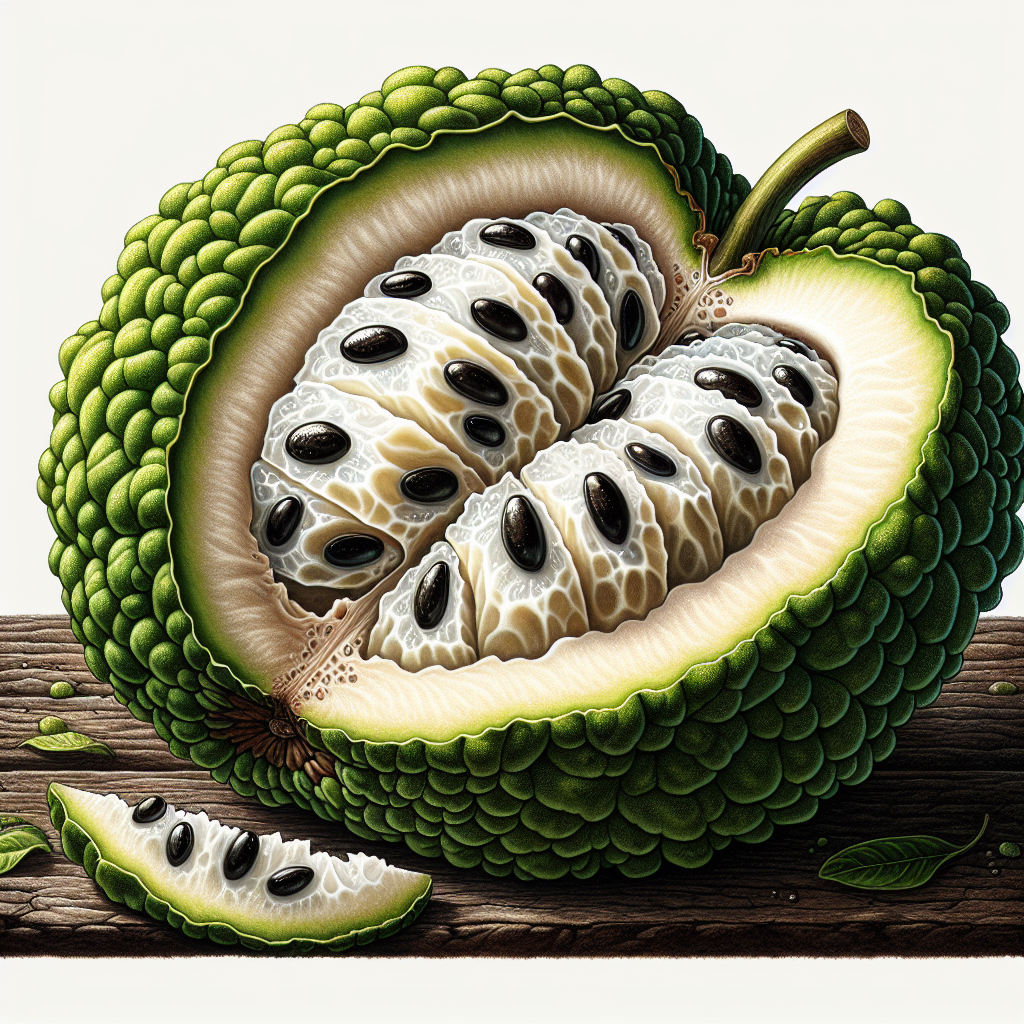
Introduction to Cherimoya (Fino de Jete)
Cherimoya Fino de Jete stands out as one of the finest cultivars of the cherimoya family, originating from the coastal hills of Jete in Granada, Spain. This variety, selected for its elite flavor and productivity, delivers fruits with an exquisite custard-like texture, intense sweetness (Brix levels often exceeding 20°), and remarkably few seeds—sometimes as low as 10-15 per fruit. Unlike standard cherimoyas, Fino de Jete maintains superior fruit quality even under variable conditions, making it a top choice for commercial growers and gourmet home gardeners alike.
Native to the Andean valleys but perfected in Europe's subtropical microclimates, this crop commands premium market prices, often $10-20 per kilogram in specialty markets. Trees reach 4-6 meters in height, with a spreading canopy ideal for espalier training in smaller spaces. Expect first harvests in 3-4 years from grafting, with mature trees yielding 50-100 fruits annually under optimal management. Its cold tolerance down to -2°C sets it apart from tropical annonas, enabling cultivation in USDA zones 9-11 and protected UK/European sites. Hass Avocado (crop) growers often transition to Fino de Jete for diversification due to overlapping climate needs and complementary harvest seasons.
Botanical Profile of Cherimoya (Fino de Jete)
Scientific Classification:
- Kingdom: Plantae
- Family: Annonaceae
- Genus: Annona
- Species: A. cherimola
- Cultivar: 'Fino de Jete'
Fino de Jete is a semi-dwarfing selection with upright growth habit, large obovate leaves (15-25 cm long) coated in fine silvery hairs beneath, and fragrant white flowers (3-4 cm) featuring three outer petals curved like fishing hooks. These hermaphroditic blooms require hand-pollination for maximum yield, as natural pollinators rarely access the hooded structure—mimicking the Annona-specific nitidulid beetles absent in most growing regions.
Fruit morphology is distinctive: heart-shaped to oval, 10-15 cm long, with thick, pale green skin etched in diamond-like scales. Flesh is snow-white, translucent, and gelatinous, encasing black seeds that detach easily. Peak ripeness occurs when skin yields to gentle thumb pressure, typically 3-5 days post-harvest at room temperature. Nutritionally, each 100g provides 75 kcal, 1g protein, 18g carbs (including 3g fiber), and rich antioxidants like acetogenins. Compared to Papaya (crop), Fino de Jete offers denser nutrition and longer shelf life.
Root system is shallow and wide-spreading (up to 3x canopy diameter), with fine laterals prone to waterlogging damage. Phenology includes spring flush of new growth, summer flowering (peaking June-August in Northern Hemisphere), and fall-winter fruit maturation. This cultivar's low seed count stems from parthenocarpic tendencies under stress, a genetic trait honed over decades of selection in Spain's Alpujarra region.
Soil, pH, and Climate Requirements for Cherimoya (Fino de Jete)
Fino de Jete demands well-drained, fertile loams with pH 6.2-7.5; avoid heavy clays or sands lacking organic matter. Incorporate 20-30% compost or aged manure pre-planting to achieve 2-3% organic content, ensuring CEC >15 meq/100g for nutrient retention. Mulch with 10-15 cm wood chips or cocoa hulls to suppress weeds, regulate moisture, and acidify gradually—vital as bicarbonates lock up iron and zinc.
Optimal climate mirrors coastal California or southern Spain: 15-28°C averages, with minimal frost. Survives brief dips to -2°C but suffers leaf drop below 0°C; summer maxima above 35°C reduce pollination success by 40%. Annual rainfall of 800-1200 mm suits it best, concentrated in winter-spring—supplement with drip irrigation (20-40 L/tree/week in summer) to maintain -0.02 to -0.05 MPa soil moisture. High humidity (60-80%) aids fruit set but invites fungal issues; ensure 2-3 m/s airflow via spacing or fans.
For cooler climates, site on south-facing slopes with maritime influence, using frost blankets or overhead protection. Salt tolerance is moderate (ECe <4 dS/m); pair with Guava (crop) in saline-prone areas. Microclimate tweaks like reflective mulches boost yields by 25% in marginal zones. Check our Soil Health Mastery: 5 Proven Strategies for Small Farms to Build Fertile Ground Without Breaking the Bank for tailored amendments.
Step-by-Step Planting & Propagation
Propagation: Grafting onto seedling rootstocks (A. cherimola or A. montana) is standard, achieving 90% take rates. Collect scions in dormancy (January-February), whip-graft to 1-2m rootstocks in spring. Air-layering works for mature trees: girdle 5 cm branches June-July, apply rooting hormone (3,000 ppm IBA), wrap in moist sphagnum—roots form in 8-12 weeks. Seeds germinate in 30-60 days at 25°C but yield variable offspring; stratify at 10°C for 14 days to break dormancy.
Planting: Select 1.5-2m grafted trees. Dig 60x60x60 cm pits, amend with 5 kg compost + 200g rock phosphate + 100g gypsum. Plant at same depth as nursery container in early spring or fall, spacing 4-6m apart (hedgerow: 3m). Stake loosely; prune to 4-6 scaffolds at 60-80 cm height. Initial irrigation: 50L/tree weekly until established (6 months).
Training: Year 1: Central leader or open vase. Year 2+: Maintain 3-4m height via summer pinching. Hand-pollinate: Collect pollen 9-11 AM (sheds midday), brush into receptive flowers (petals reflexed) evenings. Yields double with consistent pollination.
Care & Maintenance regimes for Cherimoya (Fino de Jete)
Irrigation: Drip systems deliver 600-1000 mm/year equivalent. Deficit irrigate post-fruit-set (reduce 30%) to enhance sugar concentration without cracking. Monitor tensiometers; withhold November-March to induce mild dormancy.
Fertilization: Annual regimen: February (200g N, 100g P2O5, 200g K2O/tree via urea, superphosphate, sulfate of potash); May (foliar micronutrients: 2% urea + chelated Fe/Zn/Mn/B); August (50g MgSO4). Soil test yearly; avoid excess N post-bloom to prevent vegetative vigor over fruiting.
Pruning: Winter: Remove deadwood, watersprouts, crossing branches. Thin canopy for light penetration (50-70% shade cloth equivalent). Summer: Tip-prune new shoots to 4-6 leaves. Dwarfing via root pruning every 3 years in containers.
Weed Control: Organic mulch + shallow cultivation. Cover crops like clover suppress competitors without nitrogen tie-up.
Pests, Diseases & Organic Management
Key Pests: Mealybugs cluster on tender shoots—blast with water jets, apply neem oil (2 ml/L) weekly. Scale insects on bark: Introduce Cryptolaemus montrouzieri lady beetles or horticultural oil dormant sprays. Fruit borers rare but monitor; Bacillus thuringiensis (Bt) for larvae. Birds target ripening fruit—netting essential.
Diseases: Phytophthora root rot thrives in wet soils—use phosphonate drenches (e.g., potassium phosphite 3 ml/L monthly). Anthracnose causes fruit spotting; copper hydroxide pre-bloom + sanitation. Powdery mildew on leaves: Sulfur dust (preventive, 20 kg/ha). Avoid overhead watering.
Integrated Management: Companion herbs like Thyme (crop) deter aphids. Beneficial nematodes for soil pests. Scout weekly; thresholds: 5% leaf infestation triggers intervention. Learn more in Why 90% of Small Farms Fail at Pest Management - And 8 Organic Fixes That Actually Work.
Harvesting, Curing & Optimal Storage
Harvest when fruits reach full size (thumb-deep color change at base) and slight softness—typically October-December in Mediterranean zones. Clip with 2-3 cm stem using secateurs; handle gently to avoid bruises. Yield grading: Prime (>400g, unblemished); process smaller for smoothies.
Curing: Room temperature (20-25°C) 3-5 days until aromatic and yields to pressure. Avoid refrigeration below 12°C to prevent chilling injury (pitting, browning).
Storage: Short-term: 12-15°C, 85-90% RH (2-3 weeks). Controlled atmosphere (3% O2, 5-8% CO2) extends to 4 weeks. Market fresh or puree for ice cream/sorbets—freeze at -18°C up to 12 months with 10% sugar syrup.
Companion Planting for Cherimoya (Fino de Jete)
Pair with nitrogen-fixers like pigeon pea for soil enrichment, or Marigold (crop) to repel nematodes. Underplant with low herbs: Nasturtium (crop) traps aphids, thyme suppresses soil pathogens. Avoid legumes like peas due to root competition. Yarrow (crop) attracts pollinators. Benefits: 15-20% pest reduction, improved microclimate. See Why Companion Planting Feels Like Guesswork for Small Farms - And How AI Makes It Foolproof for systems.
(Total word count: 1,456)