Introduction to Chausa Mango
Believed to have originated in northern India and associated historically with the region around present-day Bihar and Uttar Pradesh, this cultivar is one of the classic late-season mangoes of the Indo-Gangetic belt. It is especially prized for its rich aroma, soft melting texture, deep sweetness, and the traditional "sucking mango" eating style made possible by its juicy pulp and relatively low fiber. In commercial and home orchards alike, it is valued because it extends the mango season after many mid-season cultivars have finished.
Compared with some export-oriented mangoes that emphasize shelf life and skin color, this variety is grown primarily for eating quality. Fruit often remains greenish-yellow to golden rather than developing a strong red blush, so maturity must be judged by shoulder development, aroma, and pulp color rather than skin appearance alone. Growers who understand this distinction usually achieve far better harvest timing and postharvest quality.
As with most cultivated mangoes, orchard performance depends heavily on climate synchronization: a warm vegetative phase, a relatively dry induction period before flowering, and stable warm conditions during fruit set. If these stages are disrupted by rain, high humidity, or temperature swings, flowering irregularity and disease pressure increase sharply. For general species background, see Mango.
Botanical Profile of Chausa Mango
This is a grafted selection within the species Mangifera indica, an evergreen tree in the family Anacardiaceae. Trees are typically moderately vigorous to vigorous, developing a broad, rounded canopy when unmanaged. In favorable soils and warm climates, mature trees can become large, often 8-12 meters tall or more, though commercial orchards usually keep them lower through pruning for spray coverage, light penetration, and easier harvest.
New vegetative flushes often emerge reddish or bronze and harden to glossy green. Leaves are lanceolate, leathery, and arranged alternately, with strong apical dominance in young shoots. Floral panicles are terminal, branching, and carry many small yellowish to pinkish flowers; only a small percentage are hermaphroditic and capable of setting fruit. Fruit set is therefore naturally low, and a large initial drop is normal.
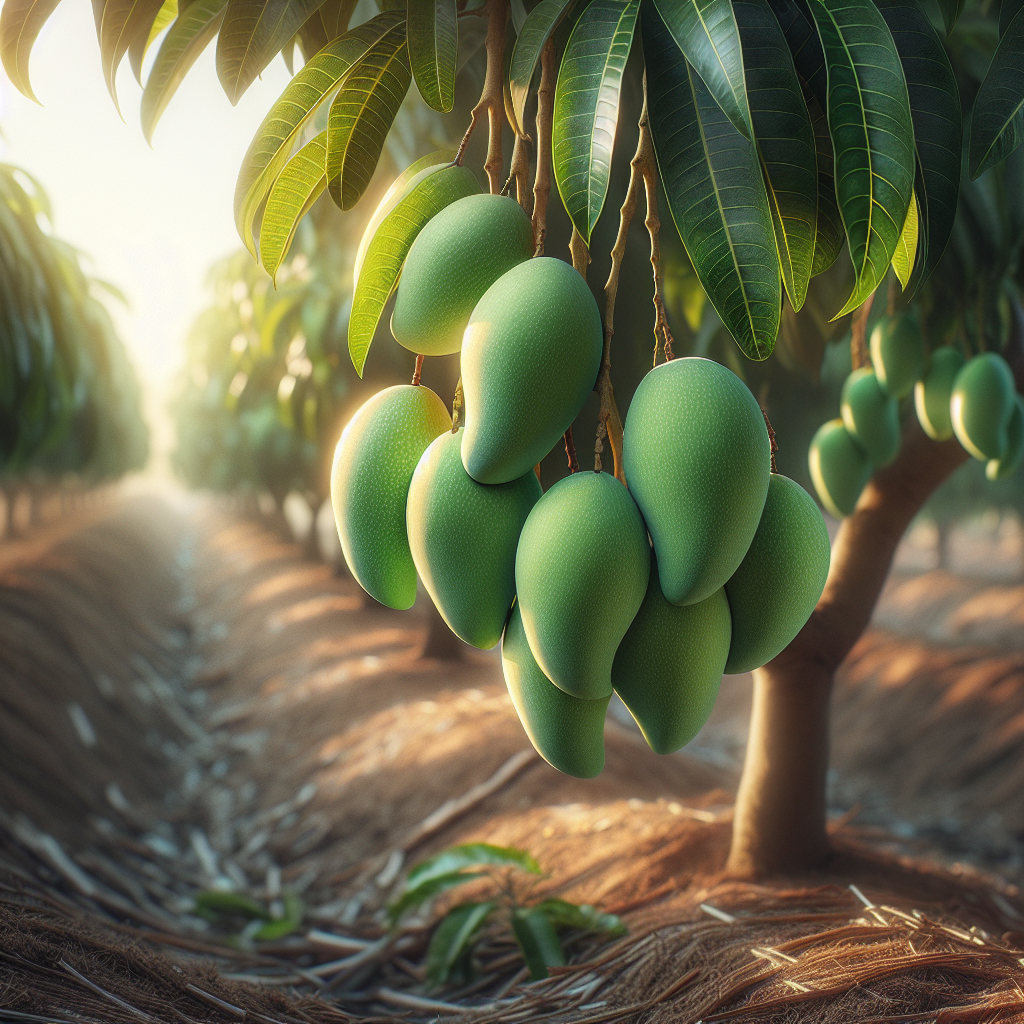
The cultivar is typically described as late maturing. Fruit are medium to large, oblong to ovate-oblong, with smooth skin and a beak that may be slight or moderately expressed depending on local strain and growing conditions. Pulp is deeply colored, very juicy, sweet, aromatic, and usually low in fiber, making it highly desirable for fresh consumption, pulp extraction, and premium local markets.
A key horticultural nuance is that cultivar identity can vary somewhat between nursery sources because regional selections are sometimes sold under the same name. Serious growers should source budwood or grafted plants from a reputable mother block with known fruiting history, bearing habit, and disease tolerance. Seedling-grown trees will not come true to type and can differ markedly in fruit quality, season, and tree vigor.
Soil, pH, and Climate Requirements for Chausa Mango
Deep, well-drained soils are essential. The best orchards are established on loams, sandy loams, or alluvial soils with at least 1.5-2 meters of effective rooting depth. Mango roots need oxygen as much as moisture; waterlogging for even 48-72 hours in warm weather can injure feeder roots, reduce microbial balance around the rhizosphere, and predispose the tree to decline and collar disorders.
An ideal soil pH is 5.5-7.5, with best nutrient availability often around 6.0-7.0. Trees can tolerate slightly alkaline conditions up to about 8.0 if drainage is excellent and micronutrient management is precise, but iron, zinc, and manganese deficiencies become more common as pH rises. In calcareous soils, leaves may show interveinal chlorosis, reduced flush vigor, and poor fruit sizing unless corrective foliar and soil treatments are used.
Avoid heavy clays with poor internal drainage unless the site can be raised significantly and provided with drainage channels. In marginal land, planting on mounds or ridges 30-60 cm above grade can dramatically improve establishment. Soil organic matter of 1.5-3% is usually adequate, but higher organic matter improves moisture buffering and biological activity as long as the soil does not remain saturated.
Climatically, this cultivar prefers tropical to hot subtropical regions. Optimal annual temperatures fall broadly between 24-32°C, though mature trees can tolerate hotter summer spells if irrigation is adequate. Young trees are sensitive to frost, and temperatures below 2-4°C can damage tender flushes, flowers, and small fruit. Prolonged cool, cloudy conditions during flowering reduce pollinator activity and increase Powdery mildew and Anthracnose risk.
Rainfall between 750 and 2500 mm can support production if its distribution is favorable. The critical requirement is a pronounced drier period before and during floral induction. Excess rain or heavy dew during flowering can wash pollen, suppress pollinator flight, and encourage fungal infection of panicles. Conversely, extreme drought without irrigation reduces canopy health and can trigger excessive fruit drop.
Wind is another important but underestimated factor. Moderate air movement improves canopy drying, yet hot desiccating winds at flowering or fruit set can scorch panicles and tiny fruitlets. Orchard windbreaks at strategic boundaries can reduce mechanical damage and improve yield stability, but they should not create stagnant humid pockets around the trees.
Step-by-Step Planting & Propagation
Commercially, propagation is done by grafting because true-to-type performance is essential. Veneer grafting, softwood grafting, and epicotyl grafting are common methods depending on nursery system and region. Rootstocks are usually vigorous seedling mangoes selected for local adaptation. A healthy grafted plant should have a well-united graft union, straight central stem, 2-4 hardened flushes, no bark cracking, and no root spiraling in the container.
Choose a full-sun site with at least 8 hours of direct light daily. Before planting, perform a soil test for pH, salinity, organic matter, and macro- plus micronutrients. If the field has a history of standing water, install drainage first; no amendment can compensate for chronic waterlogging.
For orchard layout, spacing depends on vigor, pruning intensity, and production system. Traditional low-input orchards may use 10 x 10 m or even wider spacing. Managed orchards can use 8 x 8 m or 9 x 9 m, provided annual canopy control is practiced. In very fertile soils, avoid overly tight spacing because crowded canopies reduce light penetration and sharply increase disease pressure.
Prepare planting pits in advance, commonly 60 x 60 x 60 cm to 1 x 1 x 1 m in poorer soils. Refill with topsoil mixed with 20-30 kg well-decomposed farmyard manure or compost, but do not overload pits with fresh organic matter or concentrated fertilizer that may burn roots. In termite-prone sites, incorporate appropriate preventive organic management such as neem cake where locally recommended.
Plant at the onset of favorable moisture conditions, typically early monsoon in rainfed systems or early spring/post-monsoon where irrigation is available. Remove the nursery container carefully without disturbing the root ball. Place the plant so the graft union remains at least 10-15 cm above final soil level. Planting too deep encourages collar stress and weak establishment.
Backfill firmly but not excessively, then water deeply to settle the soil. Create a shallow basin around the young tree, but in high-rainfall zones keep the basin broad and low so water does not pond against the trunk. Immediately mulch with 5-10 cm of dry organic material, leaving a 10-15 cm gap around the stem to prevent rot.
Stake only if wind exposure is high. A trunk guard or whitewash can help protect young bark from sunburn in very hot regions. Remove any flowers that appear in the first 1-2 years so the tree invests in canopy and root development rather than premature fruiting.
Care & Maintenance regimes for Chausa Mango
Irrigation should be stage-specific rather than constant. Newly planted trees need frequent but measured watering until roots move into surrounding soil. In light soils, this may mean 10-15 liters every 2-3 days for the first few weeks, then gradually shifting to deeper watering once or twice weekly. In heavier soils, the interval must be longer. The goal is moist but aerated soil, not saturation.
For young established trees, irrigate when the top 5-8 cm of soil has dried but deeper soil still retains slight moisture. A useful field sign is that soil from 15-20 cm depth should form a weak ball in the hand, not smear into mud and not crumble like dust. Chronic overwatering shows up as dull olive-green leaves, poor flush hardening, algae or sour odor near the basin, and sometimes tip dieback from root stress. Underwatering causes leaf folding, reduced flush length, fruit drop, and hard dry soil separating from the basin edge.
Mature trees benefit from reduced irrigation before flowering to support floral induction, followed by careful reintroduction of water from panicle emergence through fruit development. Severe moisture stress during marble stage to fruit enlargement can reduce fruit size and increase drop, while excessive irrigation near maturity can dilute flavor and occasionally contribute to fruit splitting in susceptible conditions.
Nutrition should be based on tree age, expected crop load, and soil analysis. Young trees require modest nitrogen for canopy building, with split applications to avoid soft, disease-prone growth. Mature bearing trees need a balanced program with nitrogen, phosphorus, potassium, calcium, magnesium, sulfur, zinc, boron, and iron where deficient. Potassium is particularly important for fruit filling, sugar movement, and overall fruit quality. Overuse of nitrogen near flowering often drives vegetative flush at the expense of bloom.
A practical organic-forward program includes annual compost or well-rotted manure under the drip line, neem cake or similar amendments where appropriate, and foliar micronutrients before flowering if deficiency symptoms are common locally. Zinc and boron deficiencies can impair flowering, pollination, and fruit retention; however, boron should be used carefully because the margin between deficiency and toxicity is narrow.
Training in the first 2-3 years should establish a strong framework. Head the young tree at a manageable height if needed to encourage 3-4 well-spaced scaffold branches. Remove shoots arising below the graft union immediately. Thereafter, pruning should be light but strategic: remove dead, crossing, shaded, diseased, and inward-growing branches after harvest. The objective is a dome or open-rounded canopy that admits filtered light into the interior without exposing large scaffold limbs to sunscald.
In high-density or intensively managed orchards, postharvest pruning is especially important. If trees are allowed to alternate between heavy vegetative growth and dense shade, flowering becomes irregular and spray penetration declines. Light annual pruning is almost always superior to severe episodic cutting.
Mulching is highly beneficial, especially in hot plains. Maintain a mulch ring extending toward the drip line, replenished as it decomposes. This moderates soil temperature, suppresses weeds, and improves soil biology. Keep mulch away from direct trunk contact.
Weed management should focus on reducing competition in the root zone while preserving soil structure. Shallow hoeing, mulching, and cover management are preferable to repeated deep cultivation that damages feeder roots. For broader orchard floor strategies, see soil health tips.
Pests, Diseases & Organic Management
Fruit flies are among the most economically serious pests, especially near ripening. Adult females lay eggs under the skin; larvae feed inside the pulp, leading to premature drop and internal breakdown. Sanitation is the first line of defense: collect and destroy fallen fruit daily, bury infested fruit deeply, or solarize it in sealed bags. Protein bait traps, methyl eugenol traps where appropriate for target species, and orchard hygiene significantly reduce pressure.
Mango hoppers attack panicles and tender shoots by sap-sucking, causing flower shedding and honeydew accumulation that supports sooty mold. Their populations often surge during flowering. Prune for airflow, avoid excess nitrogen, and monitor panicles early. Neem-based sprays can suppress light infestations if timed before populations explode, and applications should be made when pollinator activity is minimal to avoid disruption.
Mealybugs can colonize shoots, panicles, and fruit stalks, weakening the tree and causing sticky honeydew. Trunk banding before nymph ascent, destruction of egg masses in soil cracks, encouragement of predators, and targeted soap or botanical sprays help reduce infestations. Ant control is important because ants protect Mealybugs from natural enemies.
Stem borers are less common but serious. Look for frass extrusion, gum, and holes on trunks or main branches. Mechanical removal of larvae with a hooked wire, followed by sealing of the wound if locally practiced, is often necessary. Maintaining bark health and avoiding trunk injury reduces vulnerability.
Anthracnose, caused by Colletotrichum species, is a major disease in humid conditions. It affects panicles, leaves, flowers, and fruits, often remaining latent until ripening. Symptoms include black lesions, blossom blight, and postharvest fruit rots. Good canopy ventilation, removal of dead twigs, clean harvest handling, and preventive copper-based organic sprays during susceptible periods are standard tools.
Powdery mildew is especially problematic in dry, cool nights with humid mornings. Infected panicles show a grayish-white powdery growth, leading to poor fruit set and drop. Sulfur-based organic fungicides can help when applied early, but should be used with care in hot weather to avoid phytotoxicity. Dense canopies and overly lush growth worsen the problem.
Bacterial black spot and other surface blemish disorders may occur in regions with storm-driven rain and wind. Reducing mechanical injury, maintaining tree nutrition, and preventing overcrowded canopies improve resilience. Postharvest rots are often linked as much to field infection and rough handling as to storage conditions.
Integrated management works best: resistant or well-adapted planting material, orchard sanitation, airflow, balanced fertilization, trap-based monitoring, and timely organic sprays. Single-measure control rarely succeeds in mango orchards with persistent pest pressure.
Harvesting, Curing & Optimal Storage
This cultivar should be harvested at physiological maturity, not when fully soft on the tree. Mature fruit typically show fuller shoulders near the stalk end, a slight surface bloom loss, development of characteristic aroma, and pulp shift from pale immature color toward yellow-orange. Skin color alone is unreliable because mature fruit may remain partly green.
Harvest season is usually late relative to many other cultivars, but exact timing depends on region, tree load, irrigation pattern, and weather. Harvest in the cool part of the day using clippers, leaving a short stalk of 1-2 cm initially to reduce sap burn. De-sap fruit on racks or with stems downward so latex drains away from the peel. Sap injury causes black streaking and serious cosmetic downgrading.
Handle fruit gently; bruising in juicy dessert mangoes often shows later as internal soft breakdown. Grade out damaged, diseased, or undersized fruit immediately. Washing in clean sanitized water may be used where postharvest protocols support it, but fruit must be dried promptly.
Curing or conditioning is often a matter of holding mature fruit at ambient warm temperature for even ripening rather than true curing in the root-crop sense. Ripening is usually best around 20-25°C with good ventilation. Temperatures below about 10-13°C can induce chilling injury in many mangoes, leading to uneven ripening, grayish flesh, poor aroma, and skin pitting.
For short-term storage, keep mature-green fruit around 12-14°C with high relative humidity, roughly 85-90%, if facilities are available. Fully ripe fruit store only briefly and are best consumed or marketed quickly. Because this cultivar is prized for flavor more than long-distance transport durability, local and regional marketing often captures its best value.
If processing pulp, use fully ripe fruit with strong aroma but no fermentation notes. Overripe fruit may still taste sweet yet produce dull color and reduced fresh flavor intensity.
Companion Planting for Chausa Mango
Companion planting in mango orchards should prioritize weed suppression, improved beneficial insect activity, soil cover, and low competition for water near the trunk. In young orchards with wide interspaces, carefully selected companions can make productive use of land while improving orchard ecology.
Thai Basil is useful near orchard margins and sunny alleys because its flowers attract pollinators and beneficial insects while its compact habit limits competition. Clover works well as a living groundcover in suitable climates, helping protect soil, moderate erosion, and contribute biologically fixed nitrogen when managed by mowing rather than allowing rank growth. Yarrow can support predatory insects and improve biodiversity in border strips. Nasturtium is helpful in diversified systems as an insect-attracting trap and flowering companion, especially in younger orchards.
Keep all companion plants at least 1-1.5 meters away from the trunk of newly planted trees, and farther in dryland systems. The innermost root zone should remain free of aggressive competition until the mango is well established. Avoid tall annuals or vines that shade the canopy, impede airflow, or interfere with harvest and sanitation.
In bearing orchards, many growers use managed cover strips between rows while maintaining a cleaner zone under the canopy. This is often better than dense mixed planting directly beneath trees, where humidity, fallen fruit, and pest carryover can become problematic. The best companion strategy for mango is therefore structured orchard-floor management rather than indiscriminate intercropping.