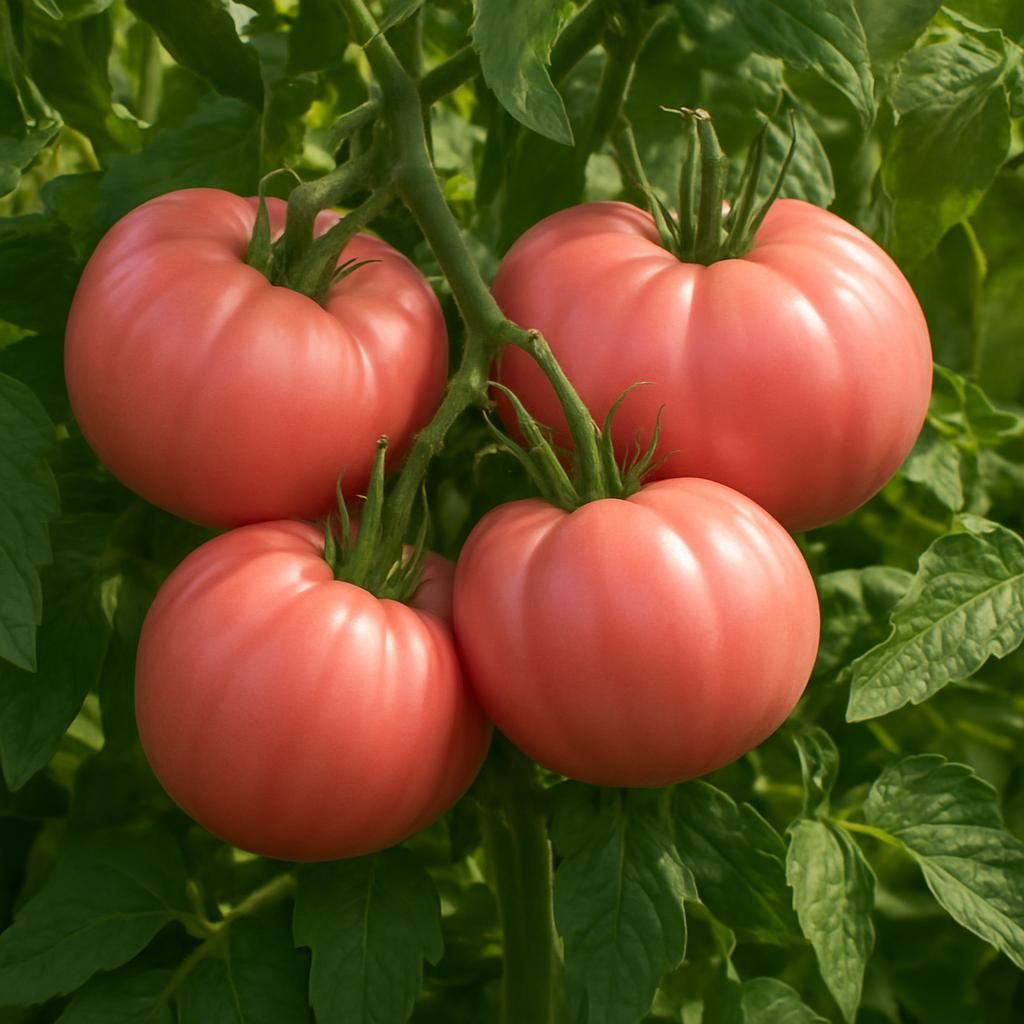
Introduction to Caspian Pink Tomato
Caspian Pink Tomato is an exceptional heirloom beefsteak variety renowned among professional growers and home gardeners for its large, smooth, pink-skinned fruits that average 12–16 ounces. The variety offers a perfect balance of sweet and tangy flavor with dense, meaty flesh that holds up well for fresh market sales, canning, and slicing. Originating from the Caspian Sea region, this tomato has adapted well to diverse growing conditions while maintaining outstanding productivity and disease resistance when properly managed.
Botanical Profile of Caspian Pink Tomato
Caspian Pink Tomato belongs to the Solanaceae family and exhibits classic indeterminate growth habits, producing vigorous vines that can reach 6–8 feet in height under optimal conditions. The plants develop large, slightly lobed leaves and produce clusters of 4–6 flowers that develop into heavy, oblate fruits with thin but durable pink skin. The variety is photoperiod-sensitive and performs best in long, warm growing seasons typical of USDA zones 5–10.
Soil, pH, and Climate Requirements for Caspian Pink Tomato
Successful cultivation of Caspian Pink Tomato begins with understanding precise environmental parameters. Professional growers rely on structured data for consistent results.
| Parameter | Ideal Range/Value | Notes |
|---|---|---|
| Soil Type | Sandy loam to loam | Well-drained, rich in organic matter |
| Soil pH | 6.2–6.8 | Slightly acidic for optimal nutrient uptake |
| Temperature (Day) | 70–85°F (21–29°C) | Critical for fruit set and pollination |
| Temperature (Night) | 60–70°F (15–21°C) | Avoid below 55°F to prevent blossom drop |
| Sunlight | Full sun, 8+ hours daily | Essential for high yields and flavor |
| Spacing | 24–36 inches between plants | 4–5 feet between rows for airflow |
| Frost Tolerance | None | Transplant after last frost date |
Step-by-Step Planting & Propagation
Start seeds indoors 6–8 weeks before the last expected frost date. Sow seeds ¼ inch deep in sterile seed-starting mix at 75–80°F soil temperature. Maintain consistent moisture until germination occurs in 5–10 days. Harden off seedlings for 7–10 days before transplanting into prepared beds enriched with aged compost. Plant deeply, burying the stem up to the first true leaves to encourage strong root development. Install sturdy cages or trellises at planting time to support heavy fruit loads.
Care & Maintenance regimes for Caspian Pink Tomato
Consistent attention to watering, nutrition, and pruning maximizes both yield and fruit quality throughout the season.
| Task | Frequency/Schedule | Details |
|---|---|---|
| Watering | 1–1.5 inches per week; deep, infrequent | Mulch heavily to retain moisture and reduce disease pressure |
| Fertilizer | Side-dress with balanced organic fertilizer every 3–4 weeks after first fruit set | Use 5-5-5 or 4-6-4 NPK; avoid excess nitrogen |
| Pruning | Weekly removal of suckers below first flower cluster | Maintain 1–2 main stems for better airflow and larger fruit |
Pests, Diseases & Organic Management
Caspian Pink Tomato can be affected by common tomato pests and diseases. Monitor regularly for Aphids, Spider Mites, and Hornworms. Implement integrated pest management using neem oil, insecticidal soaps, and beneficial insects. Prevent fungal issues such as Early Blight and Septoria Leaf Spot through crop rotation, proper spacing, and drip irrigation. Remove and destroy infected foliage promptly.
Harvesting, Curing & Optimal Storage
Harvest Caspian Pink Tomatoes when fruits show full pink coloration with slight softening at the blossom end. For peak flavor, allow fruits to ripen fully on the vine. Pick gently to avoid bruising. Store unripe tomatoes at 55–70°F away from direct sunlight. Fully ripe fruits keep 4–7 days at room temperature or up to two weeks refrigerated. For longer storage, process into sauces or can whole.
Companion Planting for Caspian Pink Tomato
Pair Caspian Pink Tomato with aromatic herbs and flowers to improve pest resistance and soil health. Recommended companions include Basil, Marigold, and Nasturtium. Avoid planting near Fennel or Walnut trees. Strategic companion planting enhances biodiversity and reduces the need for chemical inputs while supporting pollinators and beneficial insects.