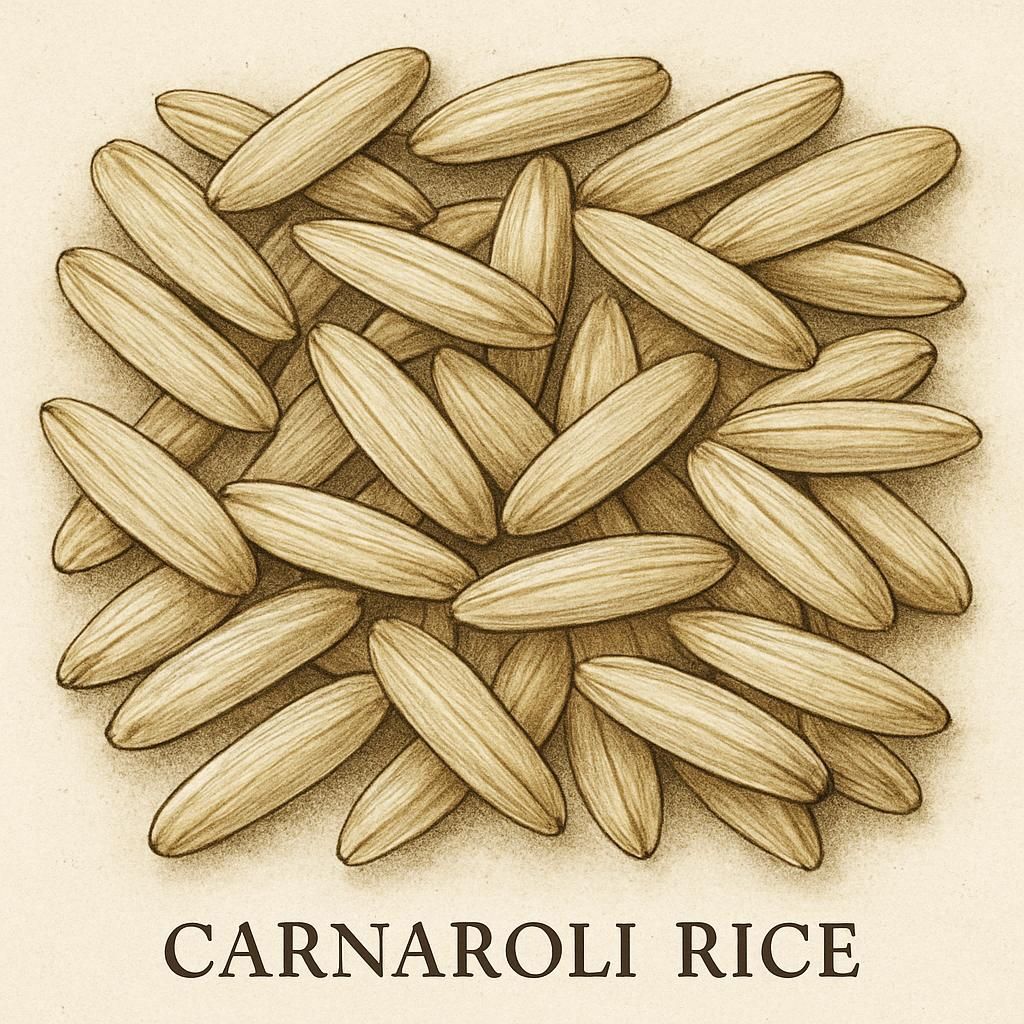
Introduction to Carnaroli Rice (Acquerello)
Carnaroli Rice, especially in its refined form known as Acquerello, is hailed for its superior culinary qualities, particularly revered in Italian cuisine for making the perfect creamy risotto. Originating from Italy, it has rapidly become a staple in gourmet cooking due to its unique ability to retain starches that thicken dishes naturally.
Botanical Profile of Carnaroli Rice (Acquerello)
Scientifically known as Oryza sativa, Carnaroli rice belongs to the family Poaceae. It features a medium-grain size with a slightly elongated shape. Its ability to absorb flavors while maintaining a firm texture distinguishes it from other rice types, such as Basmati Rice and Jasmine Rice.
Soil, pH, and Climate Requirements for Carnaroli Rice (Acquerello)
Successfully growing Carnaroli Rice requires a meticulous alignment of soil, pH, and climatic conditions to ensure optimal yield and grain quality.
| Condition | Ideal Range |
|---|---|
| Soil Type | Clayey loam, Alluvial |
| Soil pH | 5.5 - 6.5 |
| Temperature | 20°C - 30°C |
| Rainfall | 1200 - 1500 mm/year |
Step-by-Step Planting & Propagation
- Seed Selection: Choose high-quality seeds certified specifically for Carnaroli cultivation.
- Land Preparation: Till the soil to create a smooth soil bed. Ensure the field is level to maintain consistent water levels.
- Seeding: Plant seeds during spring when temperatures are conducive to germination, around 20°C.
- Water Management: Establish controlled irrigation to flood fields, mimicking a paddy environment.
- Spacing: Use row planting with distances of about 30 cm between rows.
Care & Maintenance Regimes for Carnaroli Rice (Acquerello)
Ensuring the health of Carnaroli Rice involves diligent care and precise maintenance throughout its growing cycle.
| Aspect | Recommendations |
|---|---|
| Watering | Maintain 5 cm depth in paddy fields |
| Fertilization | N:P:K ratio of 80:40:40 per hectare |
| Pruning | Not applicable |
Pests, Diseases & Organic Management
Carnaroli rice may encounter various pests and diseases which require proper management:
- Pests: Spider Mites, Rice Planthoppers
- Diseases: Blast, Root Rot
- Organic Management: Employ crop rotation and use neem-based bio-pesticides to control pest populations organically.
Harvesting, Curing & Optimal Storage
- Harvesting: Typically takes place 4-5 months post-sowing when the grains turn yellow.
- Curing: Dry the harvested rice in sun until moisture content is reduced to about 14%.
- Storage: Store in airtight containers in a cool, dry place to preserve grain quality.
Companion Planting for Carnaroli Rice (Acquerello)
Carnaroli Rice benefits from certain symbiotic planting strategies:
- Plant Clover and Coriander along edges to help deter common pests and improve nitrogen levels in the soil.
For in-depth planning, the blog post A Season of Strategic Planning for Small Farm Success offers invaluable insights.
For more about the complexities and requirements of rice cultivation, see the full entry on Rice.
The pressures of seasonal changes on farming practices is an emerging topic of interest and could be further examined in The Truth About Weather Patterns and Small Farm Resilience.