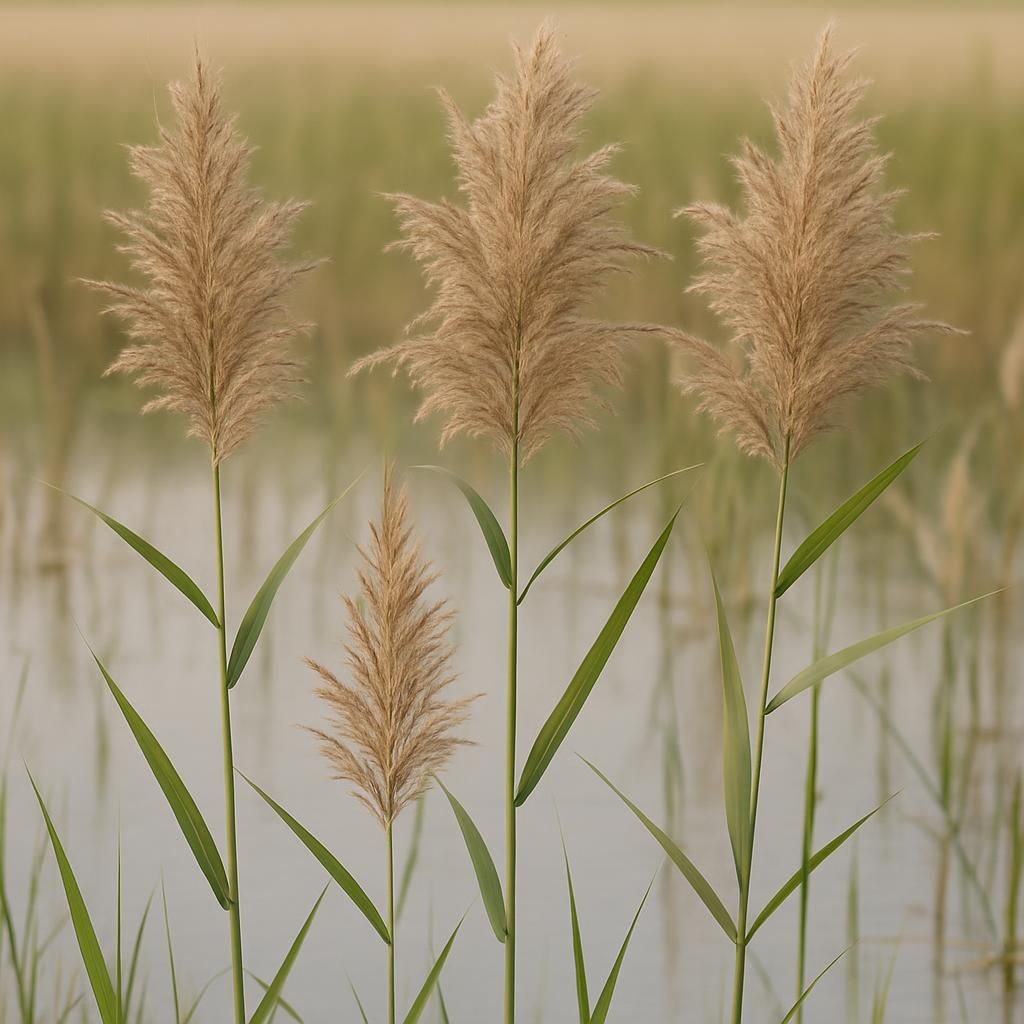
Introduction to Common Reed
Common Reed (Phragmites australis) is one of the most widely distributed wetland grasses in the world, valued for its rapid growth, extensive rhizome system, and multiple end uses. Commercial growers cultivate it for thatch roofing, livestock bedding, bioenergy feedstock, and constructed wetland filtration systems. Its ability to tolerate saline, alkaline, and nutrient-rich conditions makes it a resilient choice for marginal land reclamation and phytoremediation projects.
Beyond economic applications, Common Reed plays a critical ecological role by stabilizing shorelines, filtering agricultural runoff, and providing habitat for wetland wildlife. Because it spreads aggressively via both rhizomes and wind-dispersed seeds, intentional cultivation requires careful site selection and ongoing containment strategies. When managed correctly, it offers consistent annual harvests with low maintenance after the establishment phase.
Botanical Profile of Common Reed
Common Reed is a perennial C3 grass belonging to the Poaceae family. Mature stands reach 2–6 meters in height with hollow, jointed culms up to 2 cm in diameter. The plant produces broad, flat leaves 20–50 cm long and dense terminal panicles of purplish-brown spikelets. Its extensive underground rhizome network can extend 1–2 meters deep and spread laterally several meters per year, allowing rapid colonization of suitable habitats.
The species exhibits high phenotypic plasticity, with ecotypes adapted to fresh, brackish, and saline environments. Flowering occurs from late summer through autumn, followed by seed set that remains viable for several years in the seed bank. Because of its vigorous vegetative spread, most commercial propagation relies on rhizome divisions rather than seed.
Soil, pH, and Climate Requirements for Common Reed
Common Reed performs best in saturated or seasonally flooded soils with high organic matter. It tolerates a broad pH range but achieves optimal growth in slightly acidic to neutral conditions. The plant is extremely cold-hardy and also tolerates summer heat, making it suitable for temperate to subtropical climates.
| Parameter | Ideal Range | Notes |
|---|---|---|
| Soil Type | Loamy to clayey, high organic | Avoid compacted or heavy clay without amendment |
| Soil pH | 5.5 – 7.5 | Tolerates 4.5–8.5 with reduced vigor |
| Water Depth | 0 – 30 cm standing water | Can survive short-term flooding up to 1 m |
| Temperature Range | 15–30 °C daytime | Frost hardy to –25 °C once established |
| Annual Rainfall | 600–2000 mm | Supplemental irrigation needed below 600 mm |
| Salinity Tolerance | Up to 15–20 ppt | Higher tolerance in coastal ecotypes |
Step-by-Step Planting & Propagation
Site Preparation: Clear existing vegetation and conduct soil tests. Incorporate organic matter if organic content is below 3 %. Install containment barriers (plastic or metal sheets buried 60 cm deep) around the perimeter to restrict rhizome spread.
Rhizome Collection: Harvest healthy rhizomes from existing stands in late winter or early spring before new shoot emergence. Select segments 10–15 cm long with at least two nodes and visible buds.
Pre-Planting Treatment: Soak rhizomes in water for 24 hours. Optional fungicide dip reduces rot risk during establishment.
Planting Depth and Spacing: Plant rhizomes horizontally 5–10 cm deep. Space plants 30–50 cm apart in rows 75–100 cm wide for biomass production; wider spacing (1 m) for constructed wetlands.
Initial Irrigation: Maintain soil saturation for the first 8–12 weeks. Avoid complete submersion of young shoots.
Mulching: Apply 5–10 cm of organic mulch or straw between rows to suppress weeds and retain moisture during the first season.
Care & Maintenance regimes for Common Reed
After the first year, Common Reed requires minimal intervention. Focus on water management, periodic nutrient top-ups in nutrient-poor sites, and annual biomass removal to stimulate regrowth.
| Season | Water Management | Fertilizer Application | Pruning / Harvest Schedule |
|---|---|---|---|
| Spring | Maintain 5–15 cm standing water | Apply 40–60 kg N/ha if soil test shows deficiency | Remove winter-dead stems before new growth |
| Summer | Keep soil saturated; irrigate if rainfall <25 mm/week | Optional side-dress 20 kg N/ha mid-season | Monitor for lodging; no routine pruning |
| Autumn | Reduce water level gradually for harvest access | None required | Harvest mature culms at 2–3 m height |
| Winter | Allow natural drawdown or maintain minimal water | None | Remove any remaining biomass to reduce pest habitat |
Pests, Diseases & Organic Management
Common Reed is generally pest-resistant, but several insects and pathogens can reduce stand vigor. Aphids occasionally colonize young shoots, while Spider Mites may appear during prolonged dry spells. Fungal issues such as leaf spot diseases and rusts are rare but increase under dense, poorly ventilated stands.
Organic management relies on cultural practices: maintain adequate spacing, avoid over-fertilization, and remove infected material promptly. Beneficial insects such as lady beetles and lacewings provide natural aphid control. For severe mite outbreaks, release predatory mites or apply horticultural oil. Regular harvesting disrupts pest life cycles and improves air circulation.
Harvesting, Curing & Optimal Storage
Harvest Common Reed when culms reach full height and begin to yellow, typically late autumn. Cut stems 10–15 cm above the waterline using sickles or mechanical harvesters. Bundle stems immediately to prevent lodging.
Curing: Air-dry bundles in well-ventilated sheds or outdoor racks for 4–6 weeks until moisture content drops below 15 %. Turn bundles periodically to ensure even drying.
Storage: Store cured bundles upright in covered, ventilated structures. Protect from rain and direct sunlight to preserve color and structural integrity. Properly cured reed retains quality for 2–3 years and is suitable for thatching, industrial fiber, or biomass pellets.
Companion Planting for Common Reed
Common Reed integrates well with other wetland species in polyculture systems. Pairing with Cattail or Bulrush increases biodiversity and filtration capacity in constructed wetlands. In biomass plantings, intercropping with nitrogen-fixing legumes such as Clover on adjacent drier margins improves soil fertility without competing for saturated zones.
Avoid planting aggressive competitors like Purple Loosestrife that can outcompete reed seedlings. Maintain buffer strips of native sedges to enhance habitat value while limiting reed encroachment into upland crops.