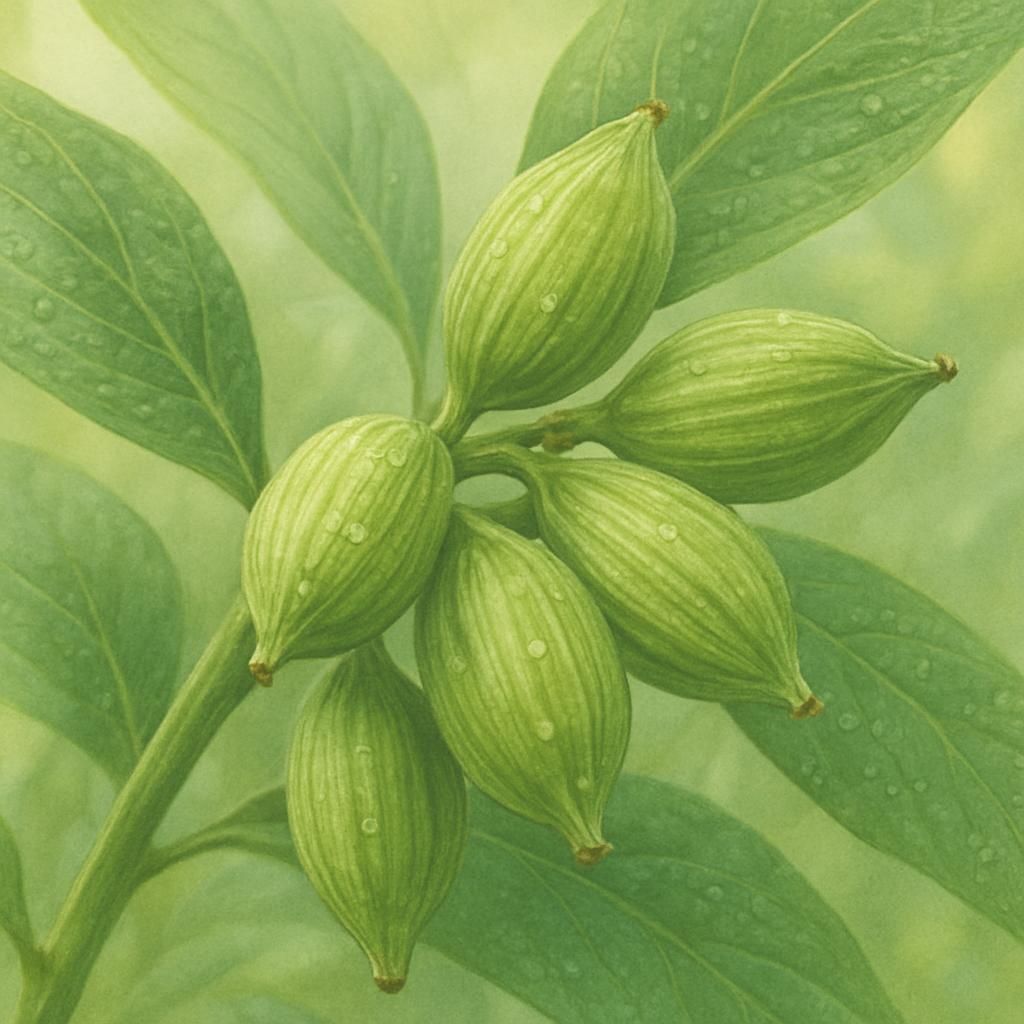
Introduction to Cardamom Seed
Cardamom Seed, derived from the dried capsules of Elettaria cardamomum, is one of the world's most expensive spices after saffron and vanilla. Native to the Western Ghats of India, it has become a cornerstone cash crop for smallholder farmers across tropical highlands. Its intense aromatic profile makes it indispensable in culinary, medicinal, and cosmetic applications. Successful cultivation demands precise microclimate management, consistent moisture, and careful post-harvest handling.
Botanical Profile of Cardamom Seed
Elettaria cardamomum is a rhizomatous herbaceous perennial in the Zingiberaceae family. Plants produce pseudostems 2–5 m tall with lanceolate leaves and produce inflorescences directly from the rhizome. Flowers are hermaphroditic and primarily pollinated by bees. The fruit is a trilocular capsule containing 15–20 aromatic seeds. Two main botanical varieties exist: Malabar (smaller, more shade-tolerant) and Mysore (larger, higher-yielding). Cardamom is closely related to Ginger and Turmeric.
Soil, pH, and Climate Requirements for Cardamom Seed (MUST INCLUDE A MARKDOWN TABLE OF IDEAL CONDITIONS)
Cardamom Seed performs best in deep, well-drained loamy soils rich in organic matter. The plant is highly sensitive to waterlogging and requires consistent humidity and filtered light.
| Parameter | Ideal Range | Notes |
|---|---|---|
| Soil Type | Loamy to sandy loam | High organic content preferred |
| Soil pH | 5.5 – 6.5 | Slightly acidic; avoid alkaline soils |
| Temperature | 15–30 °C (day); 10–18 °C (night) | Frost-free; optimum 18–25 °C |
| Relative Humidity | 70–90 % | Critical during flowering and capsule set |
| Annual Rainfall | 1500–3000 mm | Even distribution; supplemental irrigation needed in dry periods |
| Altitude | 600–1500 m | Higher altitudes improve oil content |
| Light | 30–50 % shade | Under shade trees or artificial shade nets |
Step-by-Step Planting & Propagation
Cardamom Seed is propagated vegetatively via rhizome division or from tissue-cultured plantlets. Select healthy, disease-free mother plants. Divide rhizomes into 15–20 cm sections containing at least one bud. Plant divisions in raised nursery beds or polybags with a 1:1:1 mix of soil, sand, and well-rotted manure. Maintain 50 % shade and consistent moisture until new shoots emerge (6–8 weeks). Transplant field-ready seedlings (4–6 months old) at 2 m × 2 m spacing in pits 45 cm × 45 cm × 45 cm filled with topsoil mixed with 5 kg compost and 100 g neem cake. Mulch immediately after planting.
Care & Maintenance regimes for Cardamom Seed (MUST INCLUDE A MARKDOWN TABLE OF WATER, FERTILIZER, AND PRUNING SCHEDULES)
Regular irrigation, balanced nutrition, and timely removal of senescent leaves are essential. Shade regulation and weed management should be continuous.
| Growth Stage | Water Schedule | Fertilizer Application | Pruning & Cultural Operations |
|---|---|---|---|
| Establishment (0–6 mo) | 2–3 times/week to keep soil moist | 20 g NPK 17-17-17 + 5 kg compost per plant monthly | Remove dead leaves; maintain 50 % shade |
| Vegetative (6–18 mo) | Weekly deep irrigation (25–30 mm) | 150 g N, 75 g P₂O₅, 150 g K₂O split into 3 doses | Thin overcrowded shoots; apply mulch |
| Flowering (Year 2+) | Maintain field capacity; avoid water stress | 200 g N, 100 g P₂O₅, 200 g K₂O + 5 kg FYM | Remove dried flower stalks after harvest |
| Post-harvest | Reduce frequency; prevent waterlogging | Single dose of 100 g K₂O + micronutrients | Cut back old pseudostems to 30 cm |
Pests, Diseases & Organic Management
Major pests include Thrips, capsule borers, and Root-knot nematodes. Common diseases are rhizome rot caused by Pythium and Phytophthora, leaf spot, and mosaic virus. Implement an integrated approach: use disease-free planting material, maintain optimal drainage, apply neem-based sprays every 15 days during wet periods, and introduce predatory mites for thrips control. Solarize nursery soil before planting and rotate with Black Pepper or leguminous shade trees to break pest cycles.
Harvesting, Curing & Optimal Storage
Harvest when capsules turn greenish-yellow, typically 3–4 months after flowering. Pick entire racemes by hand in early morning. Dry capsules immediately in a solar or mechanical dryer at 45–50 °C for 24–36 hours until moisture reaches 10–12 %. Rub dried capsules to remove stalks, then grade by size and color. Store in airtight containers or vacuum-sealed bags at 10–15 °C and 60 % RH. Properly cured cardamom retains volatile oils for up to 18 months.
Companion Planting for Cardamom Seed
Cardamom Seed benefits from shade provided by Coffee or Black Pepper and from nitrogen-fixing legumes such as Gliricidia. Interplant with Ginger or Turmeric in alternate rows to maximize land use and reduce soil-borne disease pressure. Avoid planting near solanaceous crops that share nematode hosts.