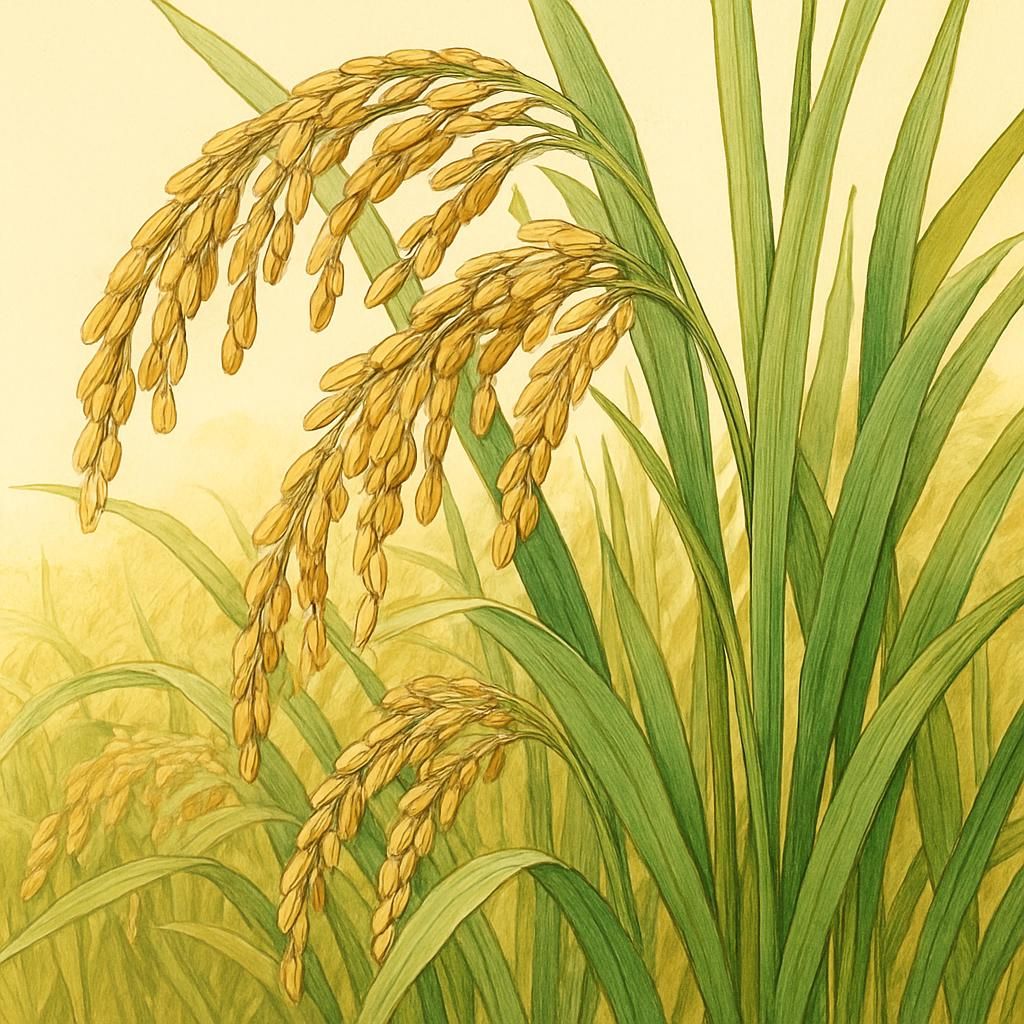
Introduction to Calrose Rice
Calrose Rice is a popular medium-grain rice variety, mainly cultivated in California. Known for its soft, sticky texture, it is ideal for dishes that require rice to clump together, such as sushi and certain types of ethnic cuisine. Calrose Rice gained its name as a blend of the words "California" and "rose," signifying its regional origin and robust qualities.
Botanical Profile of Calrose Rice
Calrose Rice, scientifically classified as Oryza sativa, is part of the Poaceae family. It is renowned for its medium-grain size, which results in a moist and tender texture when cooked. The plant typically grows to a height of 3-4 feet and features long, slender leaves that arch gracefully from the stalk.
Soil, pH, and Climate Requirements for Calrose Rice
Calrose Rice flourishes in well-aerated, clay-loam soils with a high organic matter content. pH levels should be neutral to slightly acidic. The following table outlines the ideal conditions:
| Condition | Ideal Range |
|---|---|
| Soil Type | Clay-loam |
| Soil pH | 5.5 - 6.5 |
| Temperature | 75°F - 95°F |
| Water | Consistent flooding |
Growing Calrose Rice demands a warm, Mediterranean-type climate with temperatures ranging from 75°F to 95°F. The plant is sensitive to cold temperatures, which can lead to poor grain development.
Step-by-Step Planting & Propagation
- Seed Selection and Preparation: Before planting, select certified Calrose seeds. Soak them in water for 24-48 hours to ensure uniform germination.
- Field Preparation: Cultivate the soil to a fine tilth, ensuring proper drainage and leveling to facilitate even water distribution.
- Planting: Sow the seeds directly into flooded fields at a depth of 1-2 inches. Alternatively, transplant seedlings started in nurseries.
- Water Management: Keep fields consistently flooded with 2-4 inches of water throughout the growing season to prevent weed growth and maintain moisture.
Care & Maintenance regimes for Calrose Rice
Proper care is critical for a healthy yield. This involves consistent watering, periodic fertilization, and pest management. Below is a regimen to follow:
| Activity | Schedule |
|---|---|
| Watering | Maintain 2-4 inches depth |
| Fertilizer | Apply nitrogen bi-monthly |
| Weeding | Manually after 2-3 weeks |
Regular monitoring is essential to manage pests like Spider Mites and diseases which commonly affect rice.
Pests, Diseases & Organic Management
Calrose Rice crops are susceptible to pests such as Spider Mites and Birds. Common diseases include Blast and Root Rot. For organic management, consider rotating crops and using neem oil or biological pest controls. Resources like Crop Diseases Under the Microscope: 9 Organic Fixes for Small Farm Resilience can offer additional strategies.
Harvesting, Curing & Optimal Storage
Harvest Calrose Rice when grains are fully mature, often 120-150 days after planting. Use mechanized harvesters to reduce damage. Post-harvest, cure grains by air drying to a moisture content of 14%. Store in a cool, dry environment to extend shelf life.
Companion Planting for Calrose Rice
Companion planting is a beneficial practice to naturally deter pests and optimize growth conditions. Suitable companions include Legumes to fix nitrogen into the soil and Nasturtium to repel harmful insects. For more insights, consider reading Summer Companion Planting: 10 Organic Pairings to Boost Small Farm Resilience.
Effective companion planting not only supports Calrose Rice crops but also enhances soil fertility and biodiversity.