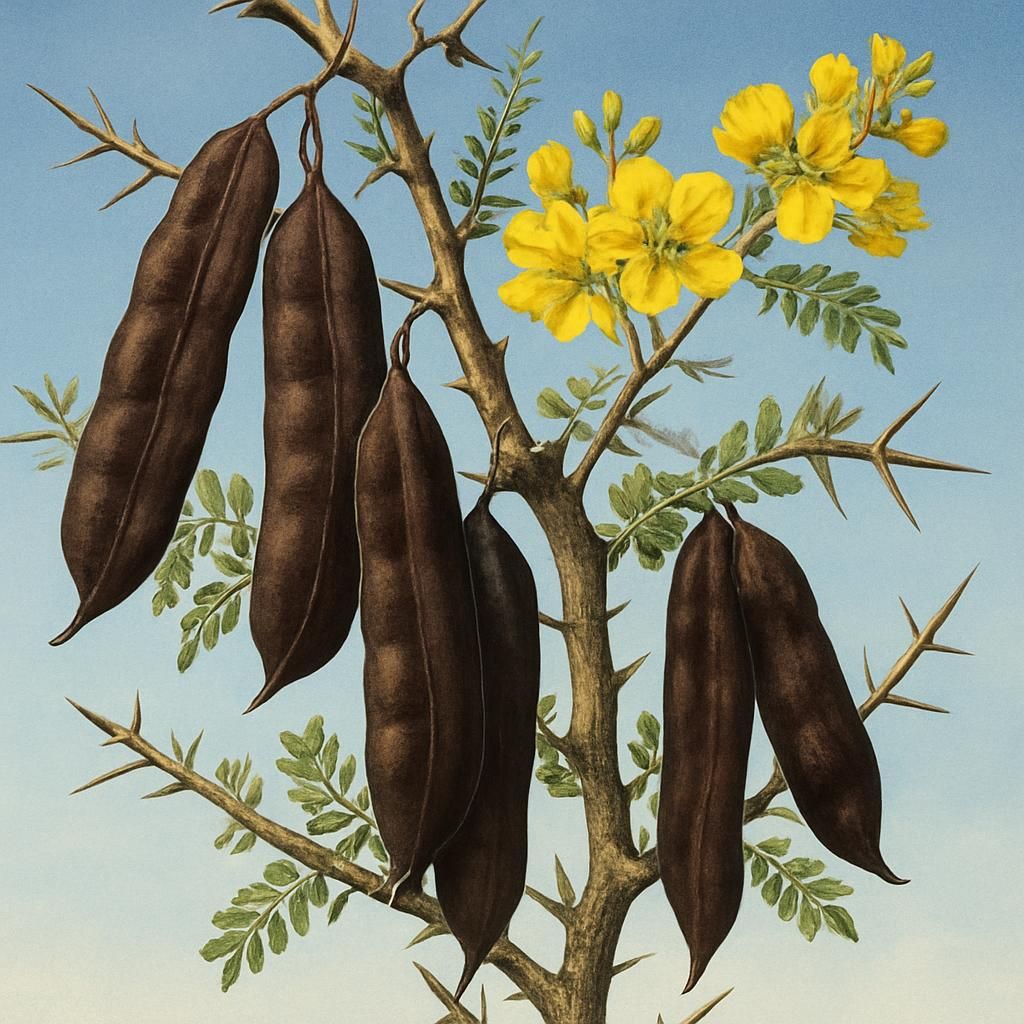
Introduction to Caesalpinia spinosa
Caesalpinia spinosa, widely known as tara or spiny holdback, is a drought-tolerant leguminous tree native to the arid valleys of Peru, Ecuador, and northern Chile. Farmers cultivate it primarily for the pods, which contain 40–60% hydrolyzable tannins used in leather tanning, pharmaceutical applications, and natural dyes. Beyond its industrial value, the species improves degraded soils through nitrogen fixation and provides shade, fodder, and fuelwood in semi-arid agroforestry systems.
Commercial interest has grown steadily because tara offers a sustainable alternative to synthetic tannins and chrome-based leather processing. The tree tolerates poor soils and low rainfall, making it suitable for marginal lands where conventional crops struggle. Smallholders in the Andes integrate tara into mixed systems with Clover and Gliricidia to enhance biodiversity and long-term farm resilience.
Botanical Profile of Caesalpinia spinosa
Caesalpinia spinosa belongs to the Fabaceae family and grows as a small to medium evergreen or semi-deciduous tree reaching 2–5 meters in height. It features bipinnate leaves with small leaflets, paired spines on young branches, and showy yellow flowers arranged in terminal racemes. The fruit is a flat, dehiscent pod 6–10 cm long containing 4–7 hard, dark seeds.
The root system is deep and extensive, allowing efficient water and nutrient uptake in dry environments. As a nitrogen-fixing legume, tara forms symbiotic relationships with rhizobia bacteria that enrich surrounding soil. Flowering occurs mainly during the dry season, followed by pod maturation that coincides with the onset of rains.
Soil, pH, and Climate Requirements for Caesalpinia spinosa
Tara thrives in well-drained sandy loam to loam soils with moderate fertility. It tolerates shallow, rocky, or saline substrates better than most legumes but performs best when organic matter exceeds 2%. Avoid heavy clay soils that retain excessive moisture and promote root diseases.
| Parameter | Ideal Range | Notes |
|---|---|---|
| Soil Type | Sandy loam to loam | Good drainage essential |
| Soil pH | 6.0–8.0 | Tolerates slight alkalinity |
| Annual Rainfall | 250–800 mm | Established trees survive on 200 mm |
| Temperature Range | 12–32 °C | Frost sensitive below –2 °C |
| Altitude | 0–2,800 m | Optimal between 800–2,000 m |
| Sunlight | Full sun | Minimum 6 hours direct light |
Step-by-Step Planting & Propagation
Propagation is achieved through scarified seeds or semi-hardwood cuttings. Collect mature pods when they turn dark brown, extract seeds, and soak in hot water (80 °C) for 12 hours followed by 24-hour room-temperature soaking to break dormancy. Sow seeds 2 cm deep in nursery beds or polybags at 25–30 °C; germination occurs in 7–15 days.
Transplant seedlings when they reach 20–30 cm height and have at least four true leaves. Prepare planting holes 40 × 40 × 40 cm and incorporate well-rotted compost. Space trees 4 × 4 m for timber or 3 × 3 m for pod production in intensive orchards. Water immediately after transplanting and provide temporary shade for the first two weeks.
Care & Maintenance regimes for Caesalpinia spinosa
Young trees require regular irrigation during the first dry season. Once established, supplemental water is needed only during prolonged drought. Apply a balanced NPK fertilizer (10-10-10) at planting and again in year two; thereafter rely primarily on organic amendments and nitrogen fixation.
| Growth Stage | Water Schedule | Fertilizer Schedule | Pruning Schedule |
|---|---|---|---|
| Year 1 | 10–15 L/tree every 7–10 days | 100 g NPK at planting; 50 g every 3 mo | Formative pruning at 6 and 12 mo |
| Years 2–3 | 20 L/tree every 14–21 days | 200 g organic compost + 50 g rock phosphate annually | Remove lower branches; shape canopy |
| Mature (>4 yr) | Rainfed or 30 L during drought | Top-dress 2–3 kg compost every 2 years | Annual sanitation prune post-harvest |
Mulch with 5–8 cm of organic material to conserve moisture and suppress weeds. Monitor for nutrient deficiencies, especially phosphorus, which can limit pod set in highly acidic soils.
Pests, Diseases & Organic Management
Major pests include Aphids, Mealybugs, and Spider Mites. These sap-feeding insects cause leaf curling and reduced photosynthesis. Control with neem oil sprays (0.5%) or introduce predatory lady beetles and lacewings. Scale insects occasionally infest branches; prune and destroy heavily infested parts.
Fungal issues such as Root rot and Powdery mildew appear under waterlogged or humid conditions. Improve drainage, avoid overhead irrigation, and apply compost teas fortified with Trichoderma. Leaf spot diseases caused by Alternaria species can be managed by removing fallen debris and maintaining 30 cm clearance around the trunk.
Harvesting, Curing & Optimal Storage
Pods reach physiological maturity 120–150 days after flowering when the outer shell turns dark brown and begins to split. Hand-harvest by shaking branches or using long-handled poles to avoid damaging the tree. Collect fallen pods daily to prevent seed predation by rodents.
Sun-dry pods on raised racks for 5–7 days until moisture content drops below 12%. Store in breathable jute sacks or ventilated silos at 15–20 °C and <65% relative humidity. Properly cured pods retain tannin quality for up to 24 months. For seed production, extract seeds immediately after drying and store in airtight containers with silica gel.
Companion Planting for Caesalpinia spinosa
Tara pairs well with deep-rooted grasses and nitrogen-fixing shrubs that improve microclimate and soil structure. Interplant with Clover or Gliricidia to increase nitrogen availability and provide windbreaks. Understory crops such as Thai Basil or Rosemary benefit from partial shade and reduced evaporation.
Avoid planting shallow-rooted vegetables directly beneath mature trees, as competition for surface moisture can reduce yields. Use tara rows as living fences around Corn or Sorghum fields to deter livestock and supply organic matter through periodic leaf pruning.