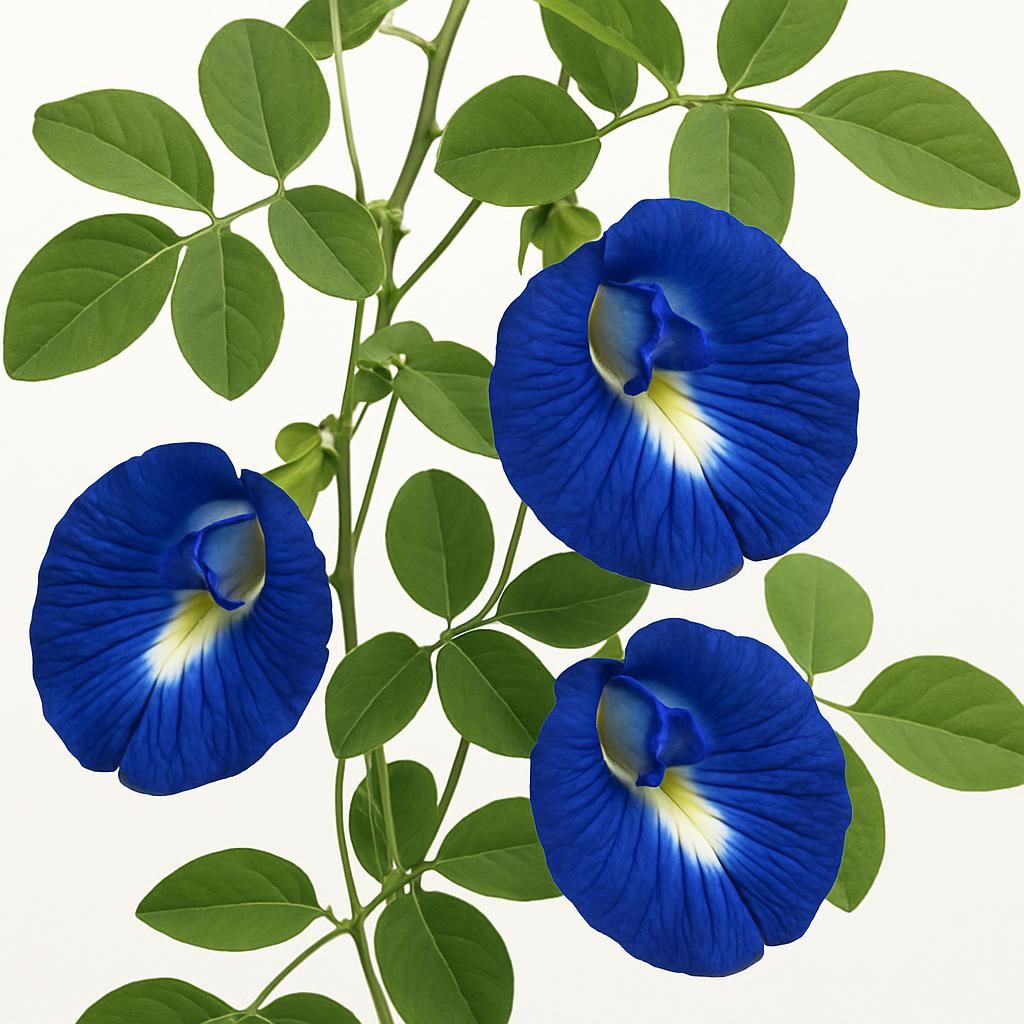
Introduction to Blue Pea Flower
Blue Pea Flower, scientifically known as Clitoria ternatea, is a versatile climbing perennial legume celebrated worldwide for its striking deep-blue petals. Native to tropical Asia, the plant has been cultivated for centuries for culinary, medicinal, and ornamental purposes. The flowers contain natural anthocyanins that produce a brilliant blue hue, making them a popular natural food dye for rice dishes, beverages, and desserts. In addition to their visual appeal, the flowers offer antioxidant and anti-inflammatory properties traditionally used in Ayurvedic and Southeast Asian herbal practices. As a nitrogen-fixing legume, Blue Pea Flower also improves soil fertility, making it an excellent choice for sustainable agriculture and small-scale farms.
Botanical Profile of Blue Pea Flower
Clitoria ternatea belongs to the Fabaceae family and is characterized by its slender, twining stems that can reach 2–3 meters in length when supported. The plant produces compound leaves with 5–7 elliptic leaflets and solitary, papilionaceous flowers measuring 4–6 cm across. The most common variety features intense cobalt-blue petals with a lighter center, though white, pink, and double-flowered cultivars also exist. After pollination, the plant develops flat, elongated pods containing 6–10 seeds. Blue Pea Flower is a short-lived perennial in frost-free regions but is frequently grown as an annual in temperate zones. Its rapid growth rate and ability to thrive in poor soils make it a low-maintenance yet highly productive crop.
Soil, pH, and Climate Requirements for Blue Pea Flower
Blue Pea Flower performs best in well-drained, fertile loamy soils with moderate organic matter. It tolerates a wide range of soil types, including sandy and clay loams, provided drainage is adequate. The crop prefers slightly acidic to neutral pH and requires consistent warmth with full sun exposure for optimal flowering.
| Parameter | Ideal Range | Notes |
|---|---|---|
| Soil Type | Loam, sandy loam, clay loam | Well-drained; avoid waterlogging |
| Soil pH | 5.5 – 7.0 | Slightly acidic to neutral |
| Temperature | 20–35 °C (68–95 °F) | Frost sensitive below 10 °C |
| Annual Rainfall | 800–2000 mm | Supplemental irrigation in dry periods |
| Sunlight | Full sun (6+ hours) | Partial shade reduces flower production |
| Elevation | 0–1500 m | Thrives from sea level to mid-altitudes |
Step-by-Step Planting & Propagation
Blue Pea Flower is most commonly propagated from seed, although stem cuttings can also be used. Begin by scarifying seeds with light sandpaper or soaking them in warm water for 12–24 hours to improve germination. Sow seeds directly into prepared beds or containers at a depth of 1–2 cm, spacing plants 30–45 cm apart in rows 60–90 cm wide. Germination typically occurs within 7–14 days at soil temperatures above 20 °C. For faster establishment, start seeds indoors 4–6 weeks before the last frost and transplant seedlings after hardening off. Provide a trellis, fence, or vertical support immediately after planting, as the vines require structure to climb and produce abundant blooms.
Care & Maintenance regimes for Blue Pea Flower
Once established, Blue Pea Flower requires minimal intervention beyond regular watering, occasional feeding, and strategic pruning. Consistent moisture during flowering promotes continuous bloom production, while moderate fertility prevents excessive vegetative growth at the expense of flowers.
| Task | Frequency | Details |
|---|---|---|
| Watering | 2–3 times per week | Keep soil evenly moist; reduce in cool weather |
| Fertilizer | Every 4–6 weeks | Balanced NPK 10-10-10 or compost tea |
| Pruning | Monthly | Pinch tips to encourage branching; remove spent flowers |
| Mulching | At planting & as needed | 5 cm organic mulch to retain moisture |
| Weeding | Weekly | Hand-weed or shallow cultivation |
Pests, Diseases & Organic Management
Blue Pea Flower is relatively resistant to major pests but can occasionally suffer from Aphids, Spider Mites, and Whiteflies. These sap-sucking insects can be controlled with insecticidal soap or neem oil sprays applied at the first sign of infestation. Fungal issues such as Powdery Mildew may appear in humid conditions; improve air circulation and avoid overhead watering to prevent outbreaks. Root rot can occur in poorly drained soils, so ensure proper drainage and consider raised beds in heavy clay areas. Regular scouting and prompt removal of affected plant parts are the most effective organic management strategies.
Harvesting, Curing & Optimal Storage
Harvest Blue Pea flowers in the early morning when petals are fully open and color is most vibrant. Pick individual blooms by hand, leaving the stem intact for easy handling. For fresh use, rinse gently and use immediately. To dry, spread flowers in a single layer on a screen in a shaded, well-ventilated area for 3–5 days until crisp. Store dried flowers in airtight glass jars away from light and moisture; properly dried material retains color and potency for up to 12 months. For culinary applications, dried flowers can be steeped directly in hot water or used as a natural blue food coloring.
Companion Planting for Blue Pea Flower
Blue Pea Flower pairs well with nitrogen-loving vegetables and aromatic herbs that benefit from its soil-improving properties. Compatible companions include Tomato, Cucumber, Lettuce, and Thai Basil. The climbing habit of Blue Pea Flower can be used to provide light shade for heat-sensitive crops while attracting pollinators that improve overall garden productivity. Avoid planting near heavy feeders that may compete for nutrients unless additional organic amendments are applied.