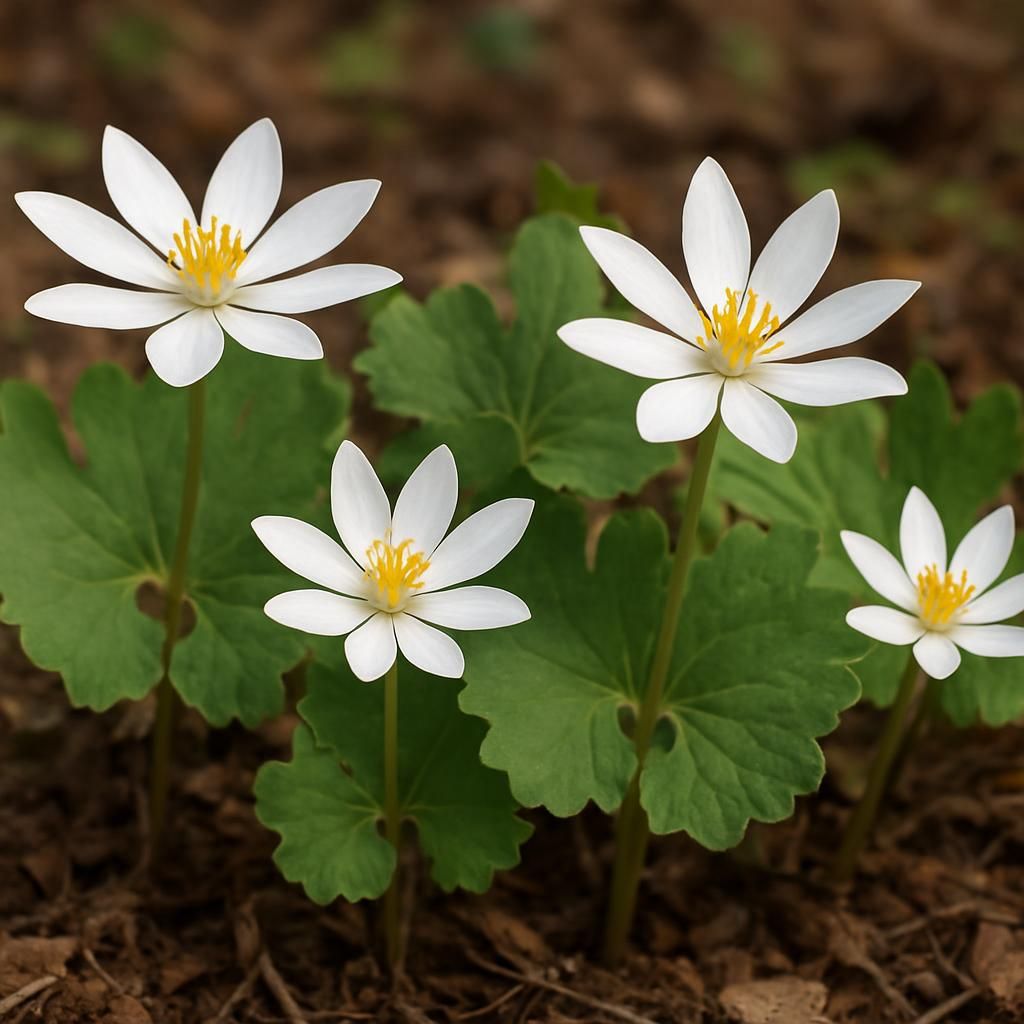
Introduction to bloodroot
Bloodroot (Sanguinaria canadensis) is a low-growing spring ephemeral native to eastern North American deciduous forests. The plant emerges in early spring, producing distinctive white flowers with yellow centers before the forest canopy fully leafs out. Its common name derives from the bright orange-red latex that exudes from the thick rhizomes when cut. Historically used by Indigenous peoples for dye and medicine, bloodroot has gained renewed interest among commercial growers for its value in herbal products, natural dyes, and native plant landscaping.
Commercial cultivation of bloodroot remains niche but profitable when managed under shade-house or forest-farming systems. The plant offers dual revenue streams: dried rhizomes for the medicinal herb market and potted plants for native nurseries. Because bloodroot is slow-growing and shade-dependent, success hinges on replicating its natural woodland conditions while maintaining soil health and preventing overharvesting pressure on wild populations.
Botanical Profile of bloodroot
Bloodroot belongs to the Papaveraceae family. It produces a single, palmately lobed leaf that unfurls after flowering and persists through early summer before senescing. The flower consists of 8–12 white petals surrounding numerous yellow stamens and a single pistil. After pollination, an elongated capsule releases small black seeds equipped with a fleshy elaiosome that attracts ants for dispersal.
The most economically important part is the horizontal rhizome, typically 5–15 cm long and 1–2 cm thick, covered in reddish-brown scales. When broken, the rhizome exudes a deep red sap containing sanguinarine and other benzophenanthridine alkaloids. These compounds contribute to bloodroot’s antimicrobial properties and its traditional use in oral-care products. The plant spreads slowly via short rhizome branches and seed, forming dense colonies over many years under ideal conditions.
Soil, pH, and Climate Requirements for bloodroot
Bloodroot thrives in rich, moist, well-drained woodland soils with high organic matter. It performs best under 60–80 % shade, mimicking the dappled light of mature deciduous forests. The species is hardy in USDA zones 3–8 and tolerates winter temperatures to −30 °C when protected by leaf litter or mulch.
| Parameter | Ideal Range | Notes |
|---|---|---|
| Soil Type | Loamy, high in humus | Incorporate 30–50 % leaf mold or compost |
| Soil pH | 5.5–6.8 | Slightly acidic to neutral |
| Drainage | Good | Raised beds improve drainage in clay soils |
| Organic Matter | 8–15 % | Maintain with annual leaf-mold top-dressing |
| Temperature Range | 10–24 °C during active growth | Protect from late-spring frosts |
| Shade Requirement | 60–80 % | Use shade cloth or existing tree canopy |
| Moisture | Consistently moist but not waterlogged | 2.5–4 cm water per week during spring |
Step-by-Step Planting & Propagation
Bloodroot is most reliably established from dormant rhizome divisions harvested in late summer or early fall. Select healthy, firm rhizomes with at least one visible bud. Cut into 5–8 cm sections, ensuring each piece has a growing point. Dust cut surfaces with agricultural charcoal to reduce rot risk.
Plant rhizome sections horizontally 5 cm deep and 15–20 cm apart in prepared beds. Cover with 5–8 cm of leaf mold or aged hardwood mulch to conserve moisture and suppress weeds. For seed propagation, collect ripe capsules in early summer and sow immediately in shaded nursery flats. Seeds require 60–90 days of cold stratification; natural winter chilling outdoors yields the highest germination rates the following spring.
Transplant seedlings or divisions into permanent shade-house beds or forest plots in the second year. Maintain 30 cm row spacing to allow for colony expansion. Mulch heavily after planting to mimic forest-floor conditions and protect shallow rhizomes from temperature fluctuations.
Care & Maintenance regimes for bloodroot
Bloodroot requires minimal intervention once established, but consistent moisture and organic fertility are essential during the first three years. Avoid high-nitrogen fertilizers that promote weak growth and increase disease susceptibility. Focus instead on building soil biology through leaf mold, compost tea, and mycorrhizal inoculants.
| Task | Schedule | Rate / Method |
|---|---|---|
| Watering | March–June (active growth) | 2.5 cm per week; reduce after flowering |
| Fertilizer | Early spring & post-flowering | 5 cm compost or leaf-mold top-dress; optional fish-emulsion tea at 1:10 dilution |
| Pruning / Cleanup | Late summer after foliage yellows | Remove dead leaves; do not cut rhizomes |
| Mulch Renewal | Every fall | 5–8 cm hardwood leaf mold or shredded bark |
| Weed Control | Ongoing | Hand-pull or shallow hoe; avoid herbicides |
Pests, Diseases & Organic Management
Bloodroot is relatively pest-resistant due to its alkaloid content, but slugs, snails, and cutworms can damage emerging shoots. Install beer traps or diatomaceous earth barriers around beds. In overly wet conditions, Pythium and Rhizoctonia may cause rhizome rot; improve drainage and avoid overwatering.
Fungal leaf spots occasionally appear in crowded plantings. Thin stands to improve air circulation and remove infected foliage at season’s end. Deer occasionally browse young leaves; use 1.2 m tall fencing or repellent sprays containing garlic and capsaicin during spring flush.
Harvesting, Curing & Optimal Storage
Harvest bloodroot rhizomes in the third or fourth year after planting, ideally in late summer when foliage has senesced. Carefully lift clumps with a digging fork, shake off soil, and rinse gently with low-pressure water. Separate rhizomes, discarding any showing rot or damage.
Cure cleaned rhizomes on screened racks in a shaded, well-ventilated area at 20–25 °C for 7–10 days until surfaces are dry. Slice larger pieces lengthwise for faster drying. Final moisture content should be below 10 %. Store in airtight glass or food-grade plastic containers with silica packets in a cool, dark location. Properly dried material retains potency for 18–24 months.
Companion Planting for bloodroot
Bloodroot pairs well with other shade-loving woodland species that share similar moisture and soil requirements. Compatible companions include Trillium, Mayapple, and Wild Ginger. These plants create a layered understory that improves biodiversity and reduces pest pressure through visual and olfactory masking.
Avoid planting bloodroot near aggressive spreaders such as English Ivy or pachysandra that can outcompete the slower-growing rhizomes. Leguminous ground covers like Partridgeberry can fix nitrogen and provide living mulch without excessive competition. Rotate bloodroot plantings every 8–10 years to prevent soil-borne pathogen buildup and maintain long-term productivity.