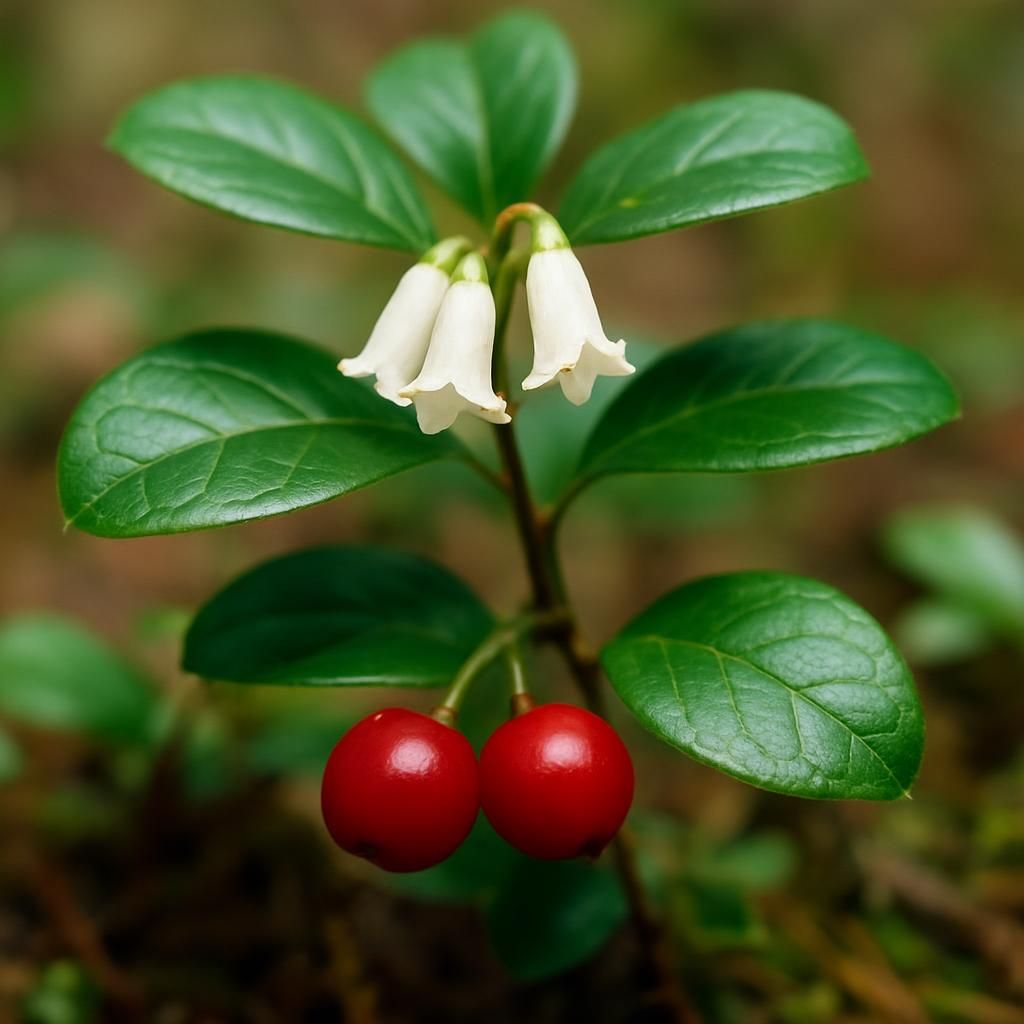
Introduction to partridgeberry
Partridgeberry (Mitchella repens) is a creeping evergreen perennial native to eastern North America. It forms dense mats of dark green, opposite leaves and produces small, fragrant white flowers in pairs followed by persistent scarlet berries. Historically used by Indigenous peoples for medicinal teas and as a winter food source for wildlife, it has gained popularity among gardeners and foragers seeking native groundcovers that perform well in shade. Unlike many berry crops, partridgeberry is not grown for large-scale fruit harvest but rather for its ecological value, ornamental appeal, and traditional herbal uses.
Botanical Profile of partridgeberry
Mitchella repens belongs to the Rubiaceae family and is the only species in its genus. The plant spreads via stolons that root at nodes, creating a low carpet rarely exceeding 2 inches in height. Leaves are ovate, leathery, and dark green with a prominent midrib. In late spring to early summer, twin tubular white flowers appear; each pair shares a single ovary, resulting in one fused berry containing several seeds. The berries ripen in autumn and often persist through winter, providing food for birds and small mammals. The plant is dioecious in some populations but most cultivated clones are self-fertile due to the fused flower structure.
Soil, pH, and Climate Requirements for partridgeberry
Partridgeberry prefers cool, moist, well-drained acidic soils typical of deciduous and coniferous forest floors. It performs best in partial to full shade and struggles in hot, dry, or alkaline conditions.
| Parameter | Ideal Range | Notes |
|---|---|---|
| Soil Type | Loamy, rich in organic matter | Leaf mold or peat-based mixes recommended |
| Soil pH | 4.5 – 6.0 | Strongly acidic to mildly acidic |
| Temperature Range | 50–75 °F (10–24 °C) daytime | Cool woodland microclimates preferred |
| USDA Hardiness | Zones 3–8 | Tolerates cold winters with snow cover |
| Moisture | Consistently moist | Avoid waterlogging; mulch helps retain moisture |
| Light | Partial to full shade | Less than 4 hours direct sun daily |
Step-by-Step Planting & Propagation
- Site Selection: Choose a shaded location with existing leaf litter or prepare a bed amended with composted pine bark and peat moss.
- Soil Preparation: Test pH and adjust to 5.0–5.5 using elemental sulfur if needed. Incorporate 2–3 inches of organic matter.
- Propagation by Division: In early spring, lift established mats and divide into 4–6 inch sections, each with roots and shoots. Replant immediately at the same depth.
- Stem Cuttings: Take 3–4 inch tip cuttings in early summer, remove lower leaves, and root in a 1:1 peat-perlite mix under high humidity. Roots form in 4–6 weeks.
- Layering: Pin trailing stems to moist soil in autumn; new plants can be severed the following spring.
- Spacing: Plant divisions 8–12 inches apart for quick coverage. Mulch with pine needles or shredded bark to suppress weeds and maintain acidity.
Care & Maintenance regimes for partridgeberry
Partridgeberry is low-maintenance once established but benefits from consistent moisture and annual organic mulching. Avoid heavy fertilization.
| Task | Schedule | Details |
|---|---|---|
| Watering | Weekly during dry spells | Provide 1 inch of water; maintain even moisture without saturation |
| Fertilizer | Early spring only | Apply 1–2 inches of well-aged leaf compost or ½ strength fish emulsion |
| Pruning | Late winter or after fruit drop | Trim damaged or overly long runners; do not shear heavily |
| Mulching | Spring and autumn | Renew 2-inch layer of acidic mulch (pine needles, oak leaves) |
| Weeding | As needed | Hand-pull competitors; avoid disturbing shallow roots |
Pests, Diseases & Organic Management
Partridgeberry is relatively pest-resistant due to its native status and low growth habit. Occasional issues include slugs feeding on young leaves and spider mites in overly dry conditions. Root rot can occur in poorly drained soils; improve drainage and avoid overwatering. Fungal leaf spots are rare but can be managed by removing infected foliage and improving air circulation. Use organic iron phosphate baits for slugs and horticultural oil or insecticidal soap for mites. Maintain plant vigor through proper site selection and mulching to prevent most problems.
Harvesting, Curing & Optimal Storage
Berries ripen from September to November and remain on the plant for months. Harvest by hand when fully red and slightly soft. Because partridgeberry is primarily grown for ornamental or medicinal use, commercial curing is unnecessary. Fresh berries can be refrigerated in breathable containers for up to two weeks. For drying, spread in a single layer at 95 °F (35 °C) until brittle, then store in airtight glass jars away from light. Dried berries retain medicinal properties for up to one year. Leaves may also be harvested year-round for herbal teas.
Companion Planting for partridgeberry
Partridgeberry pairs well with other shade-loving woodland species. Compatible companions include Blueberry, Raspberry, ferns, and native mosses that share similar acidic soil preferences. Avoid planting near aggressive groundcovers or sun-loving vegetables that may outcompete or alter soil pH. In mixed shade gardens, it serves as an attractive living mulch beneath taller shrubs and trees.