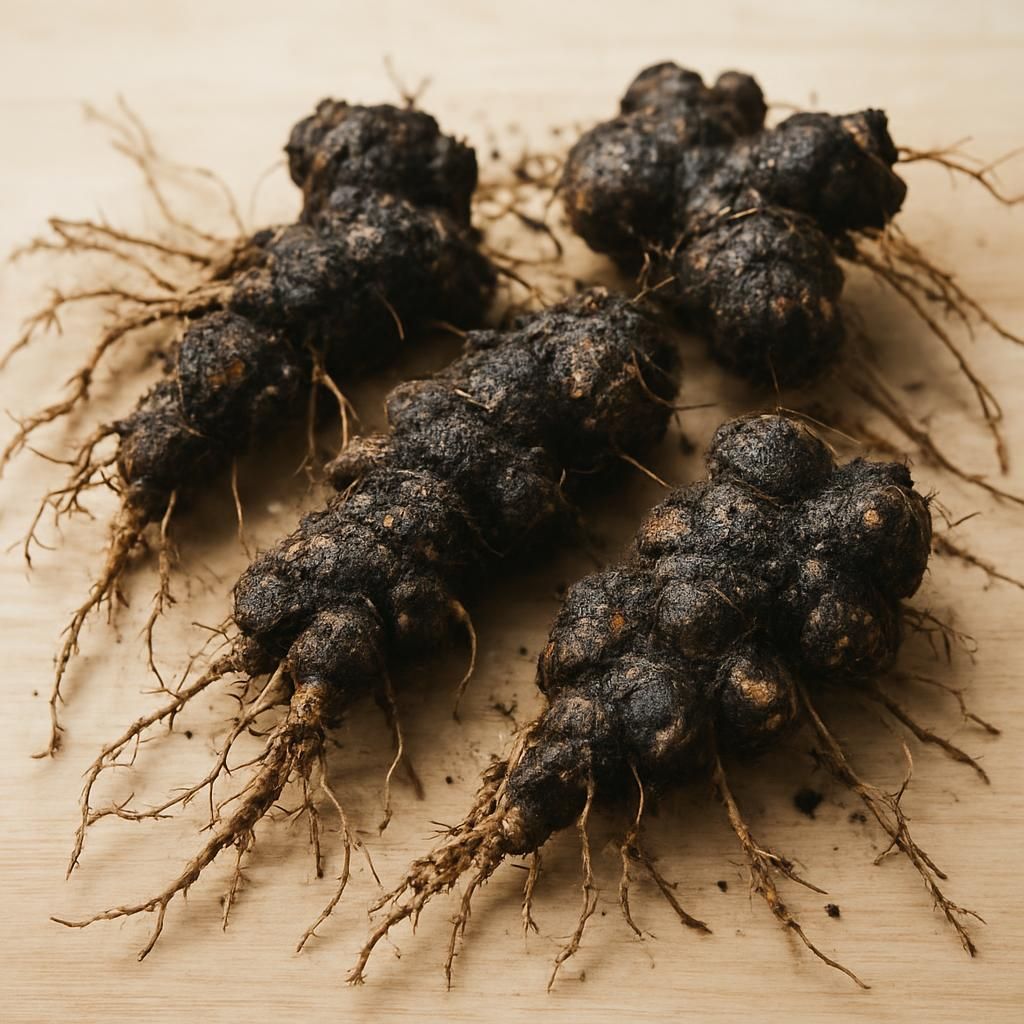
Introduction to Black Cohosh Root
Black Cohosh Root (Actaea racemosa) is a long-lived herbaceous perennial native to eastern North American deciduous forests. Valued for its thick, aromatic rhizomes used in traditional herbal medicine, the plant thrives in cool, moist, shaded environments. Commercial cultivation requires replicating woodland conditions while maintaining soil fertility and preventing disease. Success depends on careful site selection, consistent moisture, and organic practices that protect both yield and root quality.
Botanical Profile of Black Cohosh Root
Actaea racemosa belongs to the Ranunculaceae family and produces compound leaves with sharply toothed leaflets. In late spring to early summer, tall racemes of small white flowers rise above the foliage, attracting pollinators. The plant develops a dense network of thick, dark rhizomes and fibrous roots that store medicinal compounds. Mature plants reach 4–6 feet in height and spread slowly through short rhizomes. The root system is harvested in autumn after several years of growth when concentrations of triterpene glycosides are highest.
Soil, pH, and Climate Requirements for Black Cohosh Root
Black Cohosh requires fertile, well-drained yet moisture-retentive soil rich in organic matter. The species prefers a cool, humid microclimate with filtered light or 60–80% shade. Avoid frost pockets and heavy clay soils that remain waterlogged.
| Parameter | Ideal Range | Notes |
|---|---|---|
| Soil Type | Loamy, high in humus | Incorporate leaf mold or aged compost |
| Soil pH | 5.5–6.5 | Slightly acidic conditions preferred |
| Temperature Range | 15–24 °C daytime (59–75 °F) | Cool nights essential for root development |
| Annual Rainfall | 1000–1500 mm (40–60 in) | Supplemental irrigation during dry spells |
| Shade Requirement | 60–80% canopy cover | Mimics natural woodland understory |
| Spacing | 30–45 cm (12–18 in) between plants | Rows 60–90 cm (24–36 in) apart |
Step-by-Step Planting & Propagation
- Site Preparation: Clear competing vegetation and amend soil with 5–8 cm of well-rotted leaf mold or compost. Test pH and adjust with elemental sulfur if above 6.8.
- Rhizome Division: Divide healthy rhizomes in early spring or fall into sections each containing at least two buds. Dust cut surfaces with organic fungicide powder.
- Planting Depth: Set rhizomes horizontally 5–8 cm (2–3 in) deep. Firm soil gently and water thoroughly.
- Seed Propagation: Sow fresh seed in late summer in shaded nursery beds. Stratify for 90–120 days at 4 °C. Germination occurs the following spring; seedlings require two to three years before transplanting.
- Mulching: Apply 5–8 cm of shredded hardwood mulch immediately after planting to conserve moisture and suppress weeds.
Care & Maintenance regimes for Black Cohosh Root
Consistent moisture and organic fertility are critical. Monitor leaf color and soil moisture weekly. Remove flower stalks after seed set if rhizome growth is the priority.
| Task | Schedule | Materials & Rate |
|---|---|---|
| Watering | 25–40 mm per week during active growth | Drip irrigation or soaker hoses |
| Fertilizer | Early spring & mid-summer | 5-5-5 organic blend at 1 kg per 10 m² |
| Pruning | Post-flowering (July) | Remove spent racemes; leave foliage intact |
| Mulch Renewal | Annually in late fall | 5 cm hardwood chips or leaf mold |
Pests, Diseases & Organic Management
Common threats include Aphids, Slugs, and Root rot caused by Phytophthora species. Implement integrated management: encourage beneficial insects with flowering understory plants, maintain strict sanitation, and improve drainage. For slugs, apply iron phosphate baits and diatomaceous earth barriers. Avoid overwatering and rotate plantings every 5–7 years to break disease cycles.
Harvesting, Curing & Optimal Storage
Harvest rhizomes in the third or fourth autumn when leaves begin to yellow. Carefully dig around plants, wash soil from roots with low-pressure water, and trim foliage. Cure rhizomes in a shaded, well-ventilated area at 20–25 °C for 7–10 days until the outer skin wrinkles. Store in breathable mesh bags or paper-lined crates at 5–10 °C and 60–70% relative humidity. Properly cured roots retain medicinal potency for up to two years.
Companion Planting for Black Cohosh Root
Pair Black Cohosh with shade-tolerant species that improve soil structure and deter pests. Suitable companions include Ginger and Turmeric for similar moisture needs, and Nasturtium to repel aphids. Avoid planting near heavy feeders such as Corn that compete for nutrients and light.