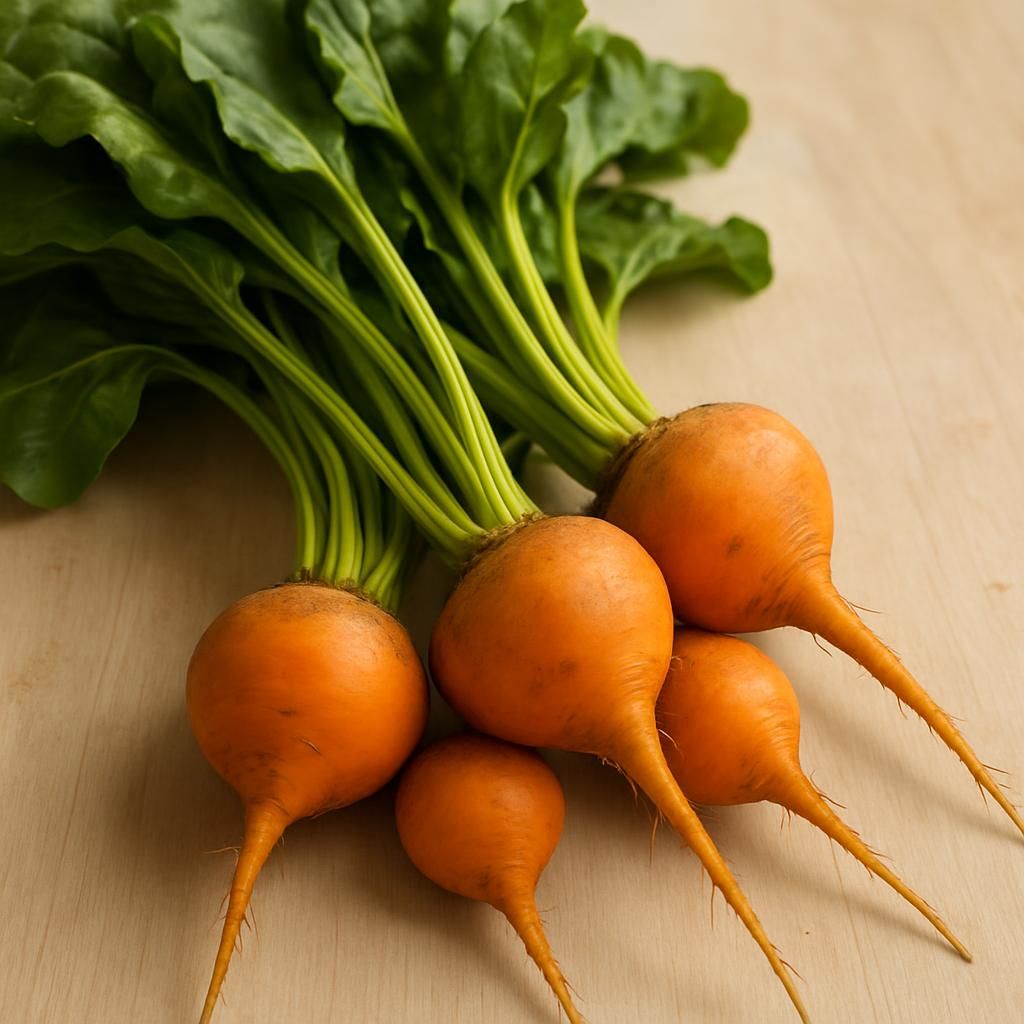
Introduction to Beet (Golden Detroit)
Golden Detroit beet is a standout heirloom variety known for its bright golden-orange roots and exceptionally sweet flavor. Unlike traditional red beets, this cultivar offers a milder, less earthy taste that appeals to a broader audience while delivering the same nutritional benefits. Gardeners and commercial growers value it for its bolt resistance, uniform root shape, and the striking contrast between its golden flesh and deep green foliage.
This beet performs reliably in both home gardens and small-scale farms, maturing in approximately 55–65 days. Its roots remain tender and sweet even when harvested at larger sizes, and the greens are excellent for fresh salads or light cooking. Because it lacks the staining pigments of red varieties, Golden Detroit is a favorite for chefs and food processors seeking vibrant color without the risk of bleeding.
Botanical Profile of Beet (Golden Detroit)
Golden Detroit belongs to the Amaranthaceae family and shares the same species as sugar beet and Swiss chard. It develops a swollen hypocotyl that forms the edible root, typically reaching 3–4 inches in diameter at maturity. The smooth skin is thin and edible, while the flesh maintains a consistent golden hue throughout.
The plant produces a rosette of broad, dark-green leaves with prominent veins and reddish petioles. These greens are highly nutritious and can be harvested young as microgreens or allowed to mature for bunching. The variety shows strong resistance to bolting, making it suitable for spring and fall plantings in temperate climates.
Soil, pH, and Climate Requirements for Beet (Golden Detroit)
Golden Detroit thrives in well-drained, fertile loam with consistent moisture. Heavy clay soils should be amended with organic matter to improve structure and drainage, while sandy soils benefit from compost to increase water retention.
| Parameter | Ideal Range | Notes |
|---|---|---|
| Soil Type | Loam, sandy loam | Avoid compacted or waterlogged soils |
| Soil pH | 6.0–7.0 | Slightly acidic to neutral; test annually |
| Temperature (Soil) | 50–65 °F (10–18 °C) | Germination fails above 85 °F |
| Air Temperature | 60–75 °F (15–24 °C) | Tolerates light frost; avoid extreme heat |
| Sunlight | Full sun (6–8 hours) | Partial shade acceptable in hot climates |
| Spacing (In-row) | 2–3 inches | Thin seedlings to prevent crowding |
| Row Spacing | 12–18 inches | Allows airflow and easy weeding |
Step-by-Step Planting & Propagation
- Site Preparation: Choose a location with full sun and loose, well-drained soil. Remove rocks and debris that could deform roots. Incorporate 2–3 inches of well-rotted compost or aged manure.
- Soil Testing & Amendment: Aim for pH 6.0–7.0. If lime is needed, apply 4–6 weeks before planting. Avoid fresh manure, which can cause forked roots.
- Sowing Seeds: Direct sow seeds ½ inch deep and 1 inch apart in rows 12–18 inches apart. Sow every 2–3 weeks for continuous harvest.
- Germination: Maintain soil temperature between 50–65 °F. Seeds typically emerge in 5–10 days. Keep soil evenly moist during this period.
- Thinning: When seedlings reach 2–3 inches tall, thin to 2–3 inches apart. Use thinnings in salads.
- Transplanting: Although direct sowing is preferred, young seedlings can be transplanted if handled carefully to avoid root disturbance.
Care & Maintenance regimes for Beet (Golden Detroit)
Consistent moisture and balanced nutrition are critical for tender, sweet roots. Mulch with straw or shredded leaves to conserve moisture and suppress weeds. Monitor for nutrient deficiencies, particularly boron, which can cause internal black spots.
| Task | Schedule | Details |
|---|---|---|
| Watering | 1 inch per week | Deep, infrequent watering; avoid fluctuations |
| Fertilizer | At planting and 4 weeks later | Side-dress with balanced organic fertilizer (5-5-5); avoid excess nitrogen |
| Mulching | Immediately after thinning | 2–3 inch layer of organic mulch |
| Weeding | Weekly until canopy closes | Hand-pull or shallow cultivation |
| Pruning/Thinning | Once at 2–3 inches tall | Remove weak seedlings; harvest greens as needed |
Pests, Diseases & Organic Management
Golden Detroit is generally resilient but can be affected by common beet pests and diseases. Aphids and flea beetles may attack foliage, while root-knot nematodes can distort roots. Leaf spot diseases and powdery mildew occasionally appear in humid conditions.
Organic controls include floating row covers for insect protection, neem oil or insecticidal soap for aphids, and crop rotation to break nematode cycles. Maintain good airflow and avoid overhead irrigation to reduce fungal pressure. Beneficial insects such as lady beetles and lacewings help suppress aphid populations naturally.
Harvesting, Curing & Optimal Storage
Harvest Golden Detroit when roots reach 2–4 inches in diameter for optimal sweetness and tenderness. Gently loosen soil with a fork and pull by the tops. The greens can be left attached or removed immediately.
Cure harvested beets by allowing them to air-dry in a shaded, well-ventilated area for 1–2 hours. Store unwashed roots in perforated plastic bags in the refrigerator for up to 3 weeks, or layer in damp sand in a cool root cellar (32–40 °F) for several months. Greens should be used within 3–5 days.
Companion Planting for Beet (Golden Detroit)
Beets grow well alongside Onion, Garlic, Lettuce, and members of the cabbage family. These companions help deter pests and make efficient use of space. Avoid planting near pole beans, which can inhibit beet growth.
For additional organic strategies that enhance soil health and resilience, see The Hidden Power of Mulching: 8 Organic Strategies to Transform Small Farm Soil.