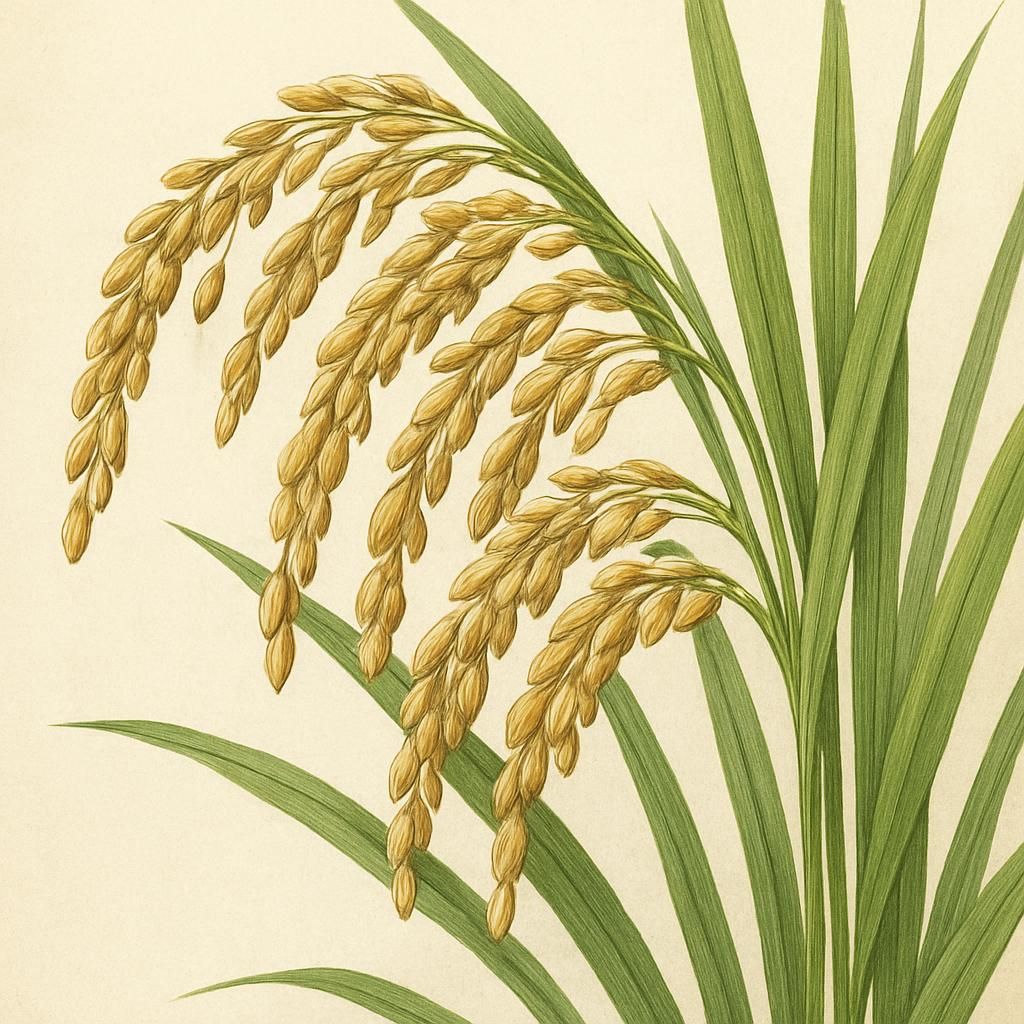
Introduction to Bahni Rice
Bahni Rice is a distinguished variety of rice that stands out for its aromatic grains and versatility in various growing environments. As a staple food grain, it plays a significant role in the agriculture and economy of many regions. Renowned for its fragrance and taste, Bahni Rice is favored by farmers and consumers alike for its robust characteristics and adaptability.
Botanical Profile of Bahni Rice
Bahni Rice, scientifically known as Oryza sativa cv. Bahni, belongs to the Poaceae family. As a monocotyledonous crop, its growth habit is predominantly annual. This cultivar is specifically bred for resilience in varying ecological zones, contributing to its widespread popularity. Its physical features include medium to long grain length, a robust stalk, and broad leaves, making it suitable for different farming practices.
Soil, pH, and Climate Requirements for Bahni Rice
Bahni Rice thrives under specific soil and climate conditions, crucial for optimizing yield and quality.
| Condition | Ideal Range |
|---|---|
| Soil Type | Loamy, well-drained soils |
| pH Level | 5.5 to 6.5 |
| Temperature | 20°C to 32°C (68°F to 89°F) |
| Rainfall | 1500 mm to 2000 mm annually |
| Humidity | 70% to 80% |
The soil should be fertile and rich in organic matter to support healthy growth. Maintaining appropriate moisture levels is essential since Bahni Rice requires consistent irrigation to sustain its development.
Step-by-Step Planting & Propagation
Land Preparation: Begin with deep plowing to break up soil clods and improve aeration. Follow with leveling to ensure uniform water distribution.
Seed Selection and Treatment: Opt for certified Bahni Rice seeds. Treat seeds with fungicides to prevent seed-borne diseases.
Sowing: Direct seeding or transplanting are both viable methods. For direct seeding, broadcast seeds evenly and cover lightly with soil. For transplanting, raise seedlings in a nursery for about 20-25 days before transplanting into prepared fields.
Spacing: Maintain a spacing of 20 cm x 15 cm to allow adequate root expansion and air circulation.
Care & Maintenance Regimes for Bahni Rice
Consistent care and maintenance are crucial for maximizing Bahni Rice yield and quality.
| Activity | Frequency | Details |
|---|---|---|
| Watering | Moderate to high | Ensure flooded conditions during early growth. |
| Fertilizing | Every 4-6 weeks | Use balanced NPK fertilizers based on soil tests. |
| Pruning | As needed | Remove weeds and thin plants to improve air flow. |
Proper irrigation and timely application of nutrients ensure optimal growth. Regular monitoring for weed and pest presence is also important.
Pests, Diseases & Organic Management
Bahni Rice faces threats from several pests and diseases like spider mites, rice blast, and brown spot. Implementing organic management strategies, such as using neem oil for pest control and rotating crops can help mitigate these issues. For more organic solutions, refer to the blog Crop Diseases Under the Microscope: 9 Organic Fixes for Small Farm Resilience.
Harvesting, Curing & Optimal Storage
Harvesting: Typically occurs when grains turn golden yellow, usually 100-120 days after planting.
Curing: Allow harvested rice to dry in the sun for a few days to lower moisture content before threshing.
Storage: Store grains in a cool, dry place, preferably in airtight containers, to protect from pests and humidity.
Companion Planting for Bahni Rice
Companion planting can be leveraged to improve Bahni Rice yields through strategic biodiversity. Consider planting legumes such as soybeans nearby to enhance soil nitrogen levels naturally. Additionally, nasturtium can act as a pest deterrent, while Thyme can enhance beneficial insect populations.
Companion planting can be further explored through organic strategies provided in this blog: Summer Companion Planting: 10 Organic Pairings to Boost Small Farm Resilience.