Introduction to apricot
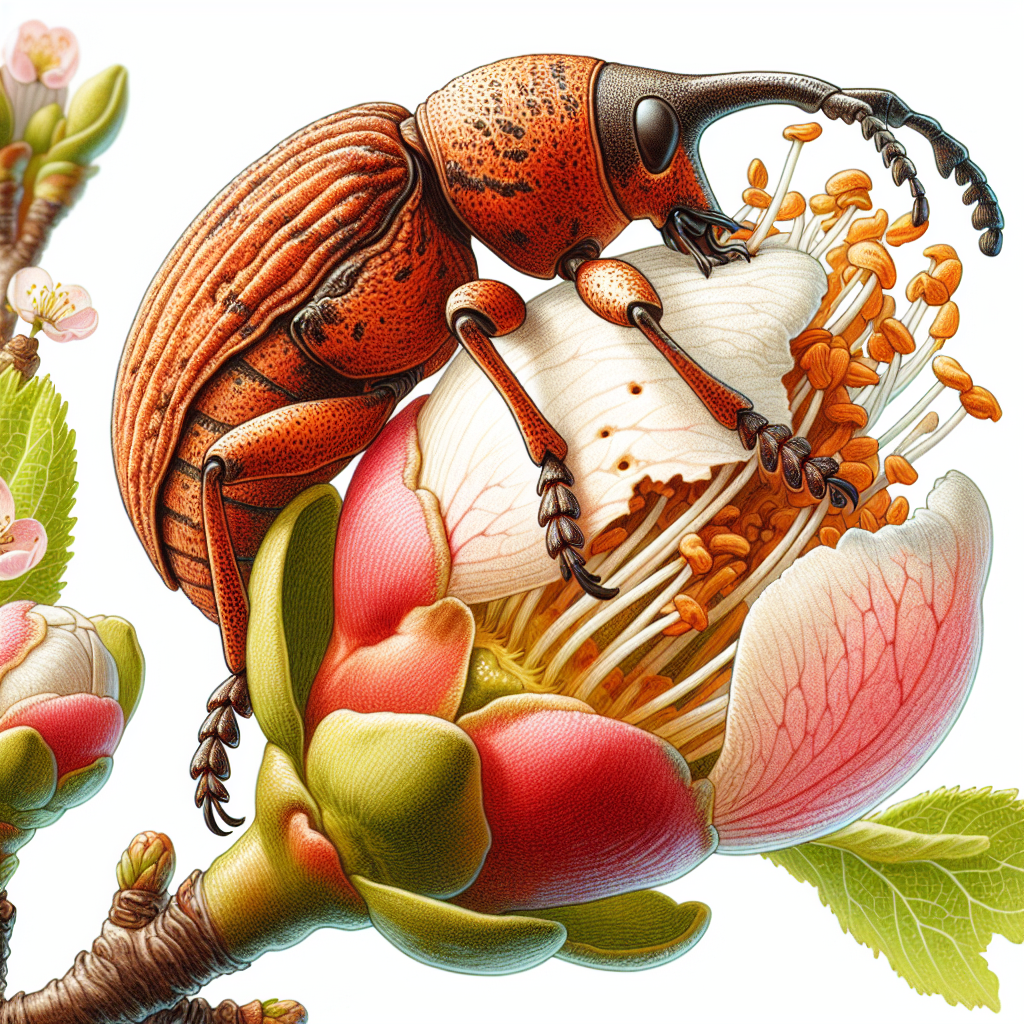
The apricot bud weevil (Anthonomus ligustici), commonly referred to simply as the 'apricot' pest in orchard management circles, is a small snout beetle that poses a severe threat to apricot trees (Prunus armeniaca) and related stone fruits. Native to Europe and parts of Asia, it has spread to North America and other regions, becoming a key pest in commercial and home orchards. Adult weevils emerge in early spring, targeting tender buds and flowers, leading to blossom drop and reduced fruit set. This can result in up to 80% yield loss in untreated orchards during peak infestation years. Understanding this pest's behavior is crucial for timely intervention. Early detection and management are essential, as chemical controls are often ineffective post-feeding. This definitive guide equips growers with professional-grade diagnostics, lifecycle knowledge, organic treatments, and prevention strategies to safeguard apricot production. By integrating cultural, biological, and mechanical methods, you can achieve sustainable control without relying on synthetic pesticides. Aphids often co-occur with weevils, exacerbating damage through secondary infections.
Apricots are highly susceptible due to their early bloom cycle, making them prime targets before many beneficial insects become active. Global warming has extended the pest's range, with overwintering adults surviving milder winters. Economic impacts are profound, with small farms losing thousands annually. Proactive scouting and IPM (Integrated Pest Management) form the backbone of successful control. This guide draws from decades of entomological research and field trials to deliver actionable advice.
Identifying Symptoms & Damage
Recognizing apricot bud weevil damage early is vital for effective management. Adult weevils, measuring 2-3 mm long with elongated snouts, create characteristic feeding punctures on buds and young leaves. Look for small, circular holes (0.5-1 mm) with ragged edges on unopened buds, often accompanied by brown, shriveled tissue. Infested buds fail to open, turning black and dropping prematurely. Distinctive signs include 'shot-hole' patterns on leaves from adult feeding and frass (sawdust-like excrement) around bud clusters.
Larval damage occurs inside buds: dissect affected buds to find creamy-white grubs with brown heads feeding on floral parts. Severe infestations lead to complete defoliation in young trees and gumming from tree stress. Differentiate from caterpillars by the absence of webbing and presence of puncture wounds. On fruit, scarring appears as corky, pitted lesions from oviposition scars. Yield impacts are most evident in thin fruit set post-bloom. Use a 10x hand lens to confirm weevil presence—adults have reddish-brown bodies covered in grayish scales. Monitor during pink bud stage, when damage peaks. Secondary symptoms include increased powdery mildew due to open wounds. Threshold: 5% bud infestation warrants action. Regular scouting with beat sheets (shake branches over white cloth) reveals adults quickly.
Lifecycle and Progression of apricot
The apricot bud weevil completes one to two generations per year, tightly synced with host phenology. Overwintering adults shelter in bark crevices, leaf litter, or soil under trees, emerging at 8-10°C in late winter/early spring. Pre-oviposition feeding lasts 7-10 days on buds, followed by egg-laying (up to 50 eggs per female) into bud bases. Eggs hatch in 5-7 days at 15°C into legless larvae that bore into buds, pupating after 10-14 days. New adults emerge 7-10 days later, feeding briefly before seeking overwintering sites by mid-summer.
In warmer climates, a partial second generation may occur on late-blooming apricots. Lifecycle duration: 4-6 weeks. Peak activity aligns with apricot bloom (March-May in temperate zones). Population dynamics favor dry springs, with females preferring 1-2 year-old shoots. Monitoring degree-days (base 10°C) predicts emergence: 100-150 DD for adults. Larvae are vulnerable during feeding; adults are mobile and harder to target. Understanding this progression allows precise timing of controls. For instance, target eggs/larvae within buds before adult dispersal.
Environmental Triggers & Risk Factors
Apricot bud weevils thrive in Mediterranean climates with mild winters and dry springs, common in apricot-growing regions like California, Spain, and Turkey. Key triggers include temperatures above 10°C during bloom and low humidity (<60%), reducing fungal mortality. Poor orchard sanitation—unremoved mummies, leaf litter—boosts overwintering survival to 70%. Susceptible varieties like 'Tilton' or 'Blenheim' face higher risks due to early bloom. Nearby wild Prunus hosts (e.g., plum, peach) serve as reservoirs.
Soil type matters: sandy loams aid pupation. Over-fertilization with nitrogen promotes tender growth, attracting females. Drought stress weakens trees, increasing susceptibility. Ants farming honeydew from associated scale insects can protect weevils. Risk assessment: High in orchards >5 years old without borders. Climate change extends active periods, with models predicting 20% range expansion by 2050. Mitigate by assessing microclimates and historical infestation data.
Organic Control & Treatment Plans
Organic management emphasizes IPM for sustainable apricot protection. Cultural Controls: Prune infested wood post-harvest; destroy debris by shredding/flaming to kill 90% overwintering adults. Kaolin clay sprays (Surround WP) at pink bud stage deter feeding via physical barrier—apply 50-100 g/L, reapply after rain. Biological Controls: Encourage ground beetles and spiders via mulch; release Bracon hebetor parasitoids (1,000/ha) targeting larvae. Neem oil (azadirachtin 0.03%) disrupts feeding/oviposition—apply at dusk to spare pollinators.
Mechanical: Beat sheets for adults (early morning, <15°C); vacuum or hand-collect into soapy water. Pheromone traps (1-2/ha) monitor and mass-trap males. Timing: Scout weekly from green tip; treat at 10% bud clip infestation. Rotate modes to prevent resistance. Efficacy: Combined IPM reduces populations 85%. For heavy infestations, spinosad (Entrust, OMRI-listed) at 0.2 L/ha targets larvae inside buds. Always follow label rates; buffer near water. Spring Pest Patrol: Organic AI Strategies to Shield Your Crops from Common Invaders offers tech-enhanced scouting tips.
Detailed Plan: Week 1 (Bud swell): Kaolin spray. Week 2-3 (Bloom): Neem + traps. Post-bloom: Sanitation. Monitor efficacy via bud dissections. Costs: $50-100/ha annually, vs. 30% yield gain.
Preventing apricot in the Future
Prevention hinges on long-term orchard hygiene and monitoring. Plant resistant rootstocks like 'GF 677' and space trees 6-7m for airflow. Establish borders with thyme or marigold as trap crops. Annual fall cleanup removes 95% refugia. Use degree-day models (free apps) for predictive scouting. Introduce beneficials via habitat strips: yarrow, buckwheat. Avoid broad-spectrum sprays preserving predators. Quarantine new plantings; inspect nursery stock.
Soil solarization in summer kills pupae. Reflective mulches disorient adults. Long-term: Breeders develop weevil-resistant cultivars. Annual plans: Jan-Feb (Sanitation), Mar (Traps/kaolin), Apr (Neem), May (Prune). Track via logs; adjust based on pressure. Success metrics: <2% bud damage. Integrating with general stone fruit IPM prevents outbreaks in cherry and peach too.
Crops Most Affected by apricot
Primarily apricots, but attacks peach, plum, cherry, nectarine, and wild Prunus. Apricots suffer most (up to 90% bud loss), followed by early-blooming peaches (50%). Sweet cherries less impacted due to later bloom. Avoid interplanting with susceptible crops. Nectarines show high scarring. In mixed orchards, isolate apricots. Economic threshold highest on apricots ($/ha loss).