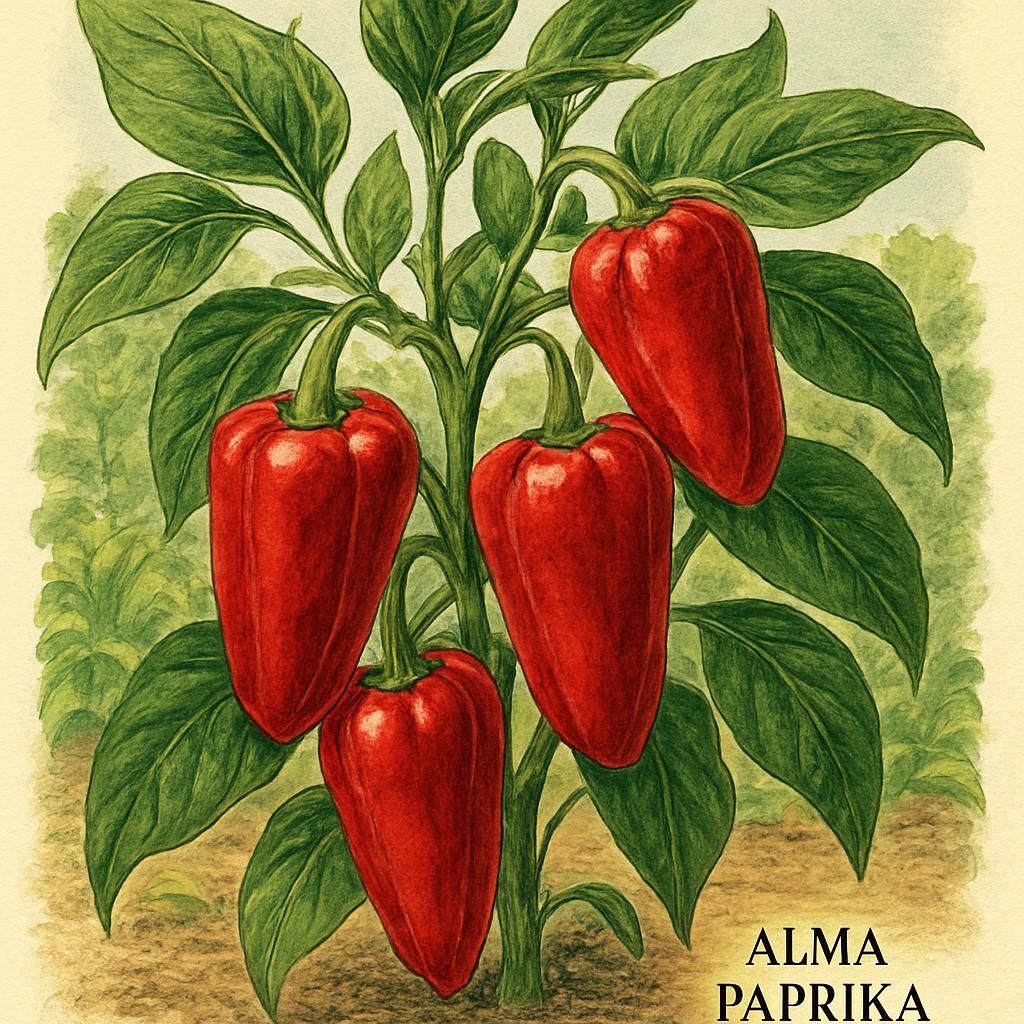
Introduction to Alma Paprika
Alma Paprika is a distinctive variety of the Capsicum annuum species, cherished for its vibrant transformation in color and its use as a spice. Initially cream-colored, the fruit transitions to a bright red, signifying harvest readiness. Known for its mild heat and thick flesh, Alma Paprika is versatile, used both in fresh culinary applications and as a dried spice powder.
Cultivating Alma Paprika offers gardeners a rewarding endeavor, producing yields that are excellent for diverse culinary uses. Whether incorporated fresh in dishes for its subtly sweet and spicy notes, or dried and ground into a flavorful paprika, this pepper variety is a splendid addition to any garden.
Botanical Profile of Alma Paprika
- Family: Solanaceae
- Genus: Capsicum
- Species: C. annuum
- Variety: Alma Paprika
- Origin: Eastern Europe
- Plant Type: Annual
- Height: 18-24 inches
- Spread: 18-24 inches
- Fruit Shape: Globe
- Color: Cream transitioning to red
- Flavor: Mildly spicy with sweet undertones
Soil, pH, and Climate Requirements for Alma Paprika
To cultivate Alma Paprika successfully, it is essential to understand its ideal growing conditions, which include specific soil, pH, and climate prerequisites.
| Property | Ideal Condition |
|---|---|
| Soil Type | Well-drained, loamy soil |
| Soil pH | 6.0 to 7.0 |
| Temperature | 70–85°F (21–29°C) |
| Sunlight | Full sun |
| Rainfall | Moderate, 1-2 inches per week |
Alma Paprika thrives in sunny plots with fertile, well-drained soil. Maintaining these conditions promotes healthy growth and optimal yields.
Step-by-Step Planting & Propagation
Growing Alma Paprika typically begins indoors about 6-8 weeks before the last expected frost date in your area. Here are detailed planting and propagation steps:
Seed Selection and Preparation: Purchase quality Alma Paprika seeds. Soak them overnight in warm water to promote germination.
Starting Indoors: Use a seed-starting mix. Sow the seeds 1/4 inch deep in seed trays. Maintain a consistent soil temperature of 75–85°F for optimal germination.
Transplanting: Once seedlings have 2-3 sets of true leaves, harden them off by gradually exposing them to outdoor conditions over a week. Transplant them into the garden, ensuring a spacing of 18-24 inches apart.
Direct Sowing: Alternatively, if your climate permits, sow seeds directly after the threat of frost has passed. Ensure rows are 24 inches apart.
Care & Maintenance Regimes for Alma Paprika
Consistent care is crucial for Alma Paprika, addressing aspects such as watering, fertilization, and pruning to enhance plant health and productivity:
| Task | Schedule |
|---|---|
| Watering | 1-2 inches of water per week |
| Fertilizing | Every 4-6 weeks with balanced feed |
| Pruning | Lightly trim leggy growth as needed |
Mulching: Use organic mulch to maintain moisture and suppress weeds.
Staking: Provide support for the plants as they grow to prevent bending and breakage.
Pests, Diseases & Organic Management
Alma Paprika is relatively hardy but can fall prey to common garden pests and diseases. Key concerns and management strategies include:
- Common Pests: Aphids, Spider Mites, Thrips
- Diseases: Powdery Mildew, Anthracnose
Organic Management: Employ insecticidal soap or neem oil for pest control. Ensure good air circulation and avoid overhead watering to prevent fungal diseases.
Harvesting, Curing & Optimal Storage
Alma Paprika can be harvested once the peppers acquire a deep red hue. Follow these steps to harvest and store:
- Harvesting: Use scissors or garden shears to cut ripe fruits from the plant to avoid damage.
- Curing for Paprika: Dry peppers in a well-ventilated area until crispy, then grind them into powder.
- Storage: Store dried paprika in an airtight container in a cool, dark place.
Companion Planting for Alma Paprika
Companion planting can enhance the growth and flavor of Alma Paprika while deterring pests and diseases. Suitable companions include:
Research has shown that companion planting can affect yields and pest control positively. For more on the benefits of companion planting, explore our article on Summer Companion Planting: 10 Organic Pairings to Boost Small Farm Resilience.