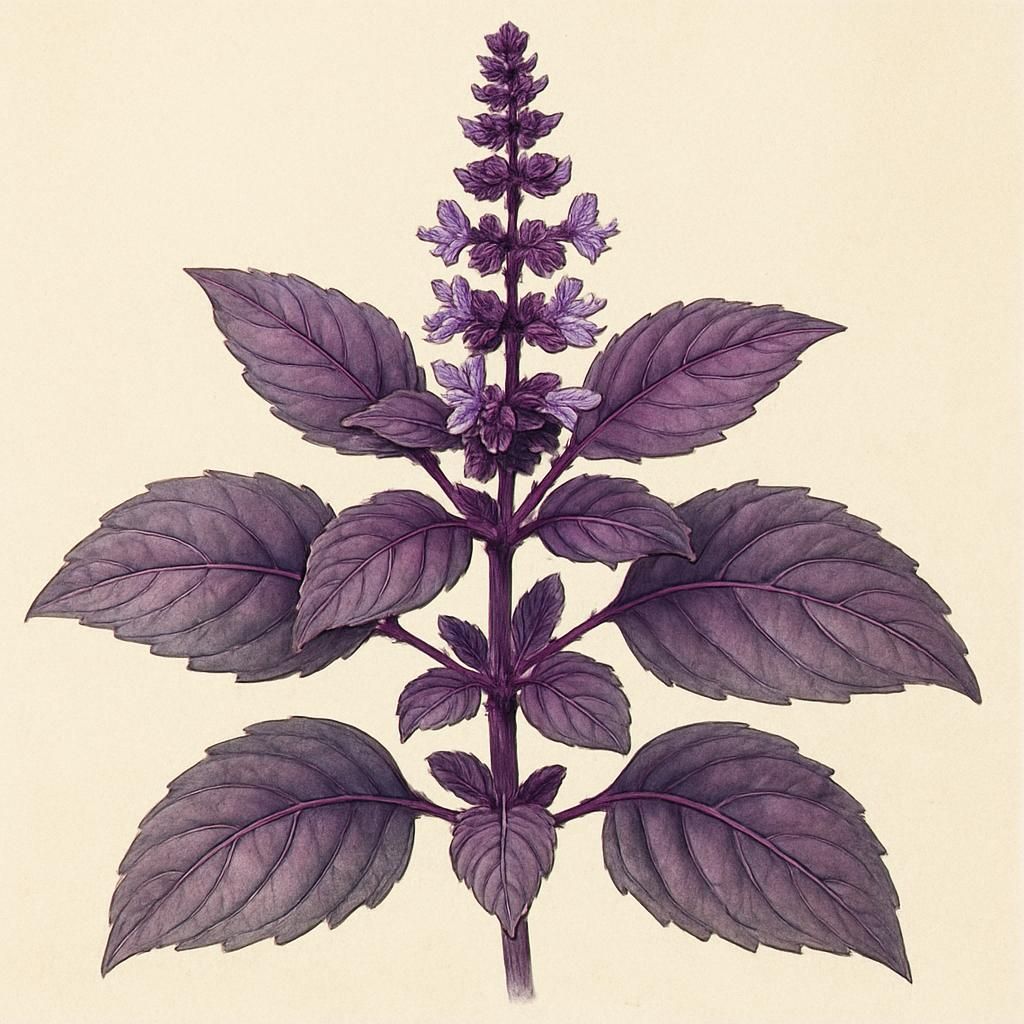
Introduction to African Blue Basil
African Blue Basil (Ocimum kilimandscharicum × basilicum 'Purpurascens') is a cross between two basil varieties, resulting in a perennial plant that offers both aesthetic and culinary value. It is cherished for its purple-tinged leaves and strong aroma, often used as an ornamental plant in gardens and a flavorful addition to dishes.
Botanical Profile of African Blue Basil
African Blue Basil is unique because it is hybrid and sterile, which means it does not set seeds and can only be propagated by cuttings. This basil grows between 24 to 36 inches tall, featuring purple stems and green leaves with a purplish hue. The plant blooms with small lavender flowers, attracting bees and other pollinators.
Soil, pH, and Climate Requirements for African Blue Basil
African Blue Basil thrives best in well-drained soil with an ideal pH level. It requires a warm climate, moderate humidity, and plenty of sun.
| Condition | Ideal Range |
|---|---|
| Soil Type | Well-drained, loamy, sandy |
| Soil pH | 6.0 - 7.5 |
| Temperature | 70-85°F (21-29°C) |
| Humidity | 40% - 60% |
| Sunlight | Full sun (6-8 hours/day) |
Step-by-Step Planting & Propagation
- Prepare the Soil: Ensure the soil is enriched with organic matter for better drainage and nutrient availability.
- Cutting Preparation: Since African Blue Basil does not produce seeds, start by cutting a 4-6 inch stem just below a leaf node.
- Rooting Process: Place the cuttings in water and leave them in a sunny spot. Roots usually develop within 10-14 days.
- Transplant: Once roots are established, transplant the cuttings to pots or directly into garden beds, spaced about 12-18 inches apart.
- Watering: Water the new plants thoroughly but ensure not to overwater.
Care & Maintenance Regimes for African Blue Basil
Proper care will ensure a bountiful and continuous harvest.
| Activity | Schedule |
|---|---|
| Watering | Moderate; water when top inch of soil is dry |
| Fertilizing | Every 4-6 weeks with a balanced fertilizer |
| Pruning | Regularly to encourage bushy growth |
Pests, Diseases & Organic Management
African Blue Basil is generally pest-resistant, but still may encounter issues such as:
- Spider Mites: These tiny pests can be controlled using neem oil or horticultural soap.
- Aphids: Introduce natural predators like ladybugs or spray with a soapy water solution.
- Powdery Mildew: Ensure good air circulation and avoid overhead watering. For a broader range of organic practices, refer to 7 Summer Pest Traps That Sabotage Small Farm Harvests.
Harvesting, Curing & Optimal Storage
- Harvesting: Pinch off leaves and stems as needed for fresh use.
- Curing: Not required, but drying can enhance flavor for storage.
- Storage: Store dried basil in an airtight container in a cool, dark place.
Companion Planting for African Blue Basil
African Blue Basil is highly beneficial in a companion planting setup. It partners well with tomatoes, Cherry Tomato, and peppers, repelling certain pests while attracting pollinators. For more insights on companion planting, check out Spring Companion Planting: 8 Organic Pairings to Maximize Small Farm Yields.
Beside being a great companion for Garlic and Tomato, it's also advantageous when paired with Thai Basil.