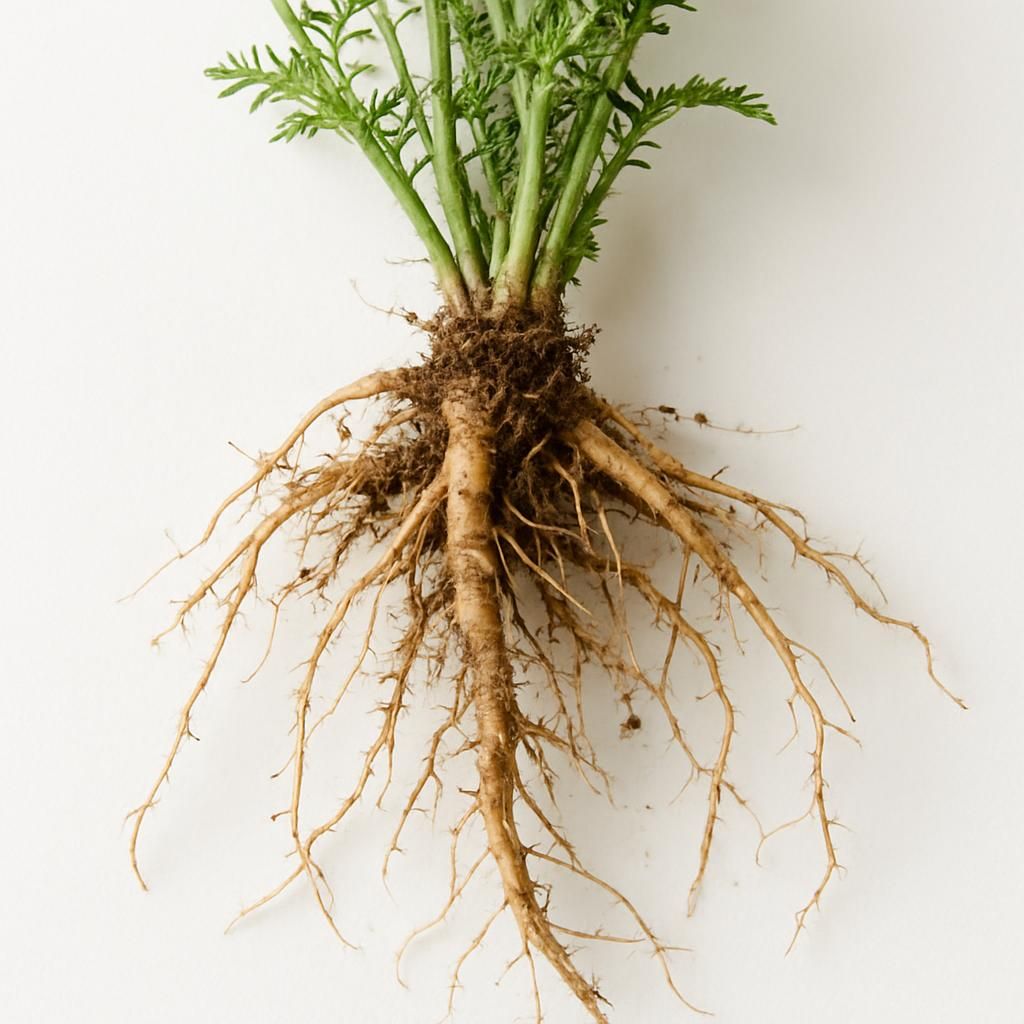
Introduction to Yarrow Root
Yarrow Root refers to the dense, aromatic rhizomes and fibrous root network of Achillea millefolium, a hardy perennial herb cultivated for centuries for its medicinal, culinary, and ecological uses. The roots contain high concentrations of sesquiterpene lactones, flavonoids, and volatile oils that support traditional herbal applications for digestive health and wound care. Beyond its therapeutic value, yarrow improves soil structure through deep taproots that break compaction and recycle nutrients, making it an excellent addition to regenerative farming systems.
Botanical Profile of Yarrow Root
Achillea millefolium belongs to the Asteraceae family and produces feathery, fern-like foliage above ground with flat-topped clusters of small white to pale pink flowers. Below ground, the plant develops a vigorous rhizomatous root system that spreads laterally while sending down taproots up to 60 cm deep. The roots are typically harvested in their second or third year when they reach peak essential oil content. Yarrow is diploid with a chromosome count of 2n=18 and exhibits strong cold hardiness, thriving across USDA zones 3–9.
Soil, pH, and Climate Requirements for Yarrow Root (MUST INCLUDE A MARKDOWN TABLE OF IDEAL CONDITIONS)
Yarrow Root performs best in well-drained, moderately fertile soils with a preference for slightly alkaline conditions. It tolerates poor soils but yields superior root biomass in loamy textures enriched with organic matter. The plant requires full sun exposure of at least six hours daily and demonstrates excellent drought tolerance once established.
| Parameter | Ideal Range | Notes |
|---|---|---|
| Soil Type | Loam to sandy loam | Avoid heavy clay without amendment |
| Soil pH | 6.5 – 7.5 | Slightly alkaline preferred |
| Temperature Range | 15–25 °C daytime | Cold hardy to −30 °C |
| Annual Rainfall | 400–800 mm | Supplemental irrigation in dry spells |
| Sun Exposure | Full sun (6+ hours) | Tolerates light afternoon shade |
| Elevation | Sea level to 2,500 m | Performs well in highland climates |
Step-by-Step Planting & Propagation
Yarrow Root is most reliably propagated by root division in early spring or fall. Select healthy two-year-old mother plants and divide the rhizomes into 8–10 cm sections, each containing at least two buds. Plant divisions 30 cm apart in rows spaced 45–60 cm, positioning the crown at soil level. Direct seeding is possible but slower; sow seeds 3 mm deep in fine seedbeds after the last frost, keeping the surface consistently moist until germination occurs in 10–14 days. Transplant seedlings at the four-leaf stage, hardening them off for one week prior to field placement.
Care & Maintenance regimes for Yarrow Root (MUST INCLUDE A MARKDOWN TABLE OF WATER, FERTILIZER, AND PRUNING SCHEDULES)
Established yarrow requires minimal intervention but responds well to targeted care. Mulch with 5–7 cm of organic material to suppress weeds and conserve moisture. Remove flower heads after blooming to redirect energy into root development. Monitor for signs of nutrient deficiency and apply balanced organic amendments only when soil tests indicate need.
| Season | Watering Schedule | Fertilizer Application | Pruning & Maintenance |
|---|---|---|---|
| Spring | 25–30 mm per week if rainfall low | Compost tea (1:10) at 4-week intervals | Divide overcrowded clumps every 3 years |
| Summer | Deep watering every 10–14 days | Light side-dressing of aged manure | Deadhead spent blooms to boost roots |
| Autumn | Reduce to 15 mm per week | Top-dress with 2 cm well-rotted compost | Cut back foliage to 10 cm after frost |
| Winter | None required (dormant) | None | Apply 5 cm mulch for insulation |
Pests, Diseases & Organic Management
Yarrow Root is relatively resistant to pests but can host Aphids and Spider Mites during hot, dry periods. Fungal issues such as Powdery Mildew may appear in humid conditions. Use strong water sprays for aphids and introduce predatory mites for spider mite control. Improve air circulation and avoid overhead irrigation to prevent mildew. Neem oil or insecticidal soap provides effective organic suppression when applied at the first sign of infestation.
Harvesting, Curing & Optimal Storage
Harvest yarrow roots in late autumn of the second or third year when foliage has begun to senesce. Carefully lift plants with a garden fork to avoid damaging the rhizomes. Shake off excess soil and rinse under cool running water. Cut roots into 5–8 cm pieces and dry in a well-ventilated area at 35–40 °C until brittle. Store cured roots in airtight glass jars away from light and moisture; properly dried material retains potency for up to two years.
Companion Planting for Yarrow Root
Yarrow enhances nearby crops through its deep roots that improve soil aeration and nutrient cycling. Pair it with Tomato to deter pests and boost flavor, or interplant with Cucumber for natural aphid suppression. Avoid planting near Lettuce if slug pressure is high, as yarrow can provide shelter. Its flowers also attract beneficial insects that support overall garden biodiversity.
Learn more about yarrow cultivation techniques on the official Wiki page. Explore companion planting strategies for small farms in this detailed blog post.