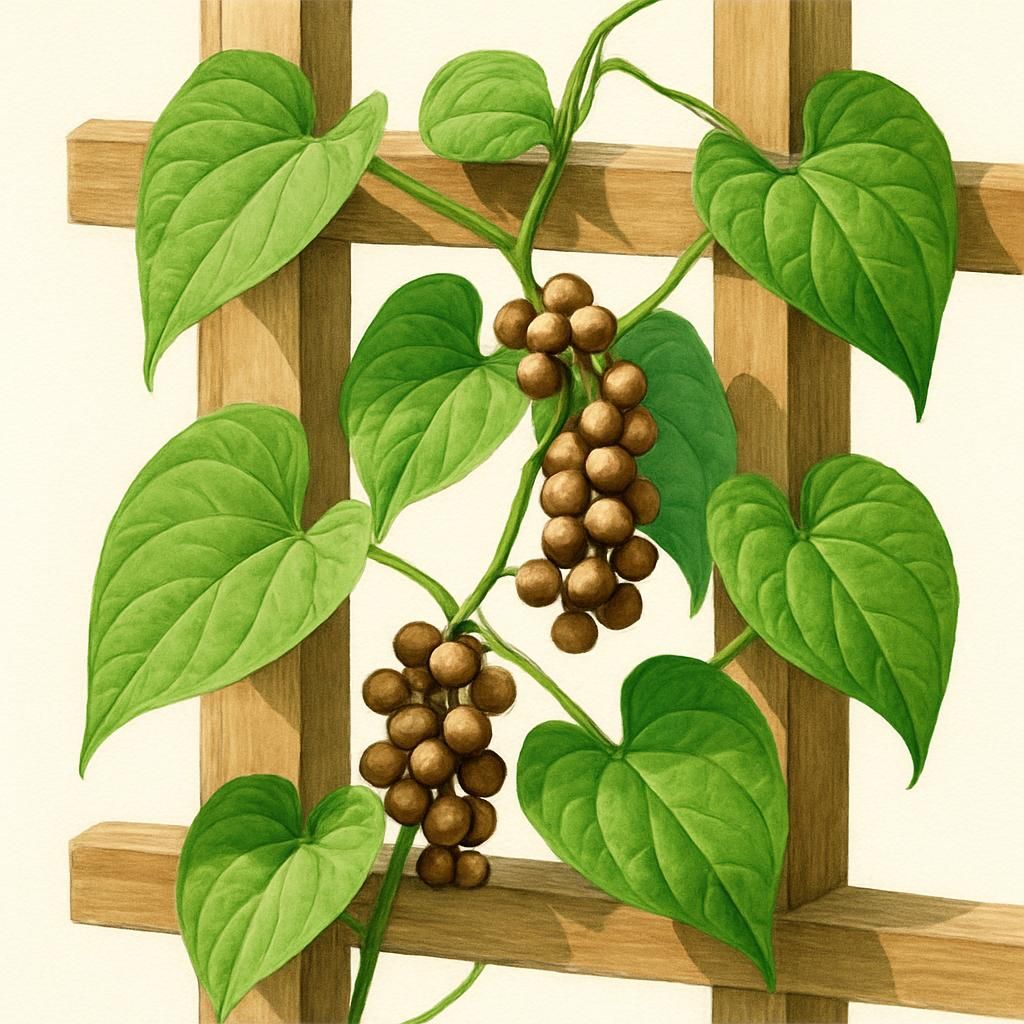
Introduction to Yam (Dioscorea bulbifera - Air Potato)
Dioscorea bulbifera is a fast-growing perennial vine valued for its aerial tubers that form along the stems. Unlike ground yams, this species produces potato-like bulbils that can be harvested without disturbing the soil. The crop is well-suited to home gardens and commercial plots in warm climates where vertical space can be utilized efficiently.
Botanical Profile of Yam (Dioscorea bulbifera - Air Potato)
The plant features heart-shaped leaves and twining stems that can reach 10–20 meters when supported. Aerial bulbils range from marble to fist size, while underground tubers develop as storage organs. The vine is deciduous in cooler months and regrows from the tuber each season.
Soil, pH, and Climate Requirements for Yam (Dioscorea bulbifera - Air Potato)
| Parameter | Ideal Range | Notes |
|---|---|---|
| Soil Type | Sandy loam to loam | Good drainage prevents rot |
| pH | 5.5 – 6.8 | Slightly acidic to neutral |
| Temperature | 22–32 °C day / 18–24 °C night | Frost sensitive below 10 °C |
| Rainfall | 1200–2000 mm/year | Even distribution preferred |
| Altitude | 0–1500 m | Performs best in lowland tropics |
Step-by-Step Planting & Propagation
Select healthy, disease-free bulbils or small tubers. Prepare trellises or poles 2–2.5 m high before planting. Plant bulbils 5–8 cm deep in prepared mounds spaced 1 m apart in rows 1.5 m apart. Water thoroughly after planting and maintain consistent moisture until sprouts emerge in 10–14 days.
Care & Maintenance regimes for Yam (Dioscorea bulbifera - Air Potato)
| Stage | Watering Schedule | Fertilizer Schedule | Pruning Schedule |
|---|---|---|---|
| Establishment (0–8 weeks) | Keep soil moist; 2–3 times/week | Apply 10-10-10 NPK at 200 kg/ha at week 4 | Remove weak shoots; train main vine |
| Vegetative (2–5 months) | 25–30 mm/week; reduce in rain | Side-dress with compost tea every 6 weeks | Pinch tips at 2 m to encourage branching |
| Bulbil Development (5–8 months) | Maintain even moisture; avoid waterlogging | Apply potassium-rich fertilizer (0-0-50) at 150 kg/ha | Remove senescing leaves; harvest small bulbils |
Pests, Diseases & Organic Management
Common pests include Aphids, Mealybugs, and Scale insects. Use neem oil sprays and introduce lady beetles for biological control. Fungal issues such as Anthracnose and Leaf spot diseases are managed by improving airflow and applying copper-based sprays when symptoms first appear.
Harvesting, Curing & Optimal Storage
Harvest aerial bulbils when they turn brown and detach easily, typically 6–8 months after planting. Cure harvested bulbils in a shaded, well-ventilated area for 3–5 days. Store at 12–15 °C with 70–80 % humidity; viable for 4–6 months. Underground tubers can remain in the ground until needed.
Companion Planting for Yam (Dioscorea bulbifera - Air Potato)
Pair with nitrogen-fixing legumes such as Cowpea or Pigeon pea to improve soil fertility. Tall supports can also host Thai Basil or Marigold to deter pests. Avoid planting near Tomato to reduce shared disease pressure.
For additional organic soil strategies, see The Hidden Power of Mulching: 8 Organic Strategies to Transform Small Farm Soil.